


Rare wildlife found in Inani puts our conservation efforts to the test

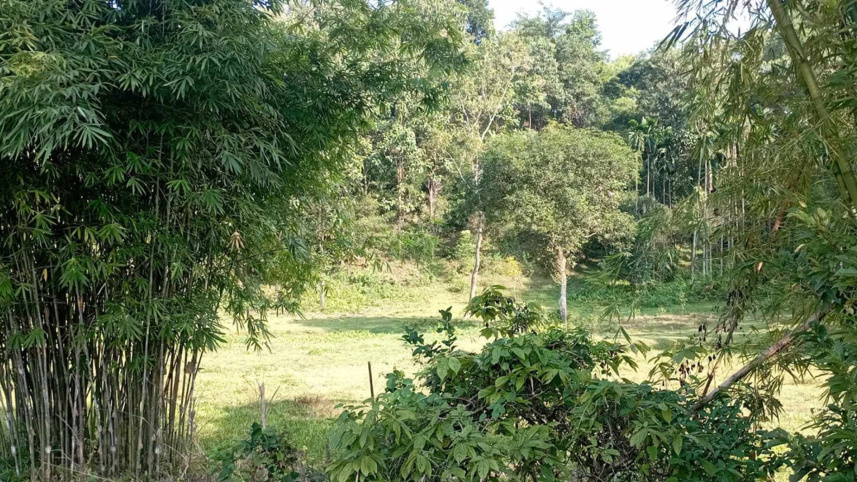
Cox’s Bazar’s 7,085-hectare Inani National Park is home to Asian elephants, western hoolock gibbons, and clouded leopards, three of Bangladesh’s most threatened mammals. A study conducted by Bipul Krishna Das between 2022 and 2023, and published in August 2026, recorded 23 mammal species including three listed as “critically endangered” on Bangladesh’s national Red List—the Asian elephant, western hoolock gibbon, and clouded leopard—as well as four species listed as “endangered” including the northern red muntjac, northern pig-tailed macaque, capped langur, and Bengal slow loris. That is reassuring news, but it is also a warning. Finding these animals inside a protected area tells us what Inani still has; it should also force us to ask whether Bangladesh has the capacity to protect what it has found. If we cannot properly secure wildlife even inside protected areas, we should think carefully about how much sensitive location information we make public before stronger safeguards are in place.
The study did more than list species. It found that shrubland, more than half the park, held the most mammals, and it proposes mapping gibbon and carnivore records so patrols can be aimed there. In a protector’s hands, such records are a conservation tool; in the wrong hands, a guide for poachers. The paper doesn’t seem to publish exact coordinates, and it says the data are available on request. Still, Bangladesh has no clear, public rule on what location details for sensitive species should be shared, with whom, and under what safeguards. Nothing shows that publicity has led to poaching at Inani, and this article doesn’t claim it has.

Writing in Science in 2017, David Lindenmayer and Ben Scheele warned that revealing rare species’ locations can invite poaching, advising coarse locations over precise coordinates where the risk is moderate, and telling the authorities beforehand. Sceptics point out that poachers often know these spots before researchers do, so watchfulness on the ground matters as much as confidentiality. Both can be true. But recent trafficking cases suggest caution makes sense in Bangladesh, where traffickers are already collecting rare animals and moving them through organised networks.
On March 23, 2025, three lemurs were stolen from Gazipur Safari Park with help from an outsourced worker, and investigators say two were smuggled into India. Without microchips or preserved DNA profiles, even proving their identity is now hard. In June, wildlife trafficker Hadis Rahman was arrested, and 42 animals were recovered from a Mirpur warehouse he had rented for a year and a half as a supposed pigeon farm, reportedly the country’s largest wildlife haul. An earlier case against him ended in a fine of Tk 10,000, and the wildlife crime control unit’s own inspector says it has no protection system of its own.
The risk to Inani’s species is just as real. Forest Department figures show 114 elephants dead in Chattogram, the Hill Tracts, and Cox’s Bazar over nine years, 33 of them shot or electrocuted, yet only 19 cases reached the forest courts. None of this proves that publicity invites poaching, or that Inani is being targeted. But it shows trafficking networks are organised and often ahead of enforcement, while our defences stay weak. The problem is not simply poaching either. Even conservation projects can put pressure on protected habitats: Forest Department officials are currently opposing a planned elephant rescue centre inside Chunati Wildlife Sanctuary because they fear its enclosure would obstruct wild elephants’ movement and shrink their habitat.
Parliament passed the Wildlife (Conservation and Security) Act, 2026 in April, replacing the 2012 Act. Section 10 bans keeping, selling, or moving wildlife without a licence, with up to a year in prison or a fine of up to Tk 1 lakh, or both. Section 41(1) punishes hunting a tiger or elephant listed in Schedule 1(a) with two to seven years in prison and Tk 1 to 10 lakh in fine, and the crime is cognisable and non-bailable. Section 19 bars hunting and unauthorised entry in national parks, and new factories or brick kilns within two kilometres of their boundaries. Section 24 lets the government declare core zones, buffer zones, and corridors.
Yet there are gaps. Under Section 46(2), the Section 10 offence is non-cognisable, bailable, and compoundable through a fine, which raises real doubts about deterring organised smugglers such as those behind Hadis Rahman’s warehouse. The law also appears to contain no provision governing disclosure of location data for sensitive species. The problem, then, is less a missing law than whether the institutions enforcing it have the people, intelligence, and accountability to make it matter.
First, we need a clear disclosure policy. Exact locations of especially vulnerable species shouldn’t be made public without a risk assessment and consultation with the relevant conservation authorities. And before any findings are broadcast, Inani needs stronger patrols, camera traps, and local surveillance, with core and buffer zones and elephant corridors formally declared. General findings and habitat needs can still be shared.
Second, a dedicated intelligence arm: a Wildlife Intelligence and Investigation Bureau under the Ministry of Environment, Forest and Climate Change, with legal backing, a forensic laboratory, digital and financial investigation units, and protection for its staff, aimed not at couriers but at the kingpins and financiers behind them. Third, we need serious prosecution: specialised public prosecutors, open case tracking, microchips, and DNA profiles for every animal in safari parks and rescue centres, and vetting of outsourced staff.
India shows how a visible failure can force reform. After tigers vanished from Sariska, a 2006 amendment created the Wildlife Crime Control Bureau, operational from 2007, gathering intelligence on organised wildlife crime. Nepal shows that success needs constant renewal. A coordination committee led by the forest minister and a crime control bureau with 16 district cells helped deliver its first zero-poaching year for rhinos in 2011, yet trap pits and electrocution have resurfaced in Chitwan, so surveillance can never lapse.
Kenya shows what a weak law costs. Before reform, only four percent of those convicted between 2008 and 2013 went to prison; the 2013 act then set a minimum fine of 20 million shillings or life imprisonment, or both, for killing threatened species, and a dedicated prosecution division and forensic laboratory followed, though wildlife prosecutors stayed too few.
Inani has given Bangladesh something worth celebrating. The answer is not to keep its wildlife secret, but to protect it before sensitive information spreads. The next test is simple: can we protect what we have found?
Nafew Sajed Joy is a researcher and environmentalist. He can be reached at nafew.sajed@gmail.com.
Views expressed in this article are the author's own.
Follow The Daily Star Opinion on Facebook for the latest opinions, commentaries, and analyses by experts and professionals. To contribute your article or letter to The Daily Star Opinion, see our guidelines for submission.
 For all latest news, follow The Daily Star's Google News channel.
Comments