


Changing the narrative of Bangladesh-Malaysia bilateral relations

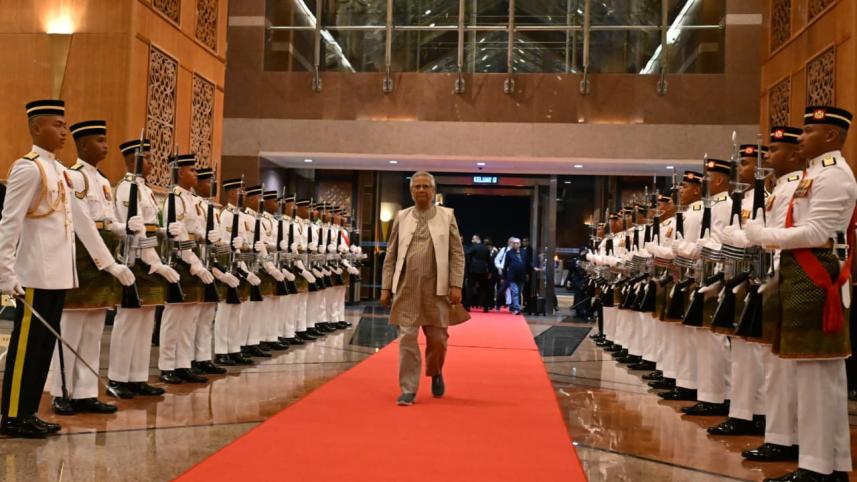
Bangladesh enjoys cordial bilateral relations with Malaysia, the first Southeast Asian country to recognise our independence. Since then, bilateral relations between the countries have grown in depth and dimensions. Our vibrant expatriate community in Malaysia has strengthened the economies of both countries while deepening the people-to-people bond.
There have been notable developments between Bangladesh and Malaysia in recent times. During my tenure as high commissioner to Malaysia, two high-level visits took place: the Malaysian Prime Minister Anwar Ibrahim visited Bangladesh on October 4, 2024, the first visit of any head of the government since the assumption of office by the interim government, and the Chief Adviser Muhammad Yunus' visit to Malaysia around mid-August this year.

The chief adviser's visit witnessed the signing of five MoUs and three Exchange of Notes in areas such as energy, higher education, defence, training of diplomats, halal ecosystem, collaboration between think tanks, and the business communities. This added substance to the visit widely considered as a watershed moment in the bilateral relations. Three more instruments were signed relating to research, pharmaceuticals and fertiliser during my tenure in Malaysia. All these serve as significant steps for shifting the current narrative of Bangladesh-Malaysia relations from a labour export-import prism to eventually a strategic partnership. I have been advocating for this shift as the large Bangladeshi community in Malaysia should not be the only defining factor of our Bangladesh-Malaysia relationship.
It is encouraging that during the visits, both the leaders identified trade and investment, digital economy, halal economy, renewable energy, STEM research, entrepreneurship, and people-to-people contacts, among others, as potential areas for cooperation. They reaffirmed their commitment to transform Bangladesh-Malaysia relations into a "deeper, future-oriented strategic partnership." Malaysian dignitaries earlier expressed their desire to reset the labour relations with Bangladesh and diversify the bilateral relations by exploring potential for collaboration as development partners in other areas, such as trade and investment.
Around 8,000 of the approximately 18,000 stranded workers who missed the May 31, 2024 deadline—the final day before Malaysia's recruitment freeze on Bangladeshi labourers—are expected to enter Malaysia once a roadmap for their recruitment is finalised. It is noteworthy that Bangladeshi expatriates currently comprise 37 percent of the foreign workforce, putting us as the top source country for Malaysia. During the two high-level visits, both sides agreed to work towards establishing a fair, transparent, and non-discriminatory recruitment process. Thanks to vigorous persuasion, in August 2025, the Malaysian government agreed to grant multiple-entry visa facilities to the Bangladeshi workers. Besides, the country has become one of the most preferred destinations for higher education for Bangladeshi students, with over 10,000 currently residing there.
Moreover, Bangladesh is Malaysia's second-largest trading partner in South Asia. Trade and investment were high on the agenda during the latest visit, which was marked by business forums with top business leaders in the audience. To further promote our bilateral relationship, the signing of a free trade agreement (FTA) will be critical. Both countries are currently working on it. Although Malaysia is Bangladesh's third-largest source of foreign remittances, contributing over $3 billion, it is also Bangladesh's ninth-largest foreign investor.
Obviously, the issue of the Rohingya figured prominently during the bilateral discussions. The chief adviser sought Malaysia's increased role as the current chair of the Association of Southeast Asian Nations (Asean) to initiate Rohingya repatriation. In response, Malaysia placed the Rohingya crisis on the regional agenda, including the plan to send a joint Asean delegation to Myanmar. It has also played an active role to mobilise humanitarian support. Bangladesh has substantial stakes as a non-member or non-partner of Asean and is keen to become Asean sectoral dialogue partner. As Dr Yunus asserted, Bangladesh could be a bridge between Asean and South Asian Association for Regional Cooperation (Saarc).
On August 13, 2025, during his Malaysia visit, Prof Yunus said, "Bangladesh and Malaysia have walked together in many ways. We have supported each other in our journeys toward growth and prosperity. I truly believe that with stronger collaboration in education, research, and trade and investment, Bangladesh and Malaysia can become a model for sustainable development and social progress." The future pattern of bilateral relations with Malaysia finds expression in the above remarks. If appropriate and necessary actions are taken properly as a follow-up to the recent visits, both Bangladesh and Malaysia will benefit in the coming days.
Md Shameem Ahsan served as the high commissioner/ambassador to Malaysia, Italy and Nigeria and the elected president of the executive board of the World Food Programme in Rome.
Views expressed in this article are the author's own.
Follow The Daily Star Opinion on Facebook for the latest opinions, commentaries and analyses by experts and professionals. To contribute your article or letter to The Daily Star Opinion, see our guidelines for submission.
 For all latest news, follow The Daily Star's Google News channel.
Comments