


We must collectively stop tolerating preventable deaths

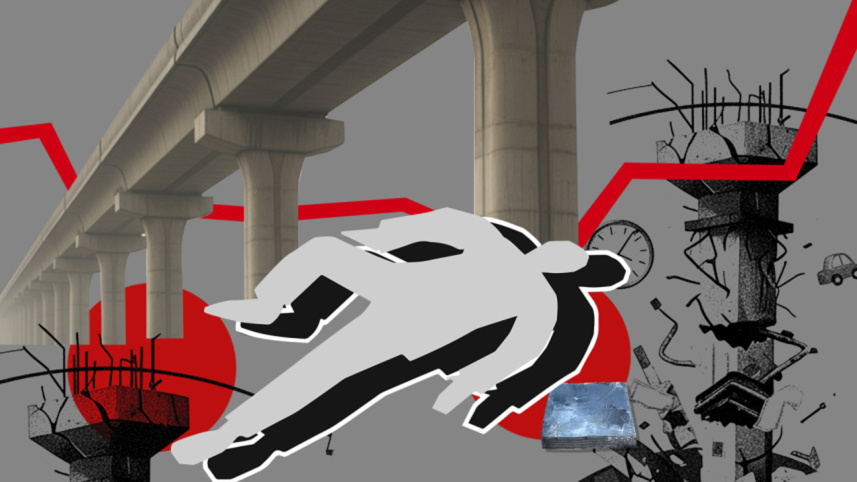
On October 26, 2025, Abul Kalam Azad was walking through the Farmgate area of the capital when a 150kg bearing pad dislodged and fell from the overhead metro rail track. The massive component knocked Azad down and killed him instantly. About 30 minutes later, I walked on the same stretch of pavement after a routine check-up at the nearby Islamia Eye Hospital. Had my appointment been slightly more efficient, or had I skipped the post-check-up wait at the pharmacy, it could have been me under that bearing pad. In Dhaka, survival isn’t a right guaranteed by the state; it is a game of chance where the odds are increasingly stacked against citizens.
The Farmgate tragedy reveals a landscape where systemic flaws and inefficiency built into the nation’s operational framework have created an environment of constant encounters with death. We also apparently built a society that has mastered the art of looking away. The data from 2025 alone reads like a grim register of preventable catastrophes, yet we treat these events with a horrifyingly high tolerance and acceptance.

On July 21 last year, a military training jet malfunctioned and plummeted into the Milestone School and College campus in Uttara. Thirty-six people were killed, 35 of them schoolchildren and teachers. Flight paths cutting directly over densely populated residential zones and schools are not due to a lack of space; it is due to a lack of accountability. Our inefficiency in zoning and safety planning turned a school into a crash site.
On October 14 of the same year, 17 people died in a chemical warehouse fire in the capital’s Mirpur. They didn’t die because the fire was unquenchable; they died because the emergency exits were padlocked from the outside—a choice made by warehouse owners who value inventory over human lives. Only two days later, another 16 perished in Chattogram EPZ. These industrial zones are touted as regulated, yet they operate with a culture of neglect.
If our infrastructure is a threat, the ground beneath is a ticking clock, too. On November 21, a leisurely Friday morning turned terrifying when a 5.7 magnitude earthquake shook the country. Ten people died that day, not due to the quake itself, but because our buildings are structurally compromised by either systemic negligence or corruption. Rajuk continues to oversee a capital where almost all high-rises fail basic fire and seismic safety standards. When a building in Dhaka collapses during a tremor, it is more likely the result of negligence rather than an “act of God.”
The state seems to have perfected a theatre of accountability designed to pacify the public until they inevitably forget or accept the tragedy as “fate.” The script appears the same every time: a disaster followed by a public and media outcry with numerous related discussions, talk shows, and newspaper articles. Then, the government announces a committee to “probe” the incident. Often, a sum of money is handed to grieving families as compensation. Within weeks or even a few days, public outrage subsides, the media moves on, and the committee fades into the background, or its report collects dust.
Since the Rana Plaza collapse in 2013, many committees have been launched. Their recommendations—mandatory fire exits, electrical overhauls, the relocation of chemical warehouses, and seismic retrofitting—remain largely untouched. In this country, safety is not a standard but a commodity to be negotiated. This culture of negligence is subsidised by people’s desperation. Workers accept jobs in firetraps because the alternative is starvation. Families move into seismically unsound apartments because the system has failed to ensure safety standards.
We must also confront our own apathy. As a society, we have developed a mental armour that allows us to witness horror yet turn around to our daily routines. Tolerance is what empowers a negligent authority. Our focus must shift to cultivating a citizenry that refuses to let the state bury its failures in a committee report.
Bangladesh’s new leadership faces a fundamental choice: continue the ritual of “probing and paying” or dismantle the systemic rot. We need conscience and accountability in the form of criminal liability, independent oversight, transparency and regular national audits of major infrastructure.
Standing outside that eye hospital, watching the chaos that followed Azad’s death, I realised that we are all living in a state of near misses with a profound, systemic disregard for human life. Instead of continuing to accept easily and forget quickly, we need to demand a system that values our lives. The cost of a functioning state is high, but the cost of the current culture of apathy is higher. We must overcome our collective will to accept the unacceptable.
Dr Sabbir Ahmad is a researcher and expert in project delivery and engineering. He can be reached at sabbir@ieee.org.
Views expressed in this article are the author's own.
Follow The Daily Star Opinion on Facebook for the latest opinions, commentaries, and analyses by experts and professionals. To contribute your article or letter to The Daily Star Opinion, see our guidelines for submission.
 For all latest news, follow The Daily Star's Google News channel.
Comments