


Adieu to a frontliner of our Liberation War

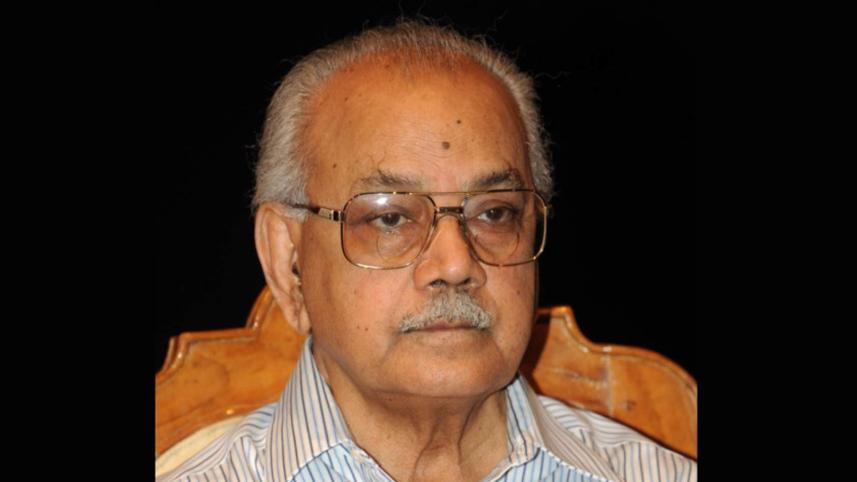
On December 20, 2025, Bangladesh lost Bir Uttam Abdul Karim Khandker, Liberation War deputy chief of staff and the first chief of the Bangladesh Air Force. His death is not only the passing of a decorated officer; it is the loss of a living bridge to the Liberation War. With him goes a voice that carried memory, discipline, and moral weight from 1971 into our uncertain present.
AK Khandker belonged to a generation that chose risk and duty over fear. When the country needed structure, he helped build it. When the war demanded courage with restraint, he offered both. His leadership was not loud, but it was firm. In a time when survival itself was unsure, he believed that victory had to be organised, ethical, and rooted in service to the people.

As the deputy commander, his role went beyond command during the war. He helped coordinate, plan, and sustain a resistance that was often outmatched in resources but not in resolve. On December 16, 1971, he was present during the Pakistani forces' surrender at the Race Course Maidan as the representative of Bangladesh. The Liberation War was won not just by the courage of millions but also by leaders like him who could think clearly under pressure and turn scattered bravery into collective strength. AK Khandker was one of those leaders.
After independence, his responsibility did not end. As the first chief of the Bangladesh Air Force, he faced a mammoth task—building an institution from almost nothing. It demands patience, vision, and integrity. He helped shape the Bangladesh Air Force as a professional body grounded in discipline rather than politics, and service rather than spectacle—standards still relevant. He also served as a diplomat, and became the planning minister after being elected to parliament from Pabna-2 constituency in 2009.
What makes his passing especially heavy is the time we are living in. Our public life is often noisy, divided, and impatient. We speak of development, reform, and national pride, yet we rarely pause to listen to those who built the foundations we stand on. AK Khandker represented an increasingly rare leadership. He believed that power should be accountable, that institutions should outlast individuals, and that patriotism is measured by service, not slogans.
His life also reminds us that the Liberation War was not a single moment frozen in textbooks. It was a process, filled with hard choices and moral tests. Leaders like AK Khandker carried those lessons forward. They understood that independence was not an ending. It was a beginning that required constant care. When such figures leave us, the risk is not only forgetting their names, but forgetting the values they lived by.
We often say that we honour our freedom fighters. But honour is more than ceremony. It is the willingness to protect institutions, reject violence as a political tool, and value competence over loyalty. It is the courage to defend truth even when it is inconvenient. These were principles that shaped AK Khandker's public life.
As the nation mourns him, we should ask ourselves what we are doing with the inheritance he and his peers left behind. Are we strengthening the republic they imagined, or are we slowly eroding it through neglect and short-term thinking? Are we building leaders who see power as responsibility or as entitlement?
AK Khandker's death marks the fading of a generation that knew the cost of freedom firsthand. With each such loss, the distance between us and 1971 grows wider. That distance makes memory fragile. It makes distortion easier. It makes duty feel optional. That is why remembering him matters.
We have lost a leader and a frontliner of the Liberation War. But we still have a choice. We can let his legacy become a line in history, or we can let it guide our conduct. If we choose the latter, then his life will continue to speak, quietly but firmly, to a nation that still needs its compass.
K. M. Iftesham Islam is in-house contributor of Tech & Startup at The Daily Star.
Views expressed in this article are the author's own.
Follow The Daily Star Opinion on Facebook for the latest opinions, commentaries, and analyses by experts and professionals. To contribute your article or letter to The Daily Star Opinion, see our guidelines for submission.
 For all latest news, follow The Daily Star's Google News channel.
Comments