


‘New mothers must be supported to recover in every way, not just physically’

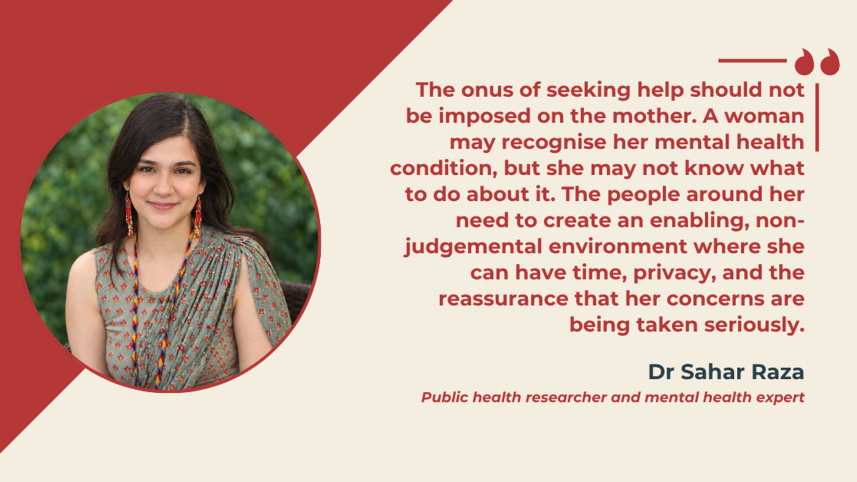
In Bangladesh, it is still uncommon for new mothers to receive help to deal with postpartum mental health shifts. On the occasion of World Mental Health Day, Dr Sahar Raza, a public health researcher and mental health expert, speaks to Afia Jahin of The Daily Star detailing the life-altering changes new mothers go through and discussing how communities and the healthcare sector can help narrow the existing gaps in care.
How do postpartum mental health issues manifest in new mothers, and how long can they last?

There is a normal level of emotional adjustment for all new mothers. Once you have a baby, it can be overwhelming as the postpartum period involves a major physical, psychological and even a social transition. That adjustment period may last up to two weeks or even longer. But then there is a mental health condition where symptoms are more persistent, severe, and which interfere more with the mother’s everyday life. For example, a new mother may feel persistently sad and empty, worry excessively, and lose interest in the activities she usually enjoys. In many cases, she may even struggle to connect with her baby emotionally. This is when an assessment may be required.
Postpartum mental health issues can include anxiety and depression, but there can also be severe issues such as hallucinations, delusions, confusion, suicidal thoughts, or even thoughts of harming the baby which can signal postpartum psychosis. These severe issues are medical emergencies and need prompt attention. There cannot be a wait-and-watch approach.
In terms of how long postpartum mental health changes can last, the World Health Organization (WHO) conventionally defines the postpartum period as the first six weeks after giving birth. But there is no biological switch that turns off on Day 40 or 42. As much as we try to quantify the postpartum period, we need to make sure the mother is getting better beyond this point, too. Women still need support as their existing mental health issues may become more severe or they may develop new conditions after the six-week mark. One Lancet series titled “Maternal health in the perinatal period and beyond” states that there should be consideration about extending the postpartum period and that women should be coming in contact with health systems in order to be kept in check regarding their mental, physical and emotional health.
How common is it for new mothers in Bangladesh to seek professional help in dealing with postpartum mental health issues?
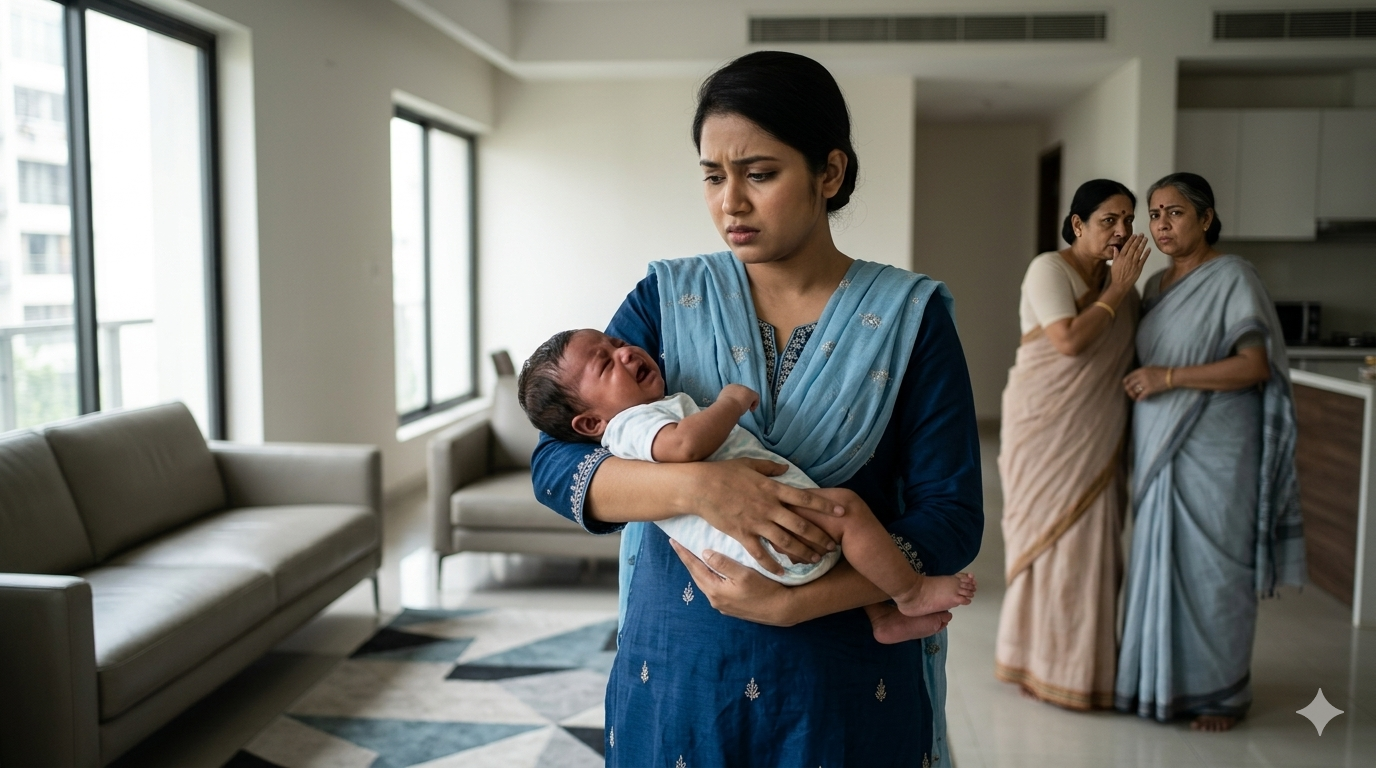
We found in one study that about 22 percent of reproductive-age women with anxiety or depression sought care from a healthcare provider, and only 8 percent used prescribed medication. During the postpartum period, the focus is more on the new baby than on the mother. Even during this time, when people visit to see the baby, the mother has to make sure that she is presentable. She will often be criticised or blamed for any issues with the baby, to the point of having her basic maternal instincts being questioned. This disallows her the space needed to navigate the first few weeks with her baby, which is an adjustment period for both of them.
Also, in order to seek help, a new mother has to first realise that she is suffering. Many a time, new mothers’ concerns are dismissed, with elders minimising the gravity of childbirth. At other times, the family may assume it is a period of adjustment that will eventually pass. Even for those who may recognise the problem, the stigma around mental health issues often becomes a barrier to seeking help.
There can also be uncertainty about where mental health services can be availed. And in our context, the decision-making is usually not with the mother as she may be dependent on a family member for money and mobility.
It should also be noted that the onus of seeking help should not be imposed on the mother. A woman may recognise her mental health condition, but she may not know what to do about it. The people around her need to create an enabling, non-judgemental environment where she can have time, privacy, and the reassurance that her concerns are being taken seriously. This also means training healthcare providers to handle such cases. It has to be a holistic approach wherein everybody plays a role.
In the rural areas, where lack of adequate services often deprives mothers of proper physical treatment during and after pregnancy, what is the level of awareness about postpartum mental health?
I would avoid saying that there is no awareness at all. Because of the level of connectivity we have now, even in rural areas, women do recognise when they are struggling. But a postpartum mother may not know that her symptoms could be part of a treatable mental health condition.
One local study evidenced this, finding that rural women often do not know which providers or facilities offer maternal mental healthcare. A new mother might also not realise that whatever she is going through is something other women feel too. That form of an enabling environment, which makes it easier for mothers to speak up, is lacking.
How can families and communities help new mothers cope better mentally during the postpartum period?
Families should offer practical support and active listening. This means helping the new mother with the baby, any older children, and with other responsibilities. Rather than making it all about the baby, relatives can ask after the mother as well. Families should foster a positive environment and avoid any unnecessary conflicts. A study done in Chandpur’s Matlab area, for instance, highlighted how strained relationships with the mother-in-law and marital conflicts were associated with postnatal depression.
A new mother may seem functional, but could be struggling internally. Regardless of how many generations we have been giving birth for, childbirth will always be a massive physical, mental and psychological change. New mothers must be supported to recover in every way, not just physically. Also, different women may have different timelines for recovery, so it is important to eliminate any pressure for a new mother to bounce back quickly.
 For all latest news, follow The Daily Star's Google News channel.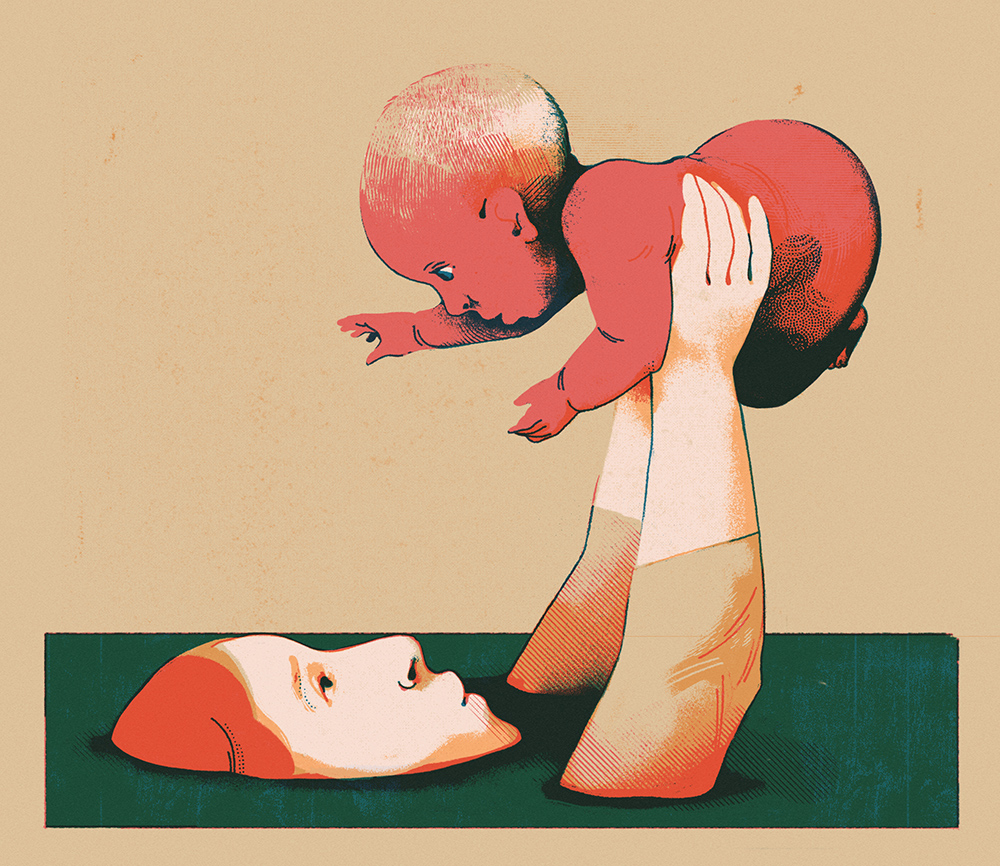
What should be done at the government level to raise awareness about postpartum mental health?
Mental healthcare should be an ordinary, expected and integrated element of maternal care that continues into postnatal care, rather than being a separate service that women are burdened to discover if they feel something is wrong. Starting from the antenatal period, mental health check-ups should be part of routine screenings.
This won’t require the government to come up with a whole new screening system. For example, when a mother takes her baby to be vaccinated, that opportunity can be used to do a quick questionnaire-based screening to check on her mental state. The contact mothers are already making with the health system should be utilised as such.
Accessing mental healthcare providers can be challenging, so having these services within a regular health facility, where women can walk in, discuss whatever is on their mind, and get a primary screening done can be a good model. It is all about ensuring that a mother can say it openly when she is struggling mentally, that she is taken seriously, and that she receives care even after the first 40 days have passed.
Afia Jahin is a member of the editorial team at The Daily Star.
Views expressed in this article are the author's own.
Follow The Daily Star Opinion on Facebook for the latest opinions, commentaries, and analyses by experts and professionals. To contribute your article or letter to The Daily Star Opinion, see our guidelines for submission.
Comments