


Who listens when mental health struggles disrupt daily life?

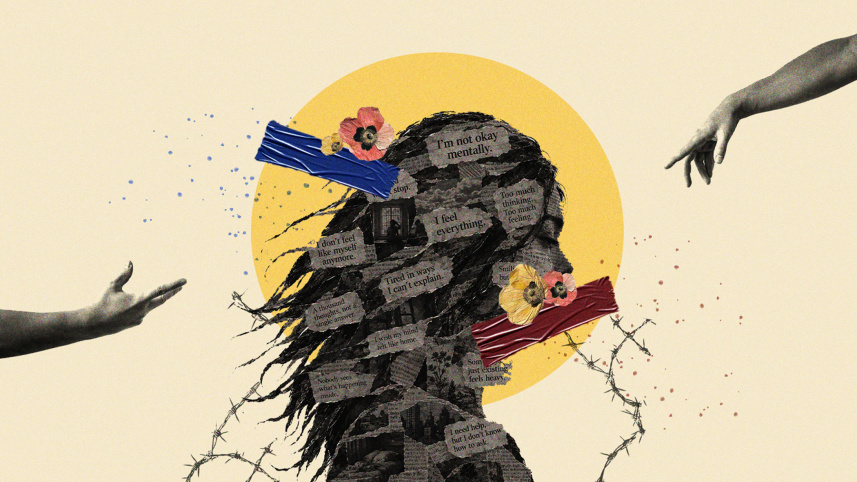
Ask a Bangladeshi newspaper reader to picture a mental health story. Perhaps a psychiatrist’s quote comes to mind, a helpline number, or a headline about a student’s death. Now ask them to picture the person who survived that despair, speaking about what living afterwards requires. Does the image come as easily?
This year, World Mental Health Day, observed on October 10, carries the WHO theme “Lived experiences heard: real voices, real change”. It asks us to recognise people’s experience of mental health conditions as expertise that should shape decisions. In Bangladesh, I think the question is what we are willing to change once someone speaks.

Recently, a close friend lost his job after his mental health struggles affected his performance. Years of strong work and contribution did not secure him support when he needed it. His employer chose to let him go.
What troubles me is how quickly the person disappears behind the word “underperforming”. There is no space in that word for the effort it may take to get through an ordinary day, let alone perform as though nothing has changed. There is only the work that did not get done.
At home too, a meal, a shower, an unanswered message or call can become something they cannot manage. Relationships strain; even affection can feel difficult to return. Then comes the quieter hurt, beginning to see oneself through what remains undone, as though difficulty were a personal failing.
I cannot turn one friend’s experience into a verdict on every employer. But it raises a question that a workplace wellness campaign should have to answer: what happens when someone’s distress becomes inconvenient?
Compassion is easy when it asks nothing of us. It becomes harder when it requires a revised deadline, a different workload, time away. In a capitalist ordering of life, where usefulness is so closely tied to output, vulnerability can feel like something we must conceal to remain employable. We invite people to speak, then make them calculate what speaking might cost—a job, a friendship, an opportunity, or social currency.
There are practical alternatives. WHO recommends workplace adjustments such as flexible hours, modified assignments and time for health appointments, alongside support for returning to work. These are ways of keeping someone in working life while recognising their needs. They require an employer who treats distress as a reason to consider support, rather than simply a performance problem.
The Bangla language has words for sorrow, worry and despair. The difficulty is whether those words are taken seriously, especially when someone uses them. Between dismissing distress as ordinary “mon kharap” and turning “pagol” into an insult, how much room do we allow a person to explain what is happening inside them?
A sleepless night is not automatically a disorder. Nor should someone have to arrive with a clinical diagnosis before being met with patience. Sometimes the first useful response is to give a person room to explain. This is more than a matter of finding kinder words. WHO’s 2020 assessment of Bangladesh documented widespread stigma and reliance on traditional and spiritual healers, particularly in the rural areas. An invitation to seek professional help means little if that help remains difficult to reach.
Findings released from the 2019 National Mental Health Survey showed that 92.3 percent of adults and 94.5 percent of children identified with mental disorders received no treatment. These are survey findings from 2019, not a new measurement of Bangladesh in 2026. When the health minister cited the survey in parliament in July, the passage of time was itself unsettling. How much longer can an old finding remain the basis of our description of an urgent need?
Bangladesh has changed its legal language. The Mental Health Act, 2018 repealed the colonial Lunacy Act, 1912; Section 6 addresses rights including health, dignity and education, which is significant. But a person from a remote rural area or from a lower-middle-class group cannot take a statutory promise to a consultation. They need to know where to go, what it will cost, and whether they can return for the next appointment.
There is another revealing detail. Section 5 specifies the membership of district mental health review and monitoring committees: officials and a nominated psychiatrist or psychologist. It reserves no seat specifically for a person with lived experience, not assuring representation by the listed membership. Whose knowledge, then, are we building into oversight?
A person who has navigated treatment can tell us what a service looks like from the receiving end: whether an explanation made sense, privacy felt secure, and a follow-up plan could fit around work and travel. These are questions worth putting beside clinical expertise when services are designed and reviewed.
Participation should come with influence, such as opportunities to help design services, paid roles where appropriate, and a way to see what changed because of people’s contributions without undermining privacy.
WHO’s campaign also calls for a planned shift from long-stay psychiatric institutions towards community-based care, with funding, services and support following people into their communities. For Bangladesh, the test should be whether care can become part of ordinary life: accessible, connected, and shaped by the people who use it.
My friend needed that ordinary life to make room for him. He needed support while his ability to work was diminished. His years of contribution make the dismissal painful to recount, but they should not be the qualification for deserving care. Someone with no record of exceptional performance deserves consideration too.
This year, as we observe World Mental Health Day, we should linger after the story has been told. After the panel ends, after the awareness post is shared, when a person still needs an appointment, an adjustment, a livelihood. A voice can fill a room for a moment. Making room for the person who owns it takes longer.
Mahiya Tabassum is a contributor to The Daily Star.
Views expressed in this article are the author's own.
 For all latest news, follow The Daily Star's Google News channel.
 Follow The Daily Star Opinion on Facebook for the latest opinions, commentaries, and analyses by experts and professionals. To contribute your article or letter to The Daily Star Opinion, see our guidelines for submission.
Comments