


Reduce Global South’s climate debt burden

It is frustrating that Bangladesh, despite being one of the world's least responsible countries for greenhouse gas emissions, is facing an ever-rising climate debt. The irony is, Bangladesh is also one of the most vulnerable nations to the impacts of climate change, with millions of its people already affected. But we are not alone in facing such predicaments. As global leaders gather at COP30 in Brazil, it is crucial that they find ways to reduce this unfair burden on Bangladesh and other highly vulnerable countries.
It must be acknowledged that it is the failure of wealthy nations—the highest emitters of greenhouse gases—to commit to grant-based, justice-driven funds for vulnerable countries that has resulted in such punishing climate debts for the latter. According to an index published by a Dhaka-based think tank, Bangladesh is in the "high risk" debt-trap category with its burden forecast to increase further by 2031. How is this fair? It is illogical that Bangladesh must borrow $29.52 for every tonne of carbon emitted, meaning that for every $1 it receives in grants, it also receives $2.70 in loans. Between 2009 and 2022, Bangladesh reportedly accrued $3.4 billion in climate-related loans, making it increasingly dependent on external borrowing for adaptation and resilience. For over a decade, LDCs like Bangladesh have consistently received more climate loans than grants.

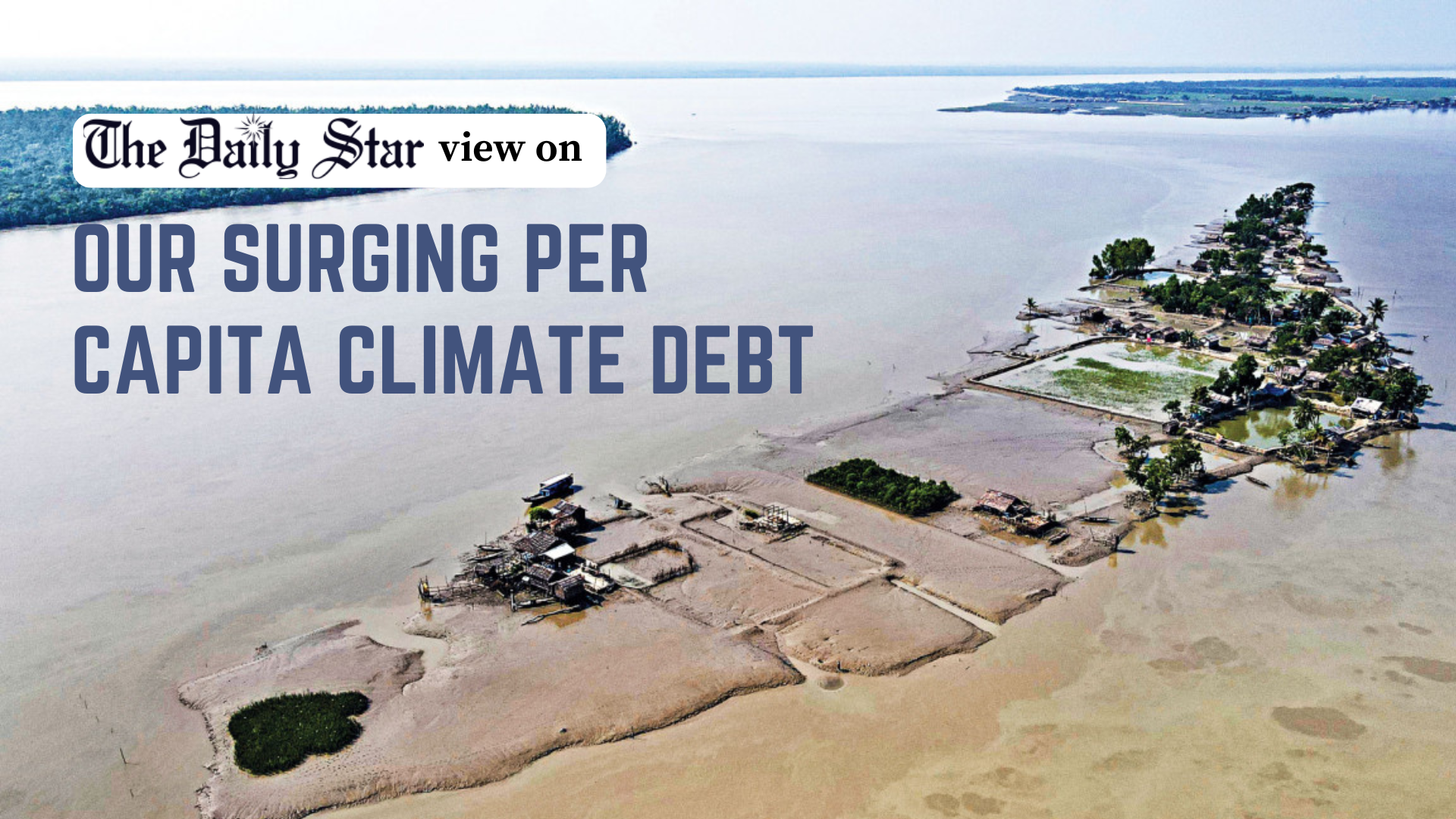
In 2022, Bangladesh identified 113 high-priority interventions across eight sectors, including water resources, agriculture, and urban resilience. Experts estimate that this plan will require around $8 billion annually from 2023 to 2050, yet Bangladesh has so far secured less than 1 percent of these projected needs. According to the World Bank, the country incurs losses of approximately $1 billion from average tropical cyclones, and by 2050, one-third of agricultural GDP may be lost due to climate vulnerability and extreme events. Thus, the new global climate finance goal of $1.3 trillion for LDCs must uphold the principles of fairness and equity, or countries like Bangladesh risk being further submerged in climate debt.

These vulnerable nations are facing increasingly frequent disasters driven by climate change, including cyclones, droughts, rising sea levels, and soaring temperatures. Decision-makers in forums such as the G7 and G20 must urgently address the debt crisis plaguing the Global South. This requires debt relief and a substantial increase in grant-based climate finance. Wealthy nations, being the largest contributors to the climate crisis, bear responsibility for its consequences on the countries of Global South. They must act decisively to reduce their debt burden and provide funds that will meaningfully mitigate climate change effects. Only by taking responsibility for their emissions can the wealthy nations ensure fairness and protect those most at risk.
 For all latest news, follow The Daily Star's Google News channel.
Comments