


Movement, mindfulness and community: Inside Dhaka’s growing wellness industry
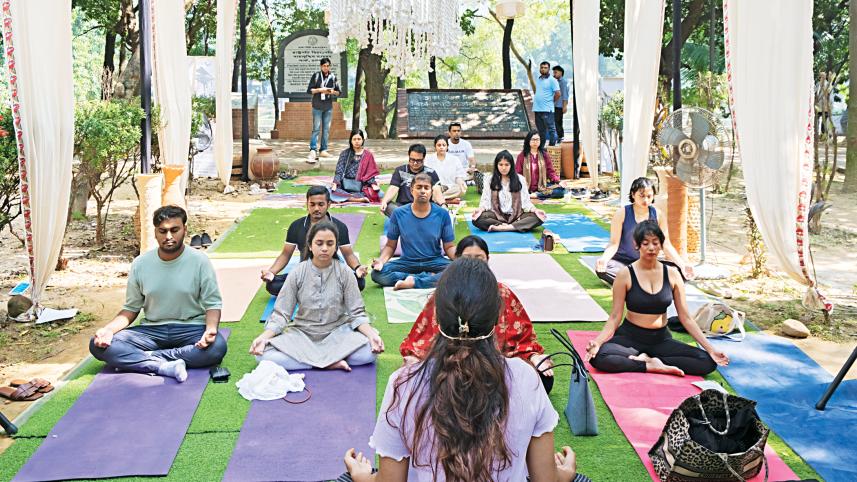
For years, Dhaka has been associated with rush-hour traffic, relentless noise, and high-stress workdays. However, beneath the chaos that Dhakaites tolerate, a quieter and healthier transition is taking place. Wellness, once considered a fringe interest, is gradually becoming a mainstream urban priority. This is not sporadic dieting or even performative fitness, but a more holistic understanding of wellbeing combining mobility, mental health, and community support.
So, how exactly is this shift taking place? To understand the broader picture, we need to take a look at a layered ecosystem that includes yoga teachers, mobility instructors, nutrition coaches, and large-scale festivals like The Flow Fest (formerly known as Dhaka Flow), which bring countless urban dwellers together to explore new tools for healthier living.

Why the wellness industry is expanding so quickly
Eliza Chowdhury is an internationally certified yoga teacher, and she made some interesting observations.
“When people were suffering from COVID-19 back in 2020, I noticed a surge in meditation and breathing practices. My students came to me for advice, and they shared it with their relatives. It was a wonderful transition. Now, more than ever, I see not only the elderly but the younger generation practising yoga regularly,” shares Chowdhury.
The pandemic might be a turning point, but Dhaka’s wellness boom can be considered a product of multiple intersecting realities — sedentary urban jobs, rising anxiety levels, and social media awareness. These factors have contributed to a growing demand for structured approaches to physical and mental well-being. As a result, dedicated gyms and wellness studios have emerged. Modelling themselves after global wellness hubs, these spaces offer curated classes ranging from classical yoga to somatic breathwork and high-intensity training.
The city gyms are also embracing different sorts of training programmes, which were once focused mostly on weightlifting exercises.
Sabrina Rahman, founder of Burnout Fitness and a licensed Zumba instructor trained in Melbourne, Australia, reflects the broader shift in mindset.
“I strongly believe fitness is no longer reserved for men. Our centre offers Zumba, High-Intensity Interval Training (HIIT) and yoga to women. Not everyone can go to a gym, but everyone deserves a chance to be fit. So, we offer at-home workout programmes and online training as well,” she shares.
Rahman’s presence, along with other female trainers and coaches, proves that both the male and female populations are equally and actively joining the city’s ever-growing wellness spaces.
Yoga, meditation, and mental wellness: A growing urban demand
Due to urban burnout, overstimulation, and digital fatigue, people are pushing more and more towards reflective practices. Hence, a rising interest in meditation and emotional healing.
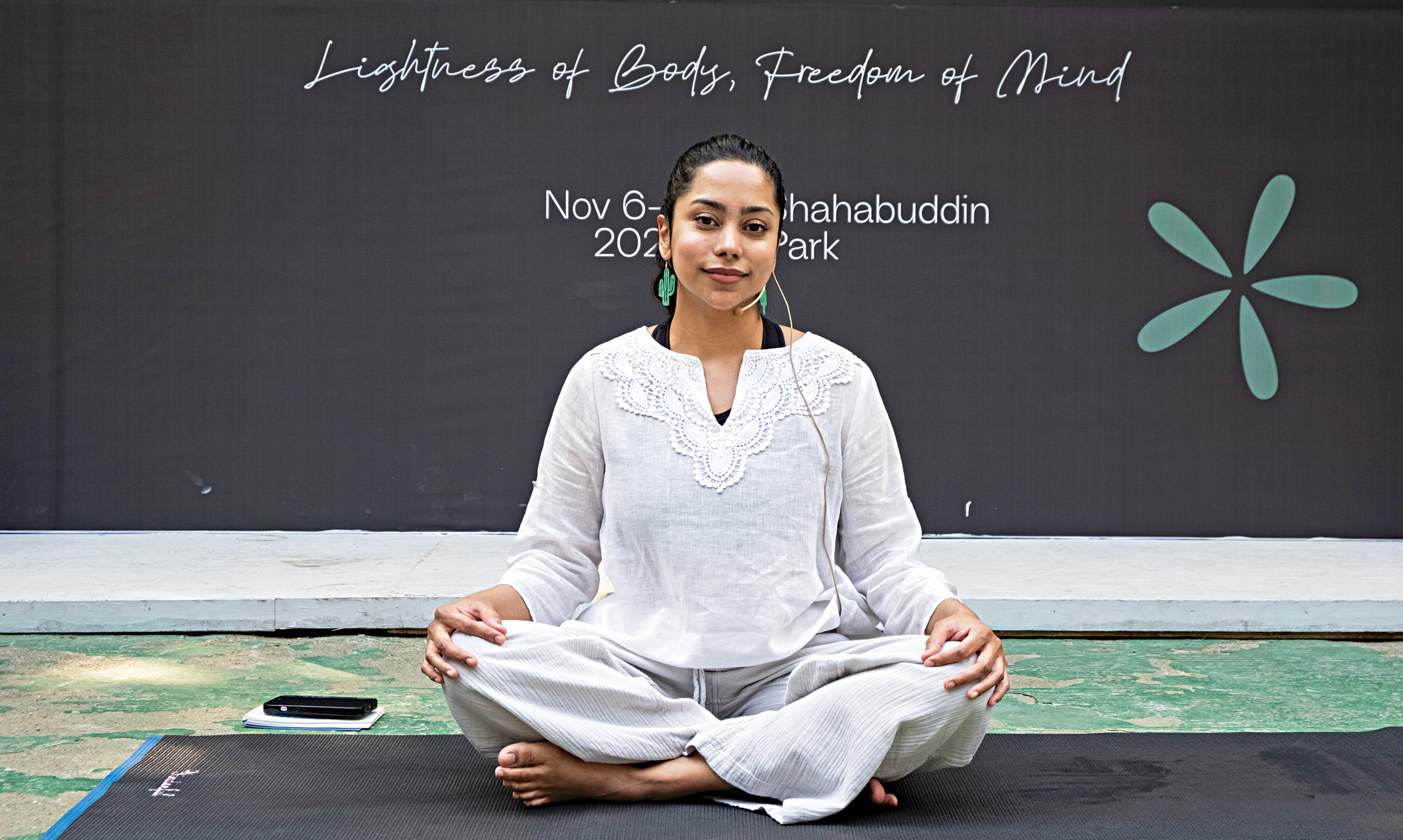
Meditation coach Faiza Farzana Gunjan, who recently led a meditation session at The Flow Fest 2025, believes these gatherings are essential for awareness. “Given the constant pressure that urban dwellers, especially the people involved in desk jobs, face nowadays, everyone should set aside a certain time and meditate for a while. It is an incredible way to heal ourselves,” says Gunjan.
Her journey started with a Bangladeshi spiritual coach, and later she obtained certification from a US-based training academy, ultimately becoming a meditation coach herself. Today, she holds regular in-person sessions in Gulshan and Banani alongside online coaching. The attendance at her classes, and similar offerings at studios across Dhaka, signals an increasing appetite for emotional grounding and psychological resilience.
Undoubtedly, gyms can build physical strength, but for healing internal systems, meditation and healing practices have become a must.
Yoga, quite similarly, is increasingly becoming popular among the city’s residents. People are becoming more mindful towards their joint care, longevity, and functional movement. As a result, there is a visible rise in Yin yoga and somatic movement practices.
Namit Kabir, a yoga instructor who taught in Canada for several years before relocating to Dhaka, underscores the importance of mobility.
“Our joints age faster than our muscles. People feel stiffness because their ligaments and fascia are tight. Yin yoga and mobility keep everything functioning properly,” she explains.
Along with teaching the younger population, Kabir holds classes for elderly practitioners as well, focusing on Yin yoga.
“Elderly people often struggle with basic movement tasks like standing up or sitting down. So, my specialised classes particularly address ageing bodies and long-term movement health,” she shares.
 For all latest news, follow The Daily Star's Google News channel.
 The growing presence of yoga teachers and studios indicates that people are more open to diverse movement philosophies, each offering a different approach: traditional disciplines, modern vinyasa, and meditation-driven flows or joint-focused training.
Dhaka’s new wellness culture
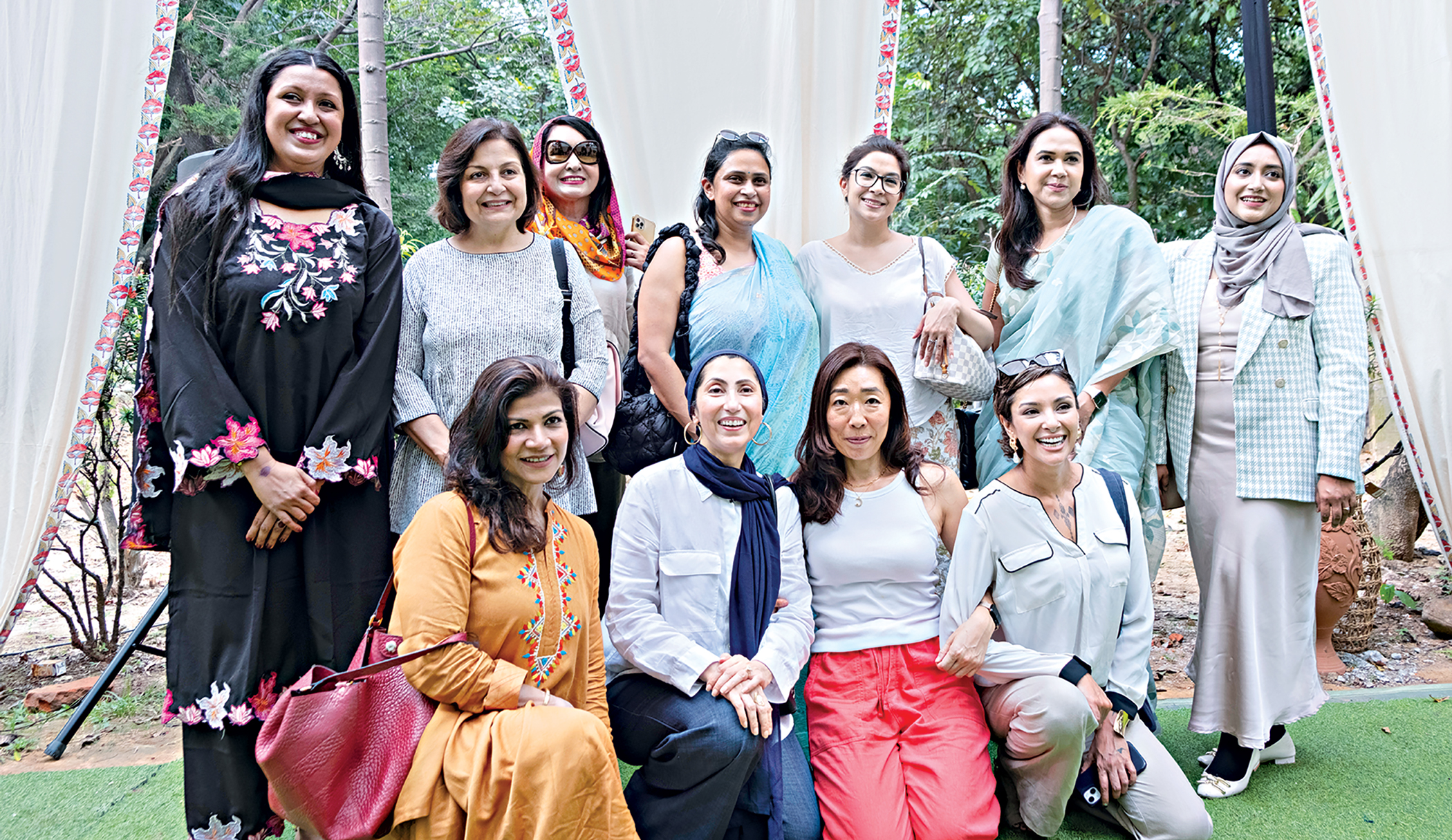
Where Dhaka’s wellness movement truly comes alive is in community gatherings like The Flow Fest 2025. The festival featured strength training, Zumba, meditation, nutrition workshops, mobility classes, and hormone-health sessions.
The festival also included wellness coach Akiko, who teaches in Japan, Singapore, and Thailand. Her presence was significant because she works in areas that remain culturally sensitive across Asia, including Bangladesh.
“Topics like menopause, periods, or even vaginal health are still taboo,” she said. “People are curious, but they don’t want to talk about it. Somebody has to open the door.”
Similarly, Michelle Tan, a personal trainer and nutrition coach who competes in bodybuilding competitions, visited from Malaysia. “I came to teach what people need to think about if their journey is to lose weight, gain weight, or get stronger,” she said.
Throughout the event, she held individual consultations and led group workouts. Though her stay was short, her takeaway was clear: “If enough people want me to come here again, I will. This is my first time, and I do enjoy it.”
Their presence clearly demonstrates how Dhaka is now seen as a fertile destination for international wellness educators. That said, the future of Dhaka’s wellness industry largely depends on accessibility, training standards, and community engagement. Dhaka may not be a prominent wellness destination yet compared to Bangkok or Bali, but it certainly has the potential to become one.
With the availability of the right resources, urban residents can continue to redefine wellness, and perhaps soon enough, movement, mindfulness, and nutrition will become a part of their everyday routine rather than crisis responses.
Photo: Silvia Mahjabin
Location: The Flow Fest, Dhaka
Comments