


Fusion, identity, and the changing mindset of young designers
To understand the future of Bangladesh’s fashion landscape, you need to look beyond the runway first. Why? Because it is in the classrooms, workshops, and cramped studio corners that young designers sit with their threads and needles, fabric scraps, unfinished motifs, and the buzzing uncertainty of ambition. Steadily, the industry is shifting, and a vital driving force behind this shift is the students and fresh graduates who are beginning to think differently about design and heritage.
For these young voices, fashion is not just a decorative pursuit. Fashion, for them, is a medium for the translation of history, personal identity, and modern realities. The real evolution of Bangladeshi fashion can be traced in the stories, frustrations, and small breakthroughs of these young designers.

Motifs as language, not just decoration
“We have shifted our perspective on thematic designs. Previously, we selected a culture or product and built our design around it. Now, we see it as a starting point for a deeper exploration, and dedicate ourselves to researching the motifs within it,” explains Md Imran Hossen, a student at Shanto-Mariam University of Creative Technology (SMUCT).
Hossen is part of a generation that has begun to think with a different lens. For him and other young designers, the shift starts at the conceptual stage. While Hossen’s design flows between 1940s fashion and village life, at the core, his method stays the same: find the motif, understand it, then make it speak. Rather than treating the motif as an add-on, he uses it as the vehicle for meaning.
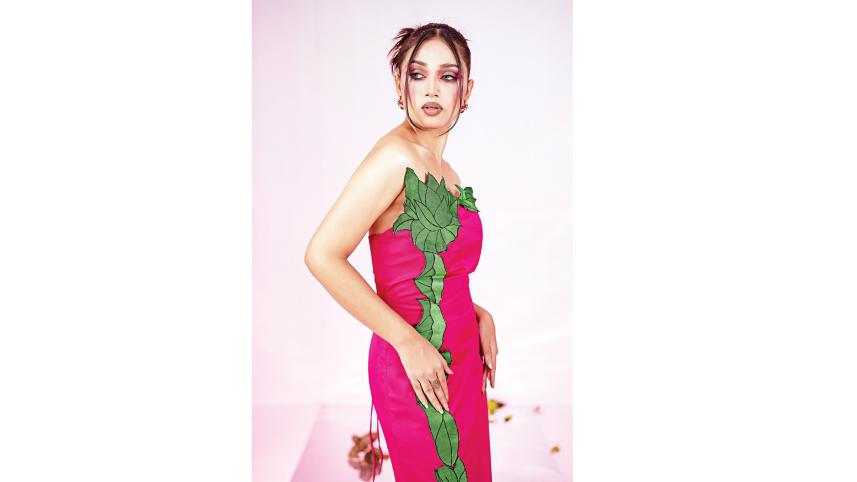
Umme Jamila, also from SMUCT, approaches motifs similarly, but her focus is more on national symbolism. Her previous themes include 21st February, 16th December, and the water lily.
“National topics interest me more, and ultimately, my goal is to present my culture uniquely, perhaps with a digital touch,” she says.
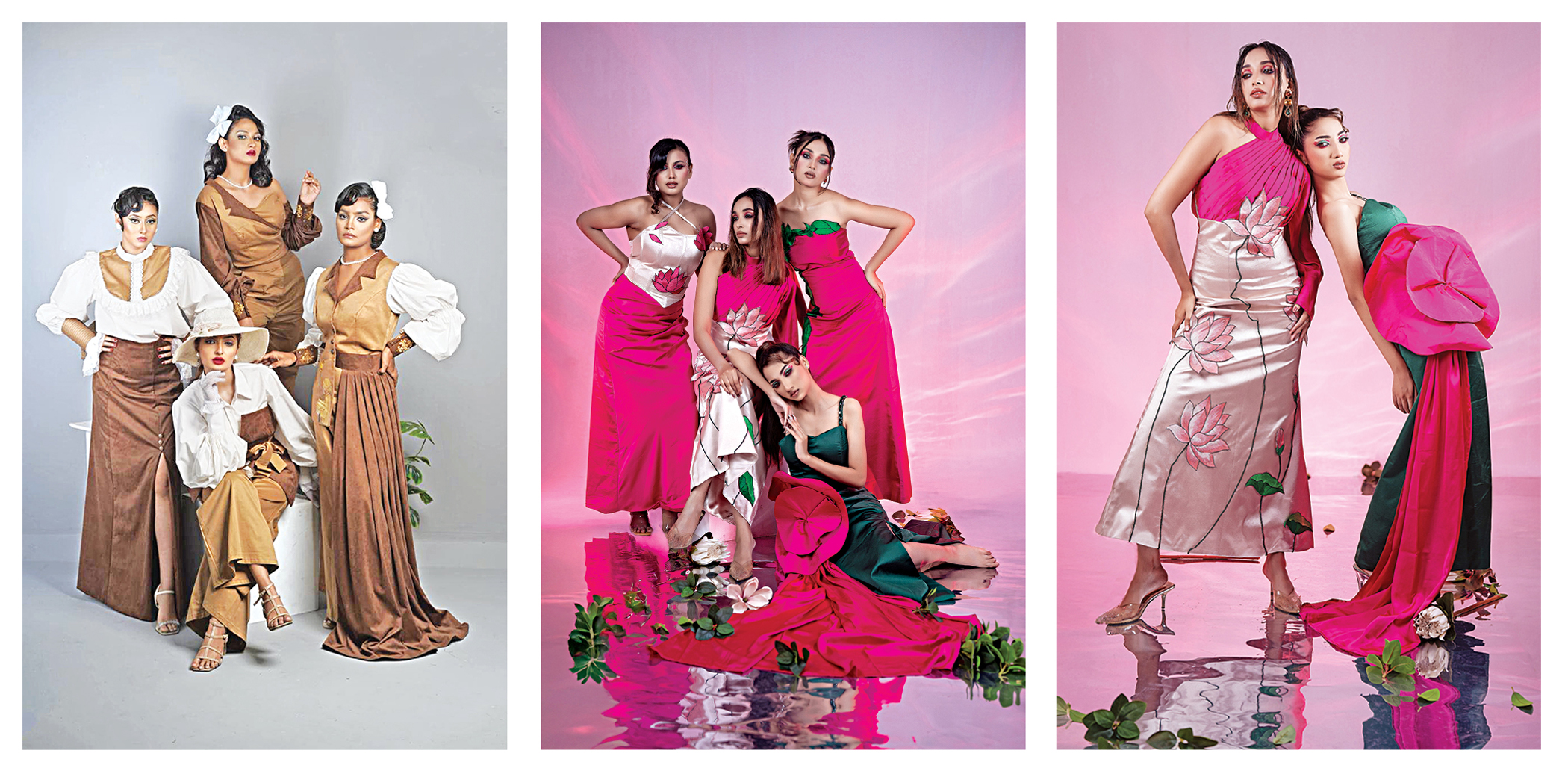
This indicates a departure from earlier trends, where themes used to dominate. A designer would pick a theme, namely “village life,” or “monsoon,” and build a silhouette around that broad category. In many cases, motifs used to be treated as longer ornamental add-ons or afterthoughts attached at the end of the design process. However, the tide is changing, and young designers like Hossen and Jamila are more focused on researching their origins, studying how it has been used across time, and then reinterpreting it through contemporary methods.
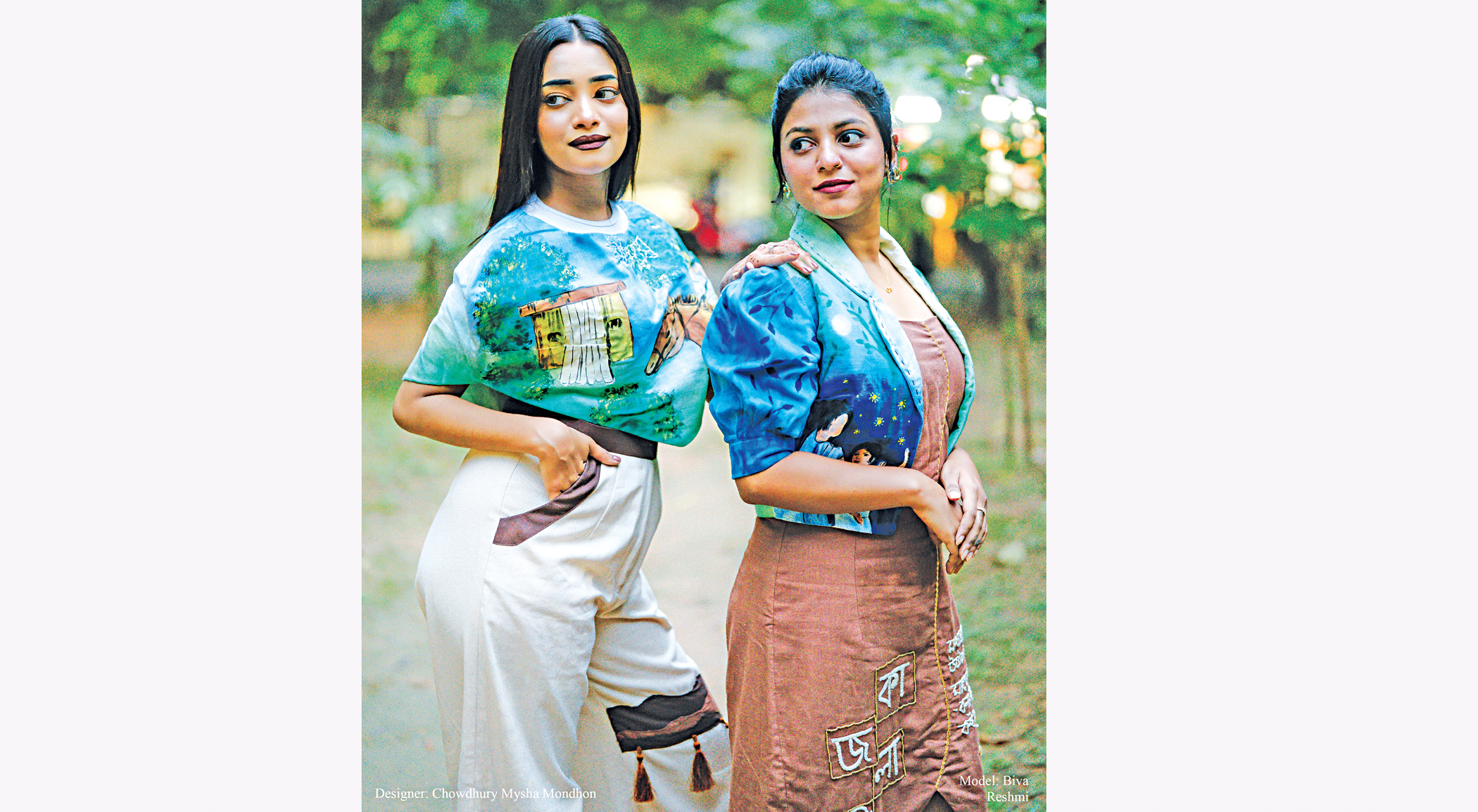
Chowdhury Mysha Mondhon, also a fellow SMUCT graduate, frames her work through cultural signifiers. What interests her are the quieter, less-talked-about expressions, as she points out the almost forgotten art of patachitra.
“I don’t see many collections based on it. I want to highlight my culture more, particularly old art forms like patachitra that are not talked about often,” she remarks. Therefore, motifs are no longer just a decorative aspect of design; rather, young designers are treating them as a carrier of history and context. Most importantly, by focusing on motifs, designers can engage with design at the micro-level with form, proportion, symbolism, and transformation, rather than relying on motifs as safe and expected cultural markers.
Culture, fusion, and the question of identity
“If you ask me what fusion is, I would say whatever is trending,” answers Jamila, who believes that the next wave in the fashion industry will be dominated by fusion. “It’s very present in our culture now. I think it will be presented even more boldly in the future.”
While the distinction between “traditional” and “modern” used to define most fashion conversations, the new generation doesn’t want to stay confined to that argument. For them, it is not just randomly attaching a Western sleeve to a local fabric, but rather, creating work that is legible both locally and globally without losing its roots.
Take, for example, Mondhon, who wants to welcome global trends but not at the expense of local identity. “Above all, I want to uphold my heritage and roots, but I am not afraid to experiment,” she explains.
From the faculty side, Assistant Professor Shohel Anwer Opu at SMUCT sees this negotiation between heritage and global relevance as central to their teaching.
“If our students want to experiment and work internationally, we cannot ignore that. In fact, we welcome them to do so,” he says, adding, “But we cannot distort our heritage.”
According to Opu, young designers should be careful so that motifs are placed deliberately, and heritage is not lost. In other words, the task is not to choose between local culture and globality, but to design in a way that makes them coexist.
Sustainability: Buzzword, reality, or something in between?
 For all latest news, follow The Daily Star's Google News channel.
 Ask any of these young designers about sustainability, and they immediately recognise the word. The question is what it means in practice.
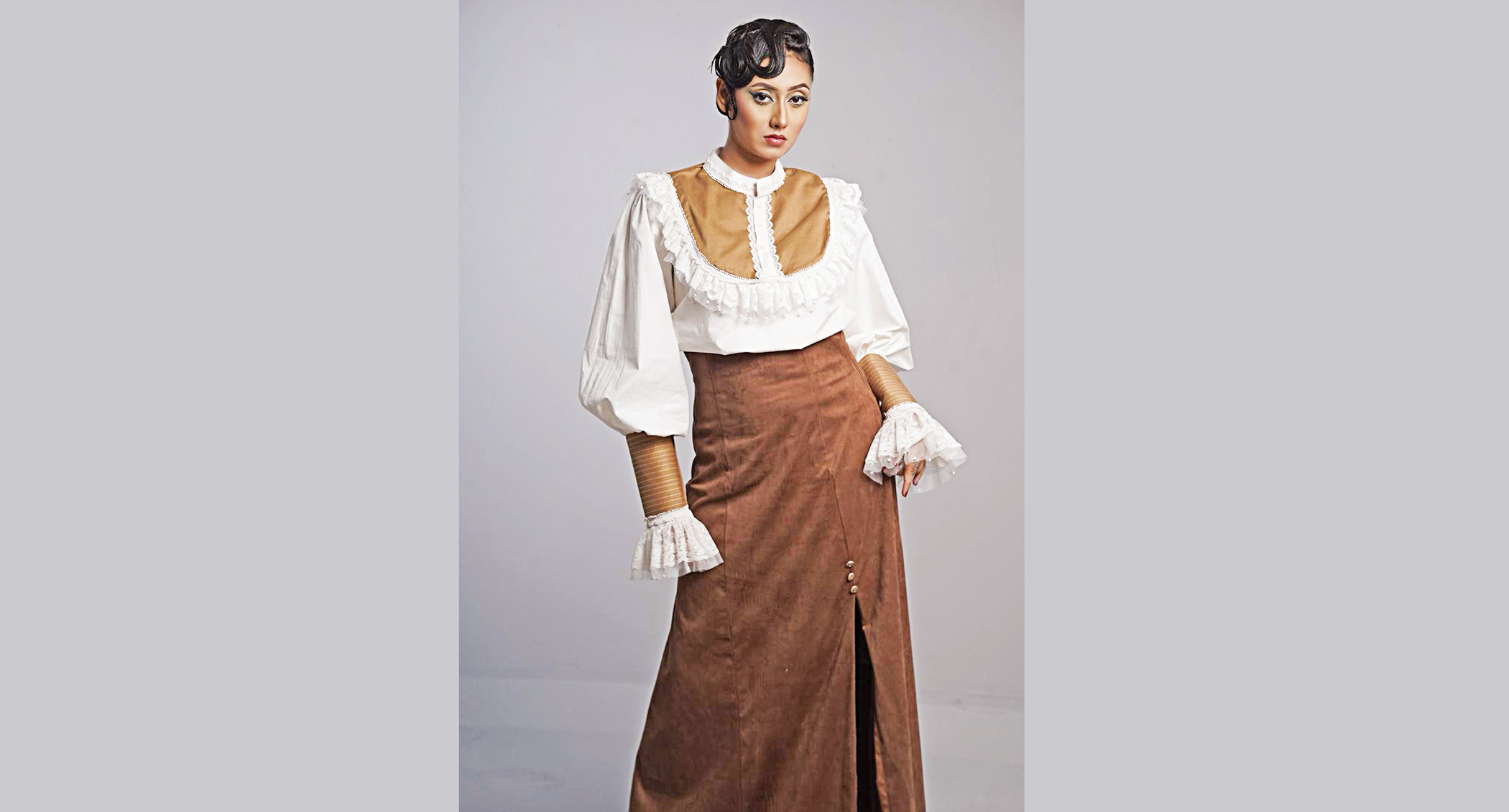
Sustainability, for Hossen, can be expressed through temporal recycling. “People are always looking for better fabrics and a certain standard. I aim to design something with thoughtful materials and a strong concept that meets that standard. This, for me, is sustainability because I am creating eye-catching work without mindless excess.”
Mondhon, however, gives a blunter answer and points out the gap between talk and action.
“Frankly speaking, sustainability is a trendy topic now,” she says. “Everywhere I go, I see people highlighting it. However, I don’t think that when it comes to our country, it is practised that much. In some cases, not at all.”
Jamila encountered sustainability as an academic topic before she saw it in the market. “We studied it and understood how important it is, not just for fashion but for daily life,” she explains. “Fashion is now re-teaching us about sustainability. It’s a good way to start.”
Her perspective is less cynical. She sees the curriculum as a useful entry point for changing habits over time. Across these viewpoints, sustainability is not completely dismissed. Instead, it is treated as an ongoing negotiation between ideals, budgets, and local infrastructure.
What young designers want from the future
When asked what measures would make the lives of young, aspiring designers easier, Hossen doesn’t want any shortcuts. Rather, he answers, “I want stronger foundations.”
According to him, the basics at university — clarity on what they are studying, where they are going, and what their goals are must be taught from day one, not at the end.
He argues, “I believe that if our beginning is strong, our ending will certainly be better.” Alongside this, he wants more reliable access to fabric, accessories, and good guidance.
Financial support is the primary concern for both Mondhon and Jamila, who see the fashion industry as a growing and fragmented sector compared to the RMG industry, which is already an established industry. They both suggest that if more institutions back young designers with sponsorships, grants, or infrastructure, the impact will be transformative. Until then, they have to cope with limited resources.
From the institutional side, Shohel Anwer Opu acknowledges that the industry is still relatively young and unevenly structured. His response is to adjust the curriculum, not pretend the problem doesn’t exist.
“I believe that regular revisions, workshops, and alumni feedback loops are useful for closing gaps between academic training and industry expectations. We are constantly trying to adapt, for example, by the recent inclusion of AI tools,” he elaborates.
What is clear from these viewpoints is that only “wild silhouettes” or “viral collections” alone do not define the new in the Bangladeshi fashion landscape. It is about the young and inquisitive designers who sit sincerely with difficult questions: How do you honour heritage without distorting it? How do you truly make sustainability a part of your design philosophy? And how do you balance global and local trends?
The answers are not neat yet, but they’re being tested every day, stitched into jute-based national-day collections, digitally-inflected water lily motifs, patachitra-inspired garments, and carefully modernised Jamdani.
The new voices of design are still emerging, but their direction is clear: less spectacle, more substance, and intention.
Photo: Courtesy
Comments