


Banglalink begins a bold new era where people come first
[Special content]
Over the past two decades, telecommunications has played a defining role in Bangladesh’s economic and social transformation. What once began as a luxury has evolved into essential national infrastructure, supporting commerce, education, healthcare access, and social connection. As mobile phones and internet access expanded across the country, connectivity steadily shifted from convenience to necessity, becoming an integral part of everyday life.

Banglalink entered the market at an early stage of this journey, when access to mobile communication was limited to a small segment of society. The objective was clear: to widen access and support inclusion. Since then, Bangladesh has moved forward at remarkable speed. Digital adoption has accelerated, mobile internet has become deeply embedded in daily routines, and connectivity now underpins how people learn, work, seek information, and stay connected with one another.
As everyday routines evolved, expectations from service providers changed as well. Connectivity today is no longer judged only by coverage or availability, but by reliability, simplicity, and how meaningfully it supports real needswhether enabling students to continue learning, helping small businesses sustain livelihoods, or allowing families to remain connected across distance and time. Across the industry, networks have strengthened, and systems have improved through significant investment. Yet, as efficiency increased, the experience in many cases became more transactional. While performance indicators advanced, the human element often receded, a gap felt by people who rely on connectivity as a daily necessity rather than a choice.
For Banglalink, this reality prompted a deeper reflection on its role in a changing society. Continued investment in networks and technology remains essential, but it is no longer sufficient on its own. Equal attention must be given to how people actually experience these services in their daily lives. This shift is guided by a principle that now shapes the company’s direction: people come first.
This principle underpins Banglalink’s recent brand refresh. While the updated visual identity is the most visible expression of change, its significance lies in what it represents. The intent is not cosmetic. Rather, it reflects a long-term alignment between business decisions and the lived realities of people, embedding care into everyday interactions rather than treating it as an abstract ideal.
Putting people first means recognising those who quietly keep families, communities, and local economies moving. The shop owner who depends on a steady connection to serve customers. The student who relies on the internet to continue learning. The caregiver who uses a phone to seek advice or reassurance. For them, connectivity is not optional. It is personal, practical, and essential.
Turning this belief into action requires more than intent. It calls for listening more closely, simplifying journeys, and reducing friction in everyday moments. Care is reflected not only in the services offered, but also in how obstacles are removed rather than passed on to people already navigating enough complexity in their daily lives.
Listening therefore sits at the heart of this approach. Following the brand refresh, Banglalink employees stepped out of offices and into communities across the country, engaging directly with customers to better understand where systems fall short and how experiences can be improved in ways grounded in lived reality.
Digital platforms can also become expressions of care. Platforms such as MyBL Super App, Toffee, and RYZE are designed to place opportunities directly into people’s hands, spanning communication, entertainment, and digital learning, with the aim of making technology accessible and meaningful. For instance, through the MyBL Super App, customers can access online doctor consultation services, enabling timely medical advice during moments of uncertainty. For many, this goes beyond connectivity, offering reassurance where access to healthcare may otherwise be limited.
Looking ahead, telecommunications will continue to shape how Bangladesh lives, learns, and connects. Progress should not be judged by speed or scale alone, but by how naturally services fit into people’s everyday lives and how confidently they can rely on them.
Beyond bridging the digital divide, Banglalink is also working to narrow the financial divide by introducing digital payment services that support simpler transactions, a more cash-light economy, and broader participation in the digital economy. With its nationwide reach andparent company VEON’s global capabilities, the company is working to build a secure and inclusive digital payment ecosystem for Bangladesh.Aligned with VEON’s DO1440 ambition, this reflects a wider purpose: supporting people meaningfully across every minute of the day in ways that are practical, dependable, and human.
For Banglalink, this new chapter is about turning care into action in the moments that matter most. It is about earning trust through consistency and human-centred choices. Because when people come first, everything else follows.
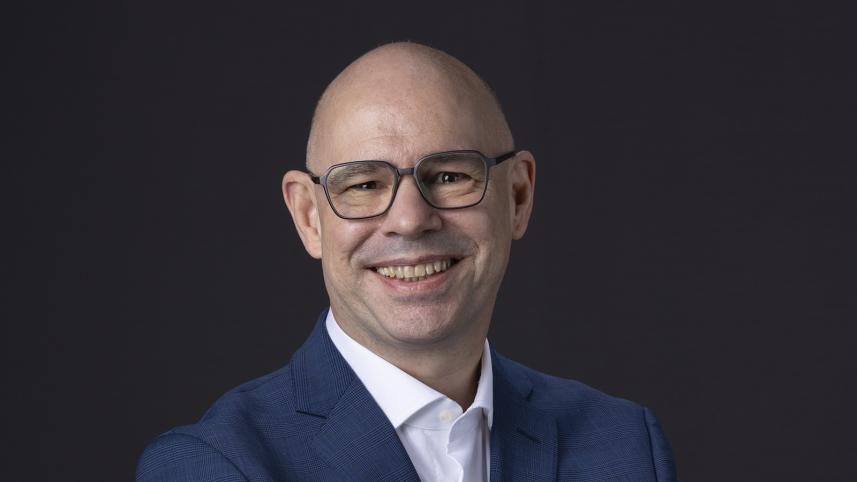
Johan Buse is chief executive officer of Banglalink
 For all latest news, follow The Daily Star's Google News channel.
Comments