


A day trip from Dhaka: 5 places to discover in Munshiganj
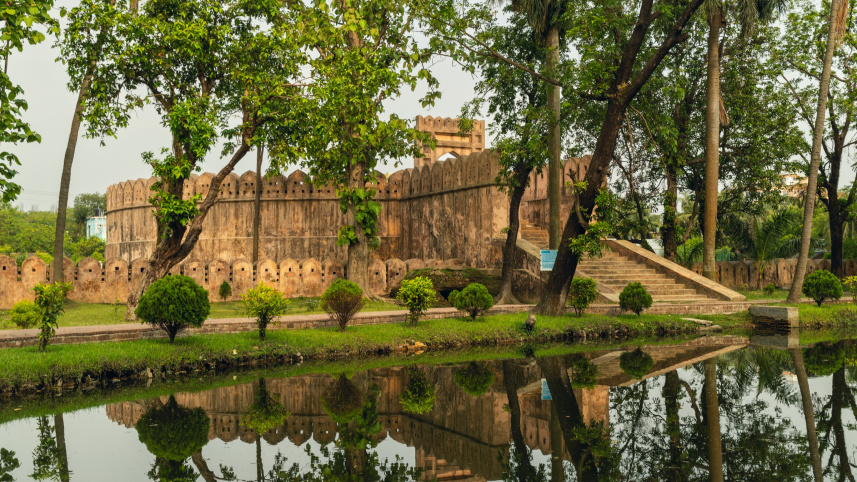
Just a few hours’ drive from Dhaka’s urban tangle, Munshiganj presents itself as a significant piece of Bengal's history. This unassuming district, formerly known as Bikrampur, once thrived as the capital of kingdoms, and still bears the signs. So, if you are looking to experience the rich heritage of Bengal, Munshiganj can easily be your next pick.

Idrakpur Fort: Where Mughal narrative stands still
Imagine arriving at a riverside fort built more than 350 years ago, where Mughal soldiers once waited (and perhaps prayed not to see any) for enemy boats to appear on the horizon.
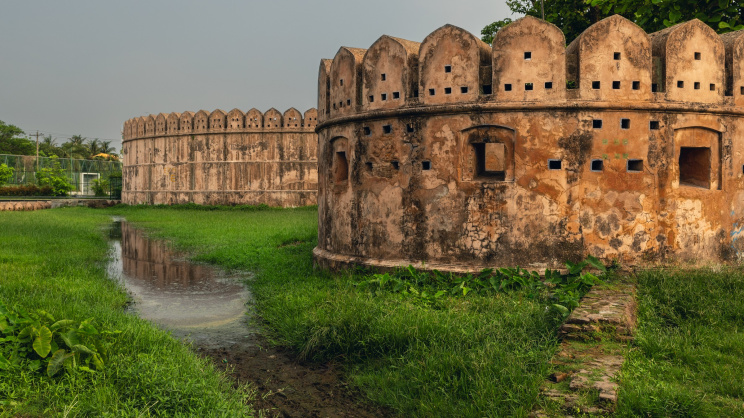
Idrakpur Fort at Munshiganj still stands with its weathered brick ramparts that echo stories of Mughal ambition and warfare. Its battle days are long gone; even the waterbody beside it has dried up. However, step through its arched gateways and the past seems to stir. While running your eyes along the timeworn brickwork, it is easy to imagine boats cutting through the river as soldiers kept watch from the fort.
In the golden hour, when sunlight spills across the aged, rustic walls, shadows gather beneath the arches, and the nearby pond glows beyond the monument; every corner offers a new frame, maybe even a glimpse into the centuries that came before.
Baba Adam’s Mosque: A 500-year-old secret
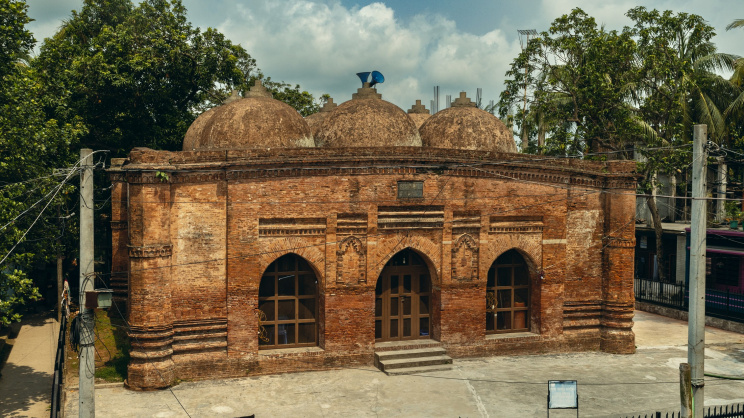
Tucked away in the old town of Munshiganj, Baba Adam's Mosque might not really entice you the moment you hear its name. But built in 1483 during the Sultanate era, this modest structure predates the Mughals, making it one of the oldest surviving mosques in Bangladesh and a rare, tangible link to a nearly forgotten chapter of Bengal's Islamic architecture.
When you step inside, you are met with a sense of peaceful seclusion. There is a stunning ceiling adorned with six intricately designed domes. The graceful curves and terracotta detailing showcase craftsmanship that has withstood over five centuries of monsoons and changing empires. Legends associate the mosque with a Sufi saint, whose story has become intertwined with this site.
Mughal Bridge: The span through time
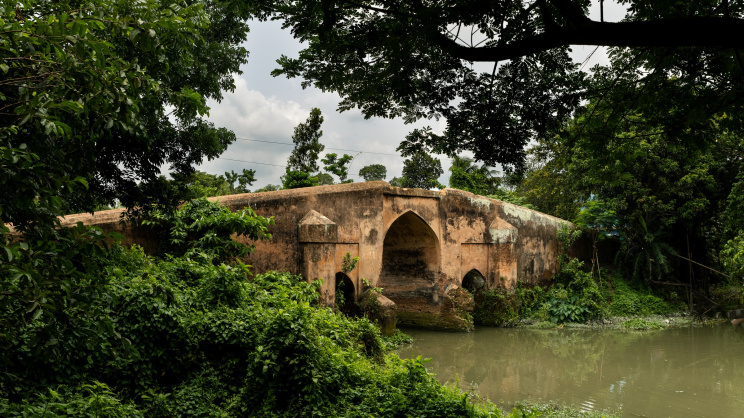
At first glance, this structure may not seem extraordinary at all. It stretches just 53 meters long and features a pointed central arch flanked by two smaller arches. It consists of worn bricks, sturdy octagonal pilasters, and craftsmanship that reflects a bygone era.
You might consider taking a ride through the water beneath the crossing, allowing the boat to carry you toward this historical structure. As you glide past, look up to appreciate the central arch overhead, a view that can easily be underestimated from the shore, yet is surprisingly exhilarating when you are directly underneath it.
What makes this bridge truly fascinating is that it was never intended to be an imperial showpiece. Instead, it served a practical purpose, connecting communities and facilitating daily life across the waterways of Mughal Bengal. Now, it feels surreal to stand over a canal that once rippled beneath the feet of generations of people.
Sonarang Twin Temples
Standing side by side on a single raised masonry platform in the picturesque village of Sonarang, the Twin Temples rise like monuments from folklore, their soaring towers reflected in the moat that wraps around three sides of the ground beneath them. These structures wear their age with striking grace; their walls bear elaborate plaster ornamentation, and the smaller temple features rows of snake heads coiling around every side.
Locals will tell you, partially joking, that the sikharas hide secret treasure chambers guarded by serpents so numerous they could "devour the whole country" if ever released.
Whether you come for the architecture, the eerie story, or simply the sight of two temples mirrored in still water, Sonarang has a way of pulling you in and refusing to let go until you have wandered around it at least twice with a camera in hand.
Nateshwar Buddhist Bihar: Where history resurfaced
In the serene village of Nateshwar in Tongibari, an entire Buddhist city has been buried beneath the soil for nearly a thousand years. This ancient city features pyramid-shaped stupas, wide ceremonial walkways, prayer halls, and mandaps, which archaeologists have only begun to uncover since excavations started around 2010.
Walking through the excavated grounds today, amid the eight-sided stupas and the faint outlines of ancient homes, feels like eavesdropping on a civilisation that traded, worshipped, and constructed in brick and clay long before modern cities came into existence, standing here, watching this thousand-year-old city slowly re-emerge from the earth, it is hard not to feel as though you are witnessing history being rewritten in real time.
 For all latest news, follow The Daily Star's Google News channel.
Comments