


A cup of Dhaka life: Our growing café culture
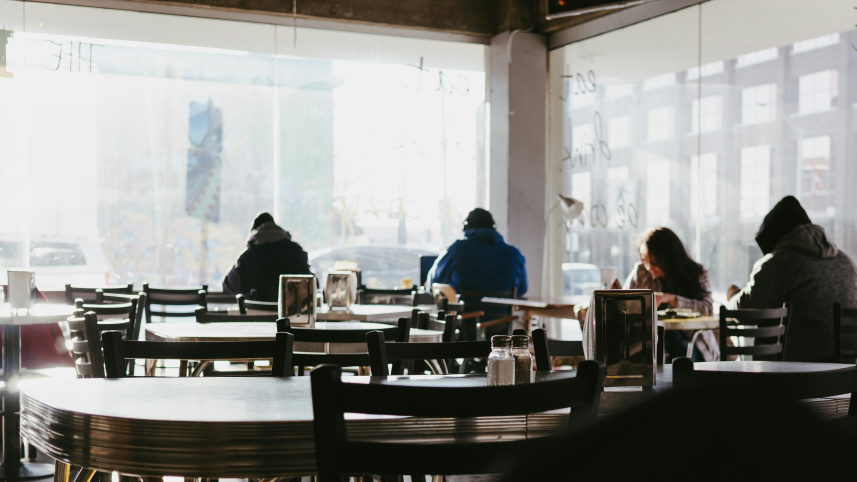
A brownie, an Americano, and a little time to oneself. For many Dhaka residents, the combination has become more than a coffee break. Cafés are increasingly serving as places to work, study, meet friends, escape the office, have a meal, or simply sit alone without having to explain why. Even on a particular public holiday, cafés across the city were buzzing. Students sat with laptops, assignment sheets and poster paper, working on group projects. Couples shared tables, families gathered over meals, friends caught up, and people sitting alone appeared equally at ease in the crowd.
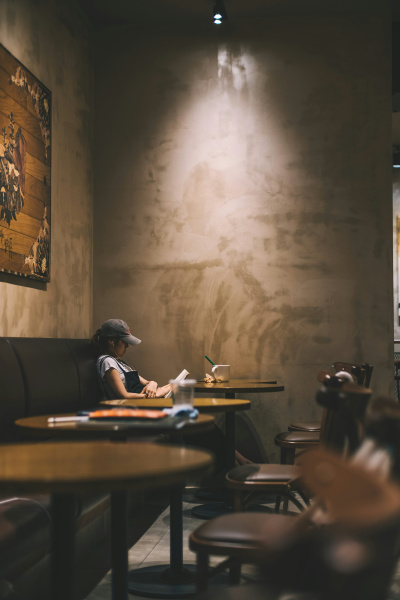

Where the study mood comes
At North End Coffee Roasters’ Dhanmondi 2 outlet, the festive-day rush left few empty seats.
Amid the buzz, third-year BUET students Hafsa Ahmed Esha and Sadik Afroze had managed to find two chairs at the end of a table. They had come for lunch, but studying was also on the agenda.
Why not simply study at home?
“Feel ashe na,” Sadik said, explaining that he simply does not get the same study mood or motivation in his student hall. For him, a café provides something that his room cannot: a comfortable environment where he can eat, study and spend time with friends.
Esha enjoys the food and the adda. Sadik, meanwhile, is drawn to the ambience. Both, however, acknowledged that the habit comes at a cost.
“Food addiction is growing,” Sadik said.
That tension runs through Dhaka’s café culture. These spaces offer comfort, convenience and a sense of belonging, but the experience is rarely free. A cup of coffee, a meal and a few hours of sitting can add up, particularly for students and young professionals.
Yet, people continue to come.
A corner of one’s own
For government teacher Sumaiya Shimu, the attraction is not simply the food.
“Food is available at a lot of places, but what we need is the open space where you can sit comfortably, read books, and have a coffee, and no one will bother you,” she said.
Shimu usually spends around two hours at North End when she deliberately goes there with a book. On the holiday, however, she had come to meet a friend and talk about life.
A flower bouquet sat on her table.
“The cost has gone up, but this much I am willing to give,” she said.
That willingness perhaps explains the staying power of cafés in a city where space is scarce, and privacy is even scarcer.
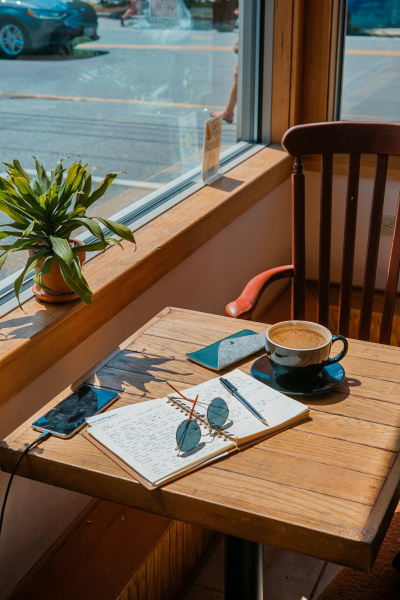
Where nobody asks you to leave
For 35-year-old Jesmin, who works in the development sector, a café can serve an entirely different purpose depending on the day.
She sat alone at a single table, her laptop plugged in and a brownie beside her.
“I come here with different purposes at different times,” she said. “Today I am alone here only to work. I order a brownie and delve into work. Some days I come with friends, and then it will be adda and planning about life.”
 For all latest news, follow The Daily Star's Google News channel.
 It is this flexibility that has made cafés particularly useful to Dhaka’s young and middle-class residents. The same table can become a workstation in the afternoon, a meeting place in the evening and a private corner for someone who simply wants to be alone.
Jesmin also pointed to another advantage: sometimes, she said, people can sit in cafés without necessarily being pressured to keep ordering.
Location and décor are important to her when choosing a café.
For others, it is the atmosphere.
Solitude with an Americano
Rifat Alam, 29, often visits Prezzie on Dhanmondi 27 during his lunch break. He does not come every day, but when he dislikes the menu at his office, the café offers an alternative and, perhaps more importantly, a brief escape.
He orders a salad or a platter, spends some time alone and then returns to work.
“I like to spend time alone,” he said.
In the evening, it may be an Americano.
For Rifat, the location matters, but so does what he calls the “vibe”. By vibe, he means quietness!
That search for a comfortable degree of solitude is one of the more interesting contradictions of café culture. People go to cafés to be around people, but they do not necessarily want to interact with them. They want the energy of a crowd without having to participate in it.
A café allows for precisely that kind of controlled proximity. You can be alone without being isolated. You can work without being at work. You can meet a friend without inviting them home. You can sit among strangers and still feel that the space belongs, at least temporarily, to you. And increasingly, the relationship is not only between customers and the physical space. It is also between customers and the people behind the counter.
Where everybody knows your beverage
At Prezzie’s Dhanmondi outlet, Sajjad Hossain Sagar said regular customers have become a familiar part of the café’s daily rhythm.
“Sixty to seventy per cent of our customers in the evening are our regulars who come here every day,” said the outlet manager.
Some regulars no longer need to explain what they want.
“We remember who likes it black, who likes cappuccino, who likes green tea or who likes honey lemon,” Sagar said.
The familiarity goes both ways.
“They know our names and each customer has their favourite server and asks about them if they do not see them. They ask us how we are doing. If they get back from abroad, they bring us souvenirs like chocolates and T-shirts.”
In a city where interactions between strangers are often fleeting, such relationships may seem insignificant. However, they represent a subtle shift in how urban social spaces function.
A café is not quite a restaurant, where the expectation is to eat and leave. It is not an office, where productivity is the primary purpose. Nor is it home, where one has complete privacy.
At a Delifrance outlet, a shift manager who asked not to be named said students sometimes come in to attend online classes. They may order an Americano and a croissant or another small snack. The coffee, the manager said, helps keep them energised through the class, and perhaps the café environment helps them escape the boredom of attending classes from home.
What happens when a customer stays for hours?
Both café managers said this is not necessarily a problem.
Sometimes, a customer may order nothing more than a bottle of mineral water and occupy a table for hours.
If the café is not crowded, staff generally do not interfere.
The calculation changes during peak hours.
“When there is a rush, we politely ask them to shift to another table,” the managers said.
That small interaction captures the unwritten rules of café culture. Customers expect a certain degree of freedom, while cafés have to balance that freedom against the economics of running a business.
Dhaka is a city where private space is often limited. Apartments are expensive, traffic makes moving around exhausting, and workplaces are not always designed for quiet concentration. For students, shared rooms and halls can make studying difficult. For young professionals, offices can be noisy or restrictive. For people living alone, even an ordinary evening can feel long.
The café fills some of those gaps.
Which is why, if cafés disappeared tomorrow, what Dhaka’s young and middle-class residents would lose would be more than a place to eat.
Perhaps that is what makes the relationship between the city and its cafés feel almost quasi-romantic. There is the anticipation of going, the comfort of being recognised, the familiar order, the favourite table, the ritual of returning. Like most relationships, it offers companionship, a little escape and a place to be yourself. And, like most relationships, it costs money.
Which brings to mind Mohiner Ghoraguli’s ode:
Coffee chhara shunno lage
Café, café, amar priya café…
Comments