


Chickenpox overtakes measles as top health concern in Rohingya camps

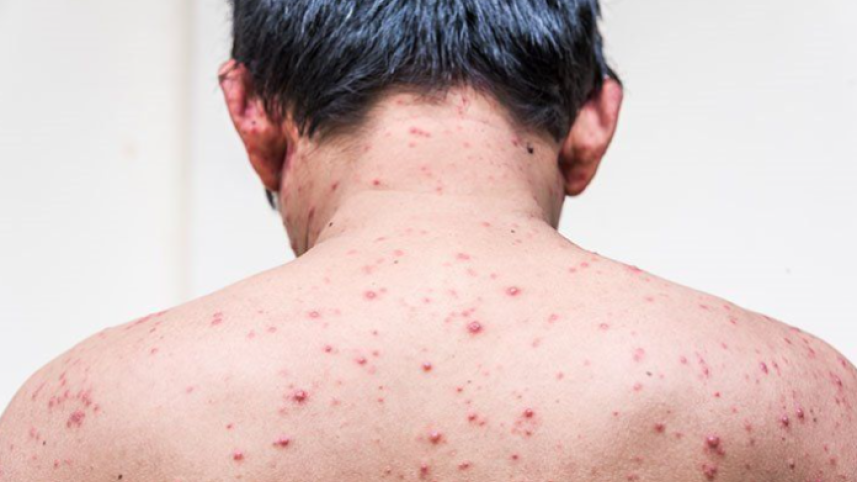
Chickenpox, caused by the varicella zoster virus, has emerged as a growing concern in the Rohingya camps in Cox’s Bazar, overtaking measles as the primary health concern.
Health officials said infections have risen sharply in recent months, spreading rapidly among children in the densely populated camps.

Dr Toha Bhuiyan, health coordinator of Refugee Relief and Repatriation Commission (RRRC), said, “A total of 8,769 people have been infected with chickenpox in the Rohingya camps over the past three months (January to March, 2026). In contrast, only 1,355 cases were recorded in the last six months of 2025.”
He said measles and rubella remain largely under control. “In the past three months, only four children were infected with measles and one with rubella,” he added.
Health officials said routine vaccination programmes have helped contain measles and rubella, but greater awareness and preventive measures are needed to control chickenpox infections.
Dr Toha said regular immunisation for children in the camps is ongoing according to schedule. He added that such diseases tend to increase during this season, although the risk of death from chickenpox remains very low.
Officials said overcrowded living conditions, shared spaces and limited ability to maintain hygiene are accelerating the spread of the disease in the camps.
Nurjahan, a resident of Kutupalong camp, said, “My son suddenly developed rashes, followed by fever. We are trying to keep him separate, but it is very difficult as we all live in one room.”
Another parent, Mohammad Idris, said, “If one person gets infected, others quickly catch it.”
Doctors said chickenpox is a highly contagious disease that spreads more frequently during late winter and spring.
 For all latest news, follow The Daily Star's Google News channel.
Comments