


Children’s safety must be a priority
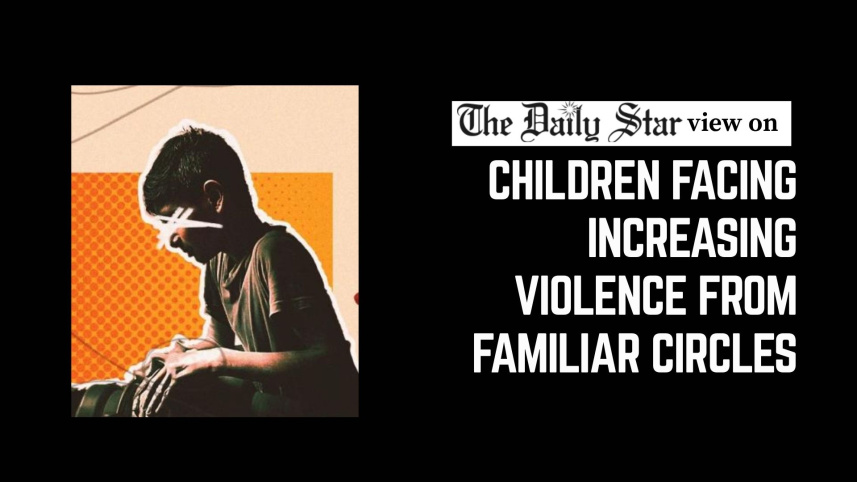
As the nation witnesses an alarming rise in rape, murder and all forms of violent crimes against children, it has become imperative to understand what is driving this rise and how, as a society, we can prevent them once and for all. This month alone, a series of gruesome crimes against children have been reported across Bangladesh. The more recent among them was the horrific rape and decapitation of an eight-year-old child by neighbours in Pallabi, Dhaka. Just days earlier, a four-year-old was allegedly raped and killed by a neighbour in Sylhet. As of this writing, this daily reported the attempted rape of a seven-year-old girl in Savar by a 69-year-old man. Earlier this month, a madrasa teacher in Netrakona allegedly raped an 11-year-old student, resulting in her pregnancy. Such incidents expose the grim reality our children face on a regular basis, with danger lurking almost everywhere.

Analysing news reports from 2025, child rights organisation Shishurai Shob found that nine out of 10 child predators were known to their victims. Immediate neighbours accounted for 40.58 percent of the 308 documented rape cases, followed by acquaintances, teachers or religious instructors, and close relatives, while strangers represented less than 10 percent. Alarmingly, more than 59 percent of sexual abuse cases and 66 percent of documented child murders occurred within homes or family environments—places that are supposed to be the safest for children. ASK data for January-April this year shows that children aged 12 years or below accounted for most rape and murder victims. And disturbingly, in around 10 percent of child rape cases, victims were later killed in an attempt to destroy evidence.
Criminologists note that perpetrators often target children because they are easier to manipulate and less able to communicate abuse. Sociologists have also warned that patriarchal attitudes, objectification of women and children, and spread of exploitative online content have normalised harmful behaviours and reinforced power-based violence. Economic stress and wider social frustrations may further intensify these tendencies, with children becoming the easiest targets. But perhaps the most disturbing factor is the failure of institutions entrusted with delivering justice. Of the 124 child murders documented by Shishurai Shob, only 35 resulted in formal charges and just two ended in convictions. The state must answer for such grave failures.
The government can no longer respond to child rape and murder cases with fragmented, incident-driven reactions. It must ensure justice in every case and treat protection of children as an urgent national priority. At the same time, while public outrage in this situation is understandable, people must not take law into their own hands under any circumstances. Authorities must ensure prompt police action, child-sensitive investigations, stronger forensic capacity, and swift but fair trials that lead to meaningful convictions. Establishing an independent National Child Commission, as proposed by experts, should also be seriously considered. Families, schools, communities, and institutions all have roles to play, but ultimately the state bears the greatest responsibility. Our children cannot continue to pay the price for institutional failures and social indifference.
 For all latest news, follow The Daily Star's Google News channel.
Comments