


Breastfeeding in Bangladesh: Promoting, supporting, and protecting under pressure
In a country where breastfeeding has long been woven into motherhood and survival, Bangladesh now faces a growing challenge: protecting one of the simplest yet most powerful practices for infant health in a rapidly changing society. Nearly every Bangladeshi mother begins breastfeeding after childbirth, yet only around half of infants receive only breast milk during their first six months of life. Experts warn that the progress achieved over decades is quietly coming under pressure.
Breastfeeding is far more than feeding a baby. Health specialists describe breast milk as a child’s first protection against illness. Rich in nutrients and protective substances, it helps babies fight infections from the earliest days of life. It also lowers the chances of deadly childhood illnesses such as diarrhoea and pneumonia, both of which remain major concerns in Bangladesh. Beyond infancy, breastfeeding has been linked to stronger growth, better learning ability and lower risks of obesity and long-term illnesses later in life.

Yet for many mothers, continuing breastfeeding is becoming increasingly difficult. The World Health Organisation (WHO) recommends feeding infants only breast milk for the first six months and continuing breastfeeding alongside other foods for two years or beyond. However, many mothers stop earlier than planned because of social and workplace pressures. Only around 57.4 percent of newborns in Bangladesh are breastfed within the first hour after birth, despite this period being considered crucial for both mother and child.
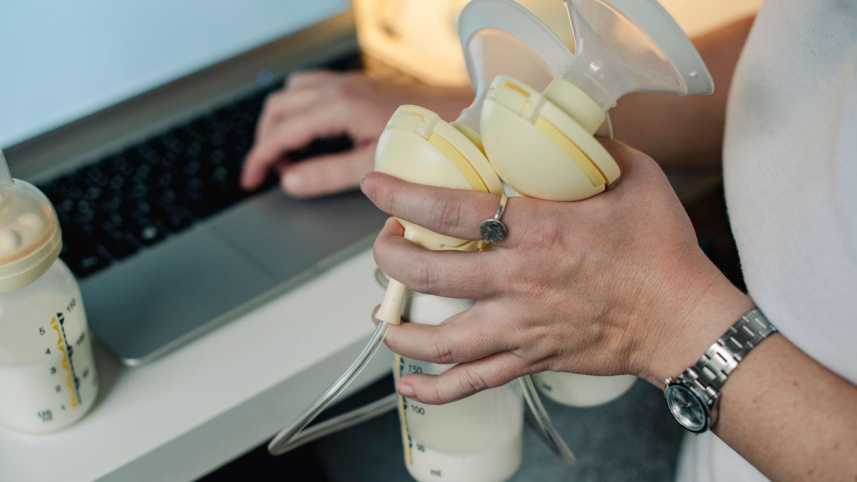
Working women face some of the biggest obstacles. As more women enter offices, factories and service jobs, balancing work and motherhood has become increasingly challenging. Short maternity leave, lack of breastfeeding-friendly workplaces and limited awareness about storing expressed breast milk often force mothers to shift away from breastfeeding sooner than they wish. Many workplaces still lack childcare support or private spaces for mothers, leaving them with little choice.
At the same time, formula milk is increasingly marketed as a modern and convenient alternative. Advertising and social perceptions have contributed to myths that breast milk alone becomes insufficient after only a few months. Public health experts strongly disagree. Breast milk can continue to provide a significant portion of a child’s nutritional needs even into the second year of life.
Experts say Bangladesh now needs stronger action to support mothers rather than placing the responsibility entirely on them. Calls are growing for longer maternity protection, breastfeeding-friendly workplaces, better counselling support and stricter control of formula marketing. Families must also be included in awareness campaigns, as feeding decisions are often influenced by relatives and household expectations.
Public health advocates stress that breastfeeding alone is not enough. Childhood vaccinations remain essential to fully protect children from severe diseases. Together, breastfeeding and immunisation create a stronger foundation for healthier futures.
The writer is a Public Health Nutritionist & Development Sector Worker. The discussion and opinion in this article do not necessarily reflect the writer’s organizational view. E-mail: shabnamf@who.int
 For all latest news, follow The Daily Star's Google News channel.
Comments