


You aren't required to love yourself to accept yourself

I was never, ever satisfied with my appearance. It is not necessarily an insecurity, but I always feel this need to change myself and constantly find myself praying to God to "fix" things that don't naturally change. I feel the guilt of existing in my body as it is. I don't feel giddy when someone stares at me. Instead, I overthink whether something's wrong with the way I look. But why have I always felt this way about myself?
I didn't grow up with media or magazines filled with women looking a certain way. I don't remember wanting to look like them, ever. Then why? How does a small child who cannot even speak properly learn to embody the complex emotion of self-hatred? How does a woman who lives, experiences, and wanders for more than twenty years on this beautiful earth cannot respect the body that takes her everywhere and lets her experience every essence? The answer to my question hit me like a tidal wave. I wasn't born in a body I hate but I was born in a society that loves to make people hate themselves.

I have an excellent memory of my childhood, fortunately or unfortunately. I remember my relatives and neighbours commenting how fat I was in every chance they got, how flat my nose was or how short I was. I sharply remember a male teacher looking at my anklet and saying "this will tear apart" when I was just in ninth grade. But what saddens me the most is not the comments but the pictures of my childhood. I wasn't what they told me about myself at all! I didn't deserve to feel that way about myself. I was meant to live and feel free in my own body. I looked underweight and normal for a child that age. I cannot imagine telling a young person like me that they way she looks is not okay.
Unfortunately, we learn to perceive ourselves by how we are perceived by others. Sociologist Charles Horton Cooley has a theory based on this; the looking glass theory. It says that our self-image is shaped by perceptions of others.
Even now, in every opportunity where the extended family meets, I count down to when someone will comment on how much weight I gained and it happens like clockwork every single time. Which is quite funny because I was never skinny according to them. In fact, these occurrences are not isolated in my family but a common occurrence in brown family gatherings. We all have those aunties and uncles who feel entitled to comment on appearances. They mask these remarks as love and "for your own good" but actually pass down inherited shame. The cycle is intergenerational. Our parents were once told the same things by their elders and normalised this behaviour within our cultural system.
It's quite ironic how in Brown families public shame is disguised as "concern" but has the most unhealthy diet and lifestyle that seems self-destructive. Maybe healing begins when we stop repeating what was said to us. It will start with telling the next generation that their worth doesn't lie within their skin tone or shape but in the way they exist, feel and create.
One of my cousins was morbidly obese and recently got into a healthy weight. And now she has to hear that she lost too much. In every event someone gets remarks about how they got tanned (an extremely negative notion in Bengali beauty standards because of our unhealthy obsession with fair skin) or how they got too skinny etc. In conclusion, you will never be able to satisfy them by changing yourself because their satisfaction lies in commenting something negative about your appearance.
I feel grateful when my shoulder gives comfort to my grieving friend. I feel grateful when I can hug my loved ones. How can we not accept our one only material existence in this cosmos that gave us a place in this infinite universe?
Childhood is the most important period of one's life. This time frame single handedly creates your personality, builds or breaks your confidence and even indicates how your romantic life will be. It shapes how you feel about yourself. I have grown a thick skin since then. The remarks don't affect me anymore. But unfortunately, we learn to perceive ourselves by how we are perceived by others.
Sociologist Charles Horton Cooley has a theory based on this; the looking glass theory. It says that our self-image is shaped by perceptions of others. This is why kids who get constantly compared to other kids grow up thinking they are not enough, this is the same reason why Van Gogh couldn't see the beauty in his art and why I dread living in my own body. "The self" is rarely something that is discovered but it is something reflected back to us. "Self-love" itself is a modern demand, as if the responsibility to feel perfect lies on the individual, not the society that made them feel insufficient.
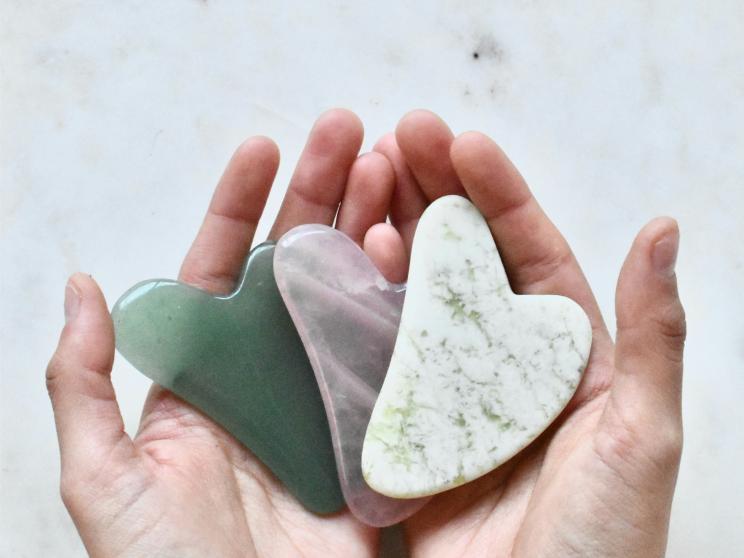
The 22-year-long brainwash I got from my family about my appearance is not easy to rewire, and quite exhausting to be honest. But I have realised, I don't have to find myself beautiful in order to accept myself. Honestly, when I think about it, I am actually grateful to my body. I am grateful because I can look at my mother with my eyes. I am grateful because with my body I can hear my friends talk. I am grateful to my body because it lets me taste "fuchka" and allows me to sing whatever gibberish I want. I feel grateful when my shoulder gives comfort to my grieving friend. I feel grateful when I can hug my loved ones. I thank myself when I can smell the beautiful scent of rain soaked earth. How can we not accept our one only material existence in this cosmos that gave us a place in this infinite universe?
Our bodies were meant to see more than being seen. They are the bridge between the world and the soul. Our bodies are the only home we truly live in. You don't owe the world pretty, but you owe yourself kindness. Today, I hold myself and thank my body for letting me experience this earth and I hope you do too.
Sazida Nahrin Auhona is an undergrad student who lives somewhere between art, literature, and philosophy. You can reach her at auhonanahrin@gmail.com
Send your articles for Slow Reads to slowreads@thedailystar.net. Check out our submission guidelines for details.
 For all latest news, follow The Daily Star's Google News channel.
Comments