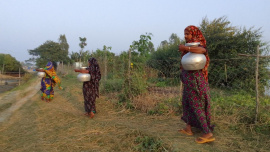
When boys don’t know
In recent years, Bangladesh has made significant progress in destigmatising menstrual hygiene. Yet the reality reflects the harrowing gap that remains to be addressed: globally, 500 million people lack access to adequate menstrual hygiene facilities (World Bank, 2023), and in Bangladesh, one in three adolescent schoolgirls still misses school every month due to menstruation, while only 53% had heard about menstruation before their first period (UNICEF Bangladesh, 2022).
But this is just one side of the coin. In conventional research, we have yet to see the conversation on menstrual hygiene being brought forward to educate and raise awareness among a crucial group: adolescent boys.
While walking through the narrow lanes of Kalyanpur slum in Dhaka, I spoke with 12 adolescent boys aged 15–19 to understand what they knew and felt about menstruation. What emerged was a picture of silence, stigma and missed opportunities.
Learning from whispers, not from schools
Two-thirds of the boys had some idea about menstruation from friends, Facebook reels and television dramas. Not one mentioned learning about it in school. This is unsurprising. Although the National Curriculum and Textbook Board (NCTB) includes basic puberty content in grades six to ten, these chapters are routinely skipped by teachers who feel culturally ill-equipped (The Daily Star, 2023). Where content does exist, girls are taught in segregated sessions, while boys receive nothing comparable. Adolescent Sexual and Reproductive Health programmes in Bangladesh have historically focused predominantly on girls (Population Council, 2017), creating a structured information gap: boys are not uninformed by accident; they are deliberately excluded.
One boy confused sanitary pads with nappies. Another recalled a television scene of a girl’s stain but remembered only the embarrassment, not the biology. Knowledge about menstruation and nutrition was even less explored; only two boys vaguely suggested that girls might need more iron. Yet iron deficiency is the most prevalent nutritional deficiency in the world, disproportionately affecting women of reproductive age because monthly blood loss more than doubles their dietary iron requirements (Percy, Mansour, & Fraser, 2017; Fernandez-Jimenez et al., 2020). In informal settlements like Kalyanpur, where food insecurity is chronic, this gap has real consequences. These boys, on the precipice of adulthood and future husbands and fathers making household decisions, remain unaware of the nutritional needs of the women beside them.
The veil of embarrassment
Eight of the twelve boys were uncomfortable discussing menstruation, describing it as a “girls’ matter”, private, embarrassing and off-limits. This discomfort is not incidental. Gender sociologists have long observed that boys are socialised to treat menstruation as belonging to a “female sphere” they should not enter (Johnston-Robledo & Chrisler, as cited in Bobel et al., 2020). Goffman’s theory of stigma explains this further: shame around menstruation emerges not from biology but from the interactional space, enacted through exclusion and the anticipation of ridicule (Bobel et al., 2020). A 2022 Plan International survey across multiple countries found that more than one in three boys believes periods should be kept secret (Plan International, 2022).
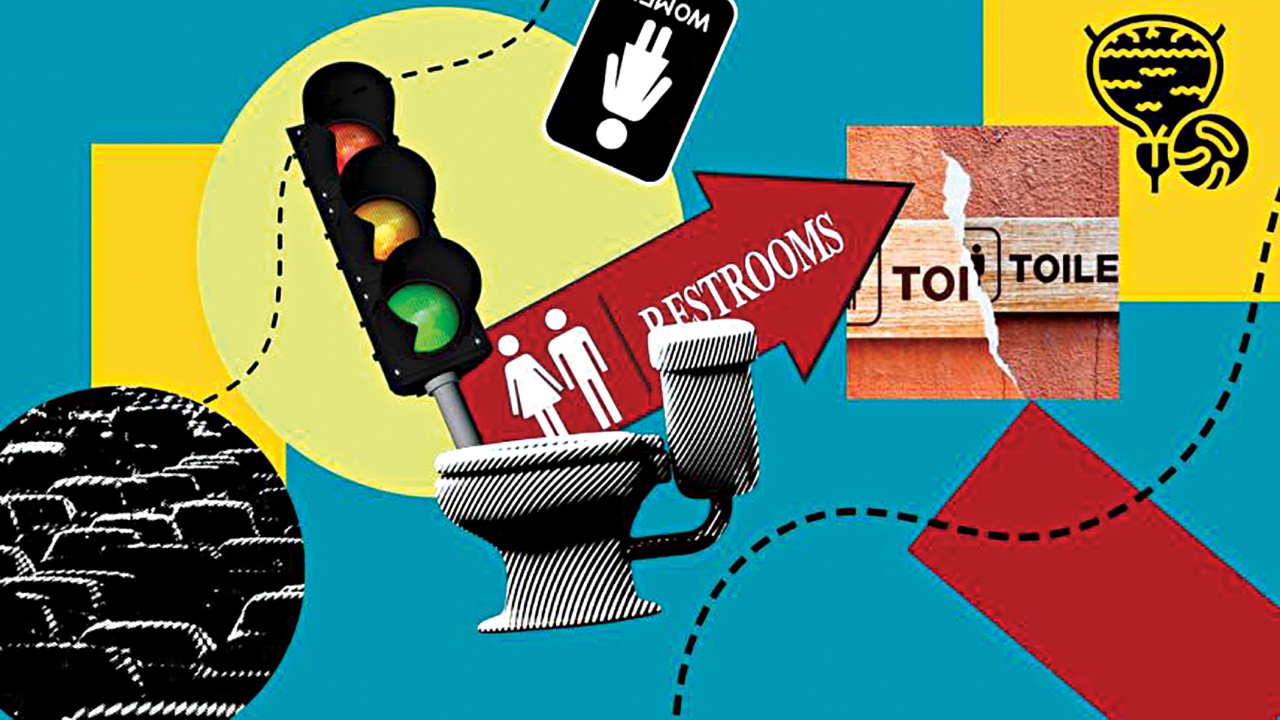
The effects are evident. In the cases we considered, the boys confessed that teasing accompanies stains at school because boys simply do not understand what is happening. Stigma breeds where there is ignorance. In a pilot study conducted in Bangladesh, it was found that if boys are incorporated into MHM discussions, bullying is reduced and boys begin to raise concerns with teachers if they see signs of discomfort emanating from their peers (Khan et al., 2023). The Government of Bangladesh’s own National MHM Strategy (2021), under which MHM discussions are being conducted, has identified male engagement as one of its guiding principles; however, it has not been fully implemented (MoHFW, 2021).
A quiet shift
Yet the story does not end in pessimism. Seven boys described menstruation as a natural process that should not be shameful. Ten out of twelve expressed a clear desire to learn more. “I’d like to start from the basics and learn everything properly,” one said, recalling how girls were taught separately while boys were left out. “If it had been shared with everyone, it would have helped.” Their curiosity signals something important: boys are not resistant to inclusion. They are waiting for it.
Can boys be part of the solution?
When asked if they could support menstruating girls, five said yes, that they could buy pads, offer help and reduce embarrassment. Seven felt they had no role, not because they were indifferent, but because they lacked knowledge. “If I know about things, I can surely help,” one boy said. The divide was not ideological. It was informational.
Evidence confirms this. In Uganda, including boys in school health clubs focused on menstrual health reduced bullying and turned male students into active supporters (Plan International, 2022). In Bangladesh, a quasi-experimental study is currently testing the effects of involving male family members in menstrual hygiene management, with the expectation that greater male awareness will reduce stigma and improve outcomes (Murshid et al., 2023).
Beyond pads and policy
Bangladesh has made commendable strides in promoting menstrual hygiene management. The Bangladesh Bureau of Statistics’ 2018 National Hygiene Survey reported that 97% of women had a place to wash and change during their periods. Between 2014 and 2019, the proportion of women using old cloth during menstruation dropped from 85% to 63%. School absenteeism among girls due to menstruation fell from 40% to 30% over the same period (BBS, 2018; The Daily Star, 2022). Bangladesh was one of only two countries out of 46 to report on Menstrual Health Indicators for the UN’s Joint Monitoring Programme in 2021 (The Daily Star, 2022). Most significantly, the Government of Bangladesh released its National Menstrual Hygiene Management Strategy in 2021, signalling an institutional commitment to systematic MHM across the WASH, health and education sectors (MoHFW, 2021). Yet infrastructure and product distribution alone cannot dismantle silence. Cultural taboos, gender norms and educational gaps must be addressed alongside physical facilities.
There should be education on reproductive health for both girls and boys. Community-level projects by NGOs, adolescent-led clubs and “uthan boithok” should specifically target boys. Teachers and parents should be encouraged to discuss the topic with girls without hesitation or shame.
The boys I spoke to are not dismissive. They are curious. They asked me questions about cramps, nutrition, length of time and how they could help in the future. They spoke about how schoolboys laughed and asked how they could change this.
When boys are left out of the lesson, girls carry the burden alone.
Breaking the silence means bringing boys into the classroom, into the conversation and into shared responsibility. Only then can menstruation move from being a whispered topic in slum alleyways to one discussed with knowledge, dignity and respect.
Dr. Mosharrat Monima is a research associate at BRAC JPGSPH and a dental surgeon by training. She can be reached at monimasami@gmail.com.
Send your articles for Slow Reads to slowreads@thedailystar.net. Check out our submission guidelines for details.
Why Dhaka cannot simply ban the rickshaw
The elephants had to be rescued again. Where is the accountability?
‘Situation under control’, but at whose expense?
The untold side of Bangladesh's climate migration
Dhaka's unbearable heat: Who suffers the most?
Enforced disappearance in Bangladesh / Who investigates the state?
Gibbons, kingfishers and the changing world of Adampur Reserved Forest
More than refugees: How Rohingya youth are reclaiming their story
Behind every cup / The mental toll on women tea workers