The untold suffering of Bangladeshi workers during Hajj

Every year, the holy cities of Makkah and Madinah transform into the spiritual heart of the Muslim world. Millions of pilgrims arrive from across continents to perform Hajj, one of the most sacred obligations in Islam. Television screens become filled with images of devotion: pilgrims circling the Kaaba, prayers echoing through the Grand Mosque, and stories of spiritual fulfilment shared across social media. Yet beneath this powerful narrative of faith and piety lies another reality, one that often remains invisible.
For many Bangladeshi migrant workers living in Saudi Arabia, the Hajj season represents both a deeply religious occasion and a period of growing uncertainty, fear, and suffering. I came to Makkah during the Hajj season and personally observed the worsening conditions and suffering experienced by many workers surrounding the city.
In recent weeks, several videos circulating on social media have shown distressed Bangladeshi workers describing sudden detention, deportation, and forced relocation during the Hajj season. Many claim they were stopped by authorities without clear explanations, questioned over documentation, or removed from areas surrounding Makkah despite years of working and living in Saudi Arabia. Some workers describe being detained simply because they lacked updated permits or proper authorisation to remain in restricted zones during Hajj operations. As a migrant researcher, I see this not merely as isolated incidents of hardship, but as a deeper layer of labour exploitation embedded within migrant governance systems.
One major reason behind this worsening situation is the tightening of border control and mobility restrictions around Makkah during the Hajj period. Entry into the holy city becomes highly regulated, requiring special authorisation documents commonly referred to as the Makkah Entry Permit, known as ‘Tasreeh’. Workers without proper permits, or those whose employers fail to arrange them in time, become exposed to police checks, detention, and immediate deportation.
A recurring complaint among workers is the lack of coordination and responsibility from kafeels, or sponsors. Some workers report being instructed to continue working in restricted areas without proper permits. Others describe being abandoned after arrests, unable to contact employers or seek legal clarification regarding their status. This creates what many migrants experience as a vicious cycle within the Kafala system: dependency on sponsors, lack of labour protection, insecure legal status, and constant fear of detention or deportation.
For many Bangladeshi workers, obtaining these permits is not always straightforward. Their legal and mobility status often depends entirely on employers or sponsors under the Kafala system, which continues to shape labour governance across much of the Gulf. In many cases, workers have little control over documentation processes, residency renewals, or workplace permissions. If a sponsor delays paperwork, refuses cooperation, or abandons responsibility, workers become trapped in administrative uncertainty despite having committed no crime.
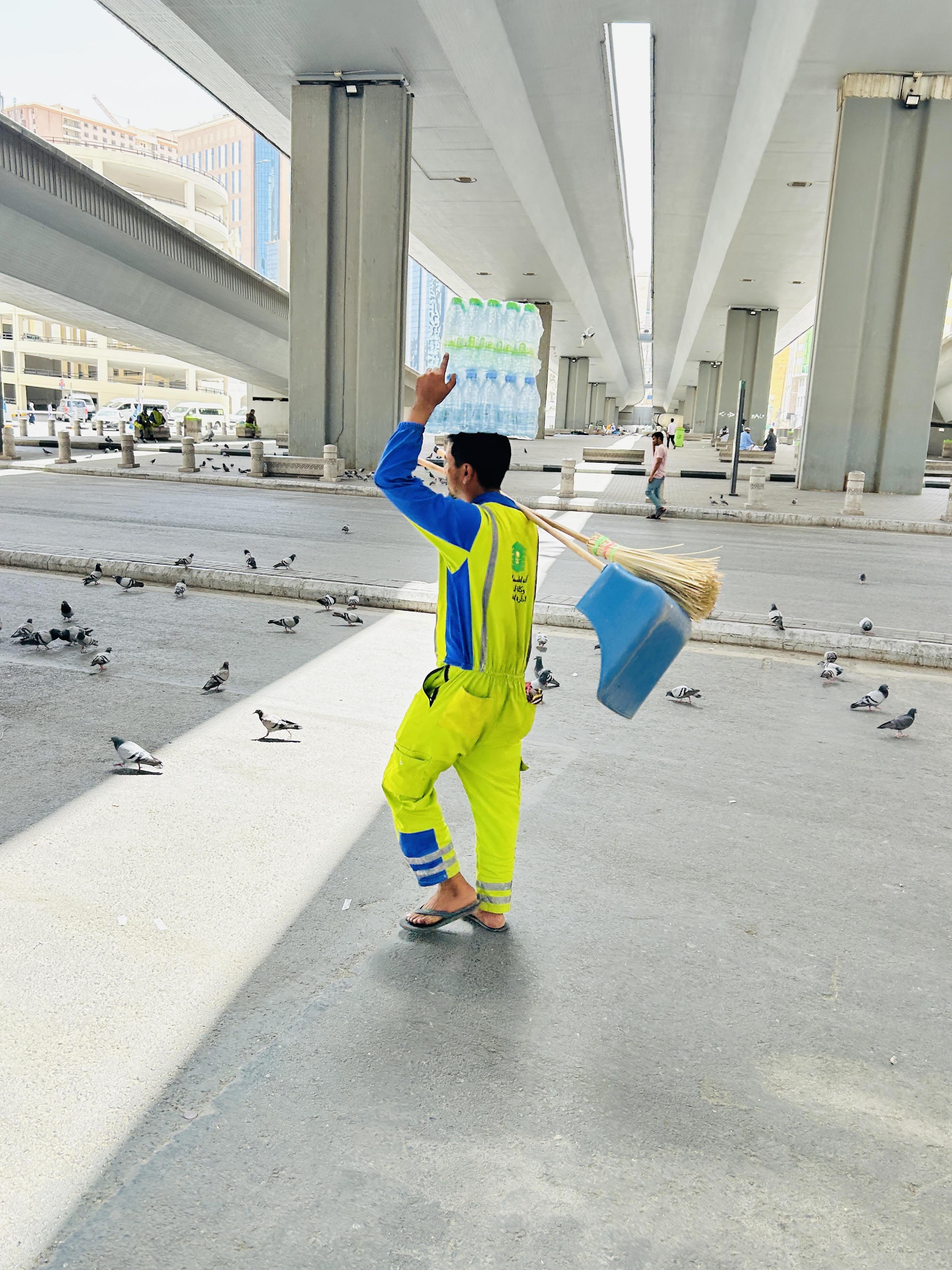
The problem is further intensified by precarious working conditions. Many Bangladeshi migrants work in low-paid service jobs such as cleaning, food delivery, construction, or informal labour within the pilgrimage economy. Their employment conditions are often unstable, lacking written contracts, job security, or access to legal support. During Hajj, when regulations become stricter and surveillance increases, these fragile conditions become even more dangerous.
A recurring complaint among workers is the lack of coordination and responsibility from kafeels, or sponsors. Some workers report being instructed to continue working in restricted areas without proper permits. Others describe being abandoned after arrests, unable to contact employers or seek legal clarification regarding their status.
This creates what many migrants experience as a vicious cycle within the Kafala system: dependency on sponsors, lack of labour protection, insecure legal status, and constant fear of detention or deportation. In such situations, workers become highly vulnerable not because they intentionally violate regulations, but because the system itself leaves them exposed.
What makes this issue particularly painful is the symbolic context in which it unfolds. Hajj represents unity, equality, and compassion within the Muslim ummah. Pilgrims wear the same garments regardless of race, nationality, or class, embodying the Islamic ideals of human dignity and collective brotherhood. Yet behind the scenes, many migrant workers who sustain the very infrastructure of the pilgrimage economy remain marginalised and invisible.
These workers clean hotels, transport goods, prepare food, maintain roads, and provide countless forms of labour that make the Hajj operationally possible. Despite their contribution, their hardships often go unnoticed amid the broader public celebration of the pilgrimage.
The plight of migrant workers during this sacred season should concern not only labour rights advocates but also wider Muslim societies committed to the values of insaf, including compassion and fairness.
The worsening conditions facing Bangladeshi workers in Saudi Arabia require urgent attention from both Saudi and Bangladeshi authorities. The Ministry of Expatriates’ Welfare and Overseas Employment and the Bangladeshi consulate in Saudi Arabia should thoroughly investigate recent reports of detention, deportation, labour abuse, and permit-related vulnerabilities affecting migrants during Hajj. More importantly, there is a need for stronger diplomatic coordination and sustained collaboration with Saudi stakeholders to ensure that migrant workers are protected from arbitrary treatment and systemic exploitation.
What makes this issue particularly painful is the symbolic context in which it unfolds. Hajj represents unity, equality, and compassion within the Muslim ummah. Pilgrims wear the same garments regardless of race, nationality, or class, embodying the Islamic ideals of human dignity and collective brotherhood. Yet behind the scenes, many migrant workers who sustain the very infrastructure of the pilgrimage economy remain marginalised and invisible.
Labour governance during Hajj must include transparent communication, fair documentation procedures, legal assistance mechanisms, and protections for vulnerable workers whose livelihoods depend on seasonal mobility. Employers and sponsors should also be held accountable for failures in permit arrangements and labour responsibilities.
As the world watches the sacred rituals of Hajj unfold, it is equally important to remember the hidden labour that sustains this vast pilgrimage every year. Beyond the images of devotion and spirituality lie the untold stories of migrant workers navigating fear, uncertainty, and invisibility. Their suffering should not remain outside the moral imagination of the Hajj experience.
Abdul Aziz, PhD, is a Lecturer at the School of Arts and Social Sciences, Monash University Malaysia. His research focuses on digital media, migration, and intercultural studies. a.aziz@monash.edu
Send your articles for Slow Reads to slowreads@thedailystar.net. Check out our submission guidelines for details.
Enforced disappearance in Bangladesh / Who investigates the state?
Gibbons, kingfishers and the changing world of Adampur Reserved Forest

More than refugees: How Rohingya youth are reclaiming their story
Behind every cup / The mental toll on women tea workers
From Shyamnagar to Kurigram: Women work, but where is the income?
Waiting for April: The other side of migration in the Sundarbans
Where have Bangladesh’s hilsa gone?

Lead poisoning in Bangladesh: A crisis ignored for too long
Who recycles Bangladesh’s garment waste?