Sea widows: When fishermen never return from the sea
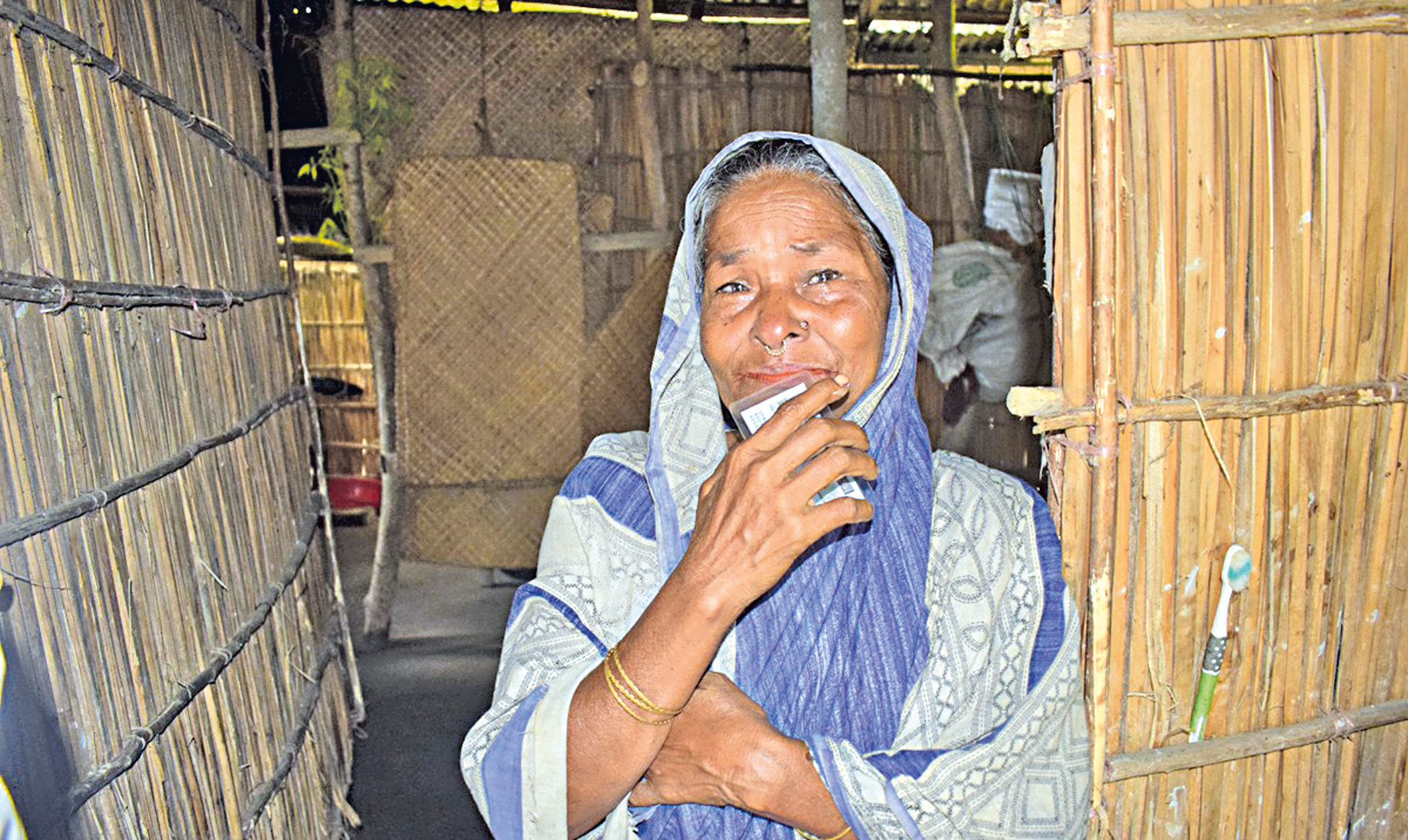
“I’m struggling to make a living with my orphaned children. I have endured financial crises and social barriers over the years. I have been waiting for my missing husband for nineteen years. I still hope that my husband will return and all our problems will end.”
‘Sea widow’ Machuma Begum, 45, said these words in front of her dilapidated house. Her house stands outside the embankment in Charlathimara village of Patharghata upazila (sub-district) in Barguna district. Her husband, Hasan Pahlan, was a fisherman. Machuma always feared the dangers of his going out to fish at sea. But with no alternative means of earning a livelihood, Hasan continued fishing in the sea to support his family. Machuma’s fears became reality on the night of Cyclone Sidr on November 15, 2007. Hasan never returned after going to sea that night.
“My waiting never ends. After Cyclone Sidr, whenever I heard news of a dead body being found in the area, I rushed there. But I never found my husband’s body anywhere. Since then, the burden of the entire family has fallen on my shoulders. I did not know how we would survive. Everything was in disarray — we had no place to live and no means of earning a livelihood. In the meantime, so many years have passed raising my children,” added Machuma Begum.
There are many women like Machuma Begum across the coastal regions of Bangladesh, living with endless grief and uncertainty. Many continue to wait for husbands who never returned from the sea. Cyclones are not the only cause of these disappearances. Every year, countless fishermen go missing while fishing at sea due to low-pressure systems, tidal surges, and other maritime accidents. The burden of these tragedies falls overwhelmingly on women like Machuma Begum, who are left to shoulder families alone.
Scientists warn that the dangers at sea are likely to intensify further in the coming years. The study titled Climate Change as Observed in the Bay of Bengal highlights the growing risks in the sea linked to climate change. Another study by the World Bank examines how climate change is affecting fishermen who depend on the sea for their livelihoods.
The days of hardship are endless
Women like Machuma Begum can be found throughout the coastal belt — in Patharghata of Barguna district, Kalapara of Patuakhali district, Charfason of Bhola district, Sandwip of Chattogram district, and Kutubdia of Cox’s Bazar district. Many people refer to them as ‘sea widows’, women whose lives have been devastated by the sea.
During a field visit to the coastal village of Char Manohar, grief seemed to linger in every corner. From one household to another, the same stories of loss and uncertainty emerged, casting a heavy shadow over the entire community. Located in Mujibnagar Union of Charfason upazila in Bhola district, the village was devastated in 2020 when seven fishermen from the area went missing at sea. Years later, the pain of that tragedy still shapes everyday life in the village.
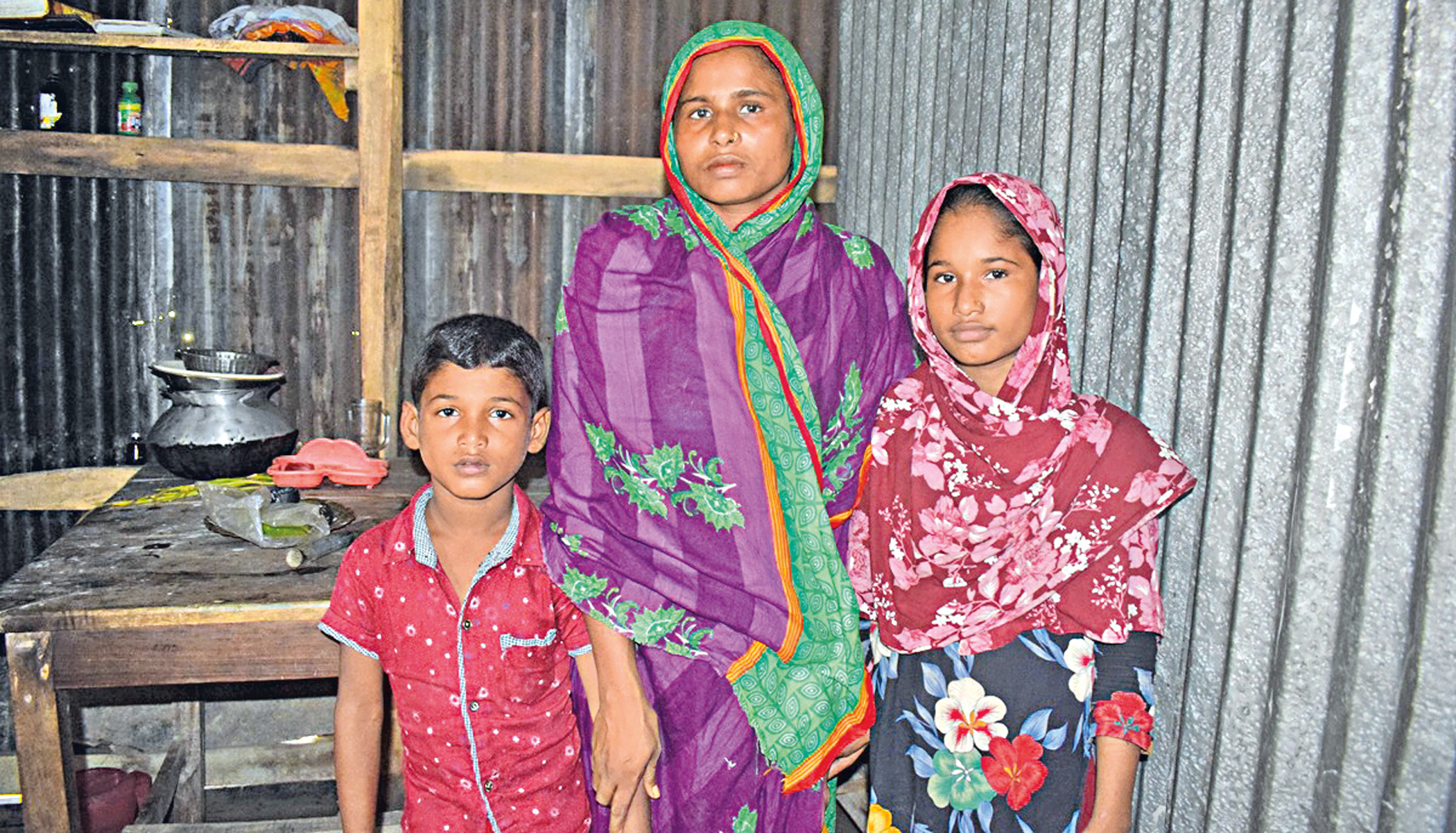
Hasina Begum, the wife of missing fisherman Zakir Hossain, now lives in a dilapidated two-room house with her three daughters. She does not know how the family will survive or how she will repay the three-lakh taka loan left behind by her husband. Another missing fisherman, Alamgir, left behind debts amounting to sixty thousand taka. With no earning member in the family, his wife, Rifa Begum, now struggles helplessly to survive. The families of the other missing fishermen are facing similar hardships.
Another such tragedy occurred in 2019 in Uttar Madraz village of Jinnagar Union in Charfason upazila. Usually, reports of a missing trawler or fisherman appear only as brief news items in the media. Yet behind those short reports lie far larger stories of helplessness, loss, and uncertainty within the fishermen’s families. Few people search for them afterwards. This reporter met the families of missing fishermen in several coastal areas, including Kutubdia, Sandwip, Ramgati, Hatia, and Monpura. Almost every family was living through the same cycle of loss, uncertainty, and economic hardship.
The growing dangers facing fishermen
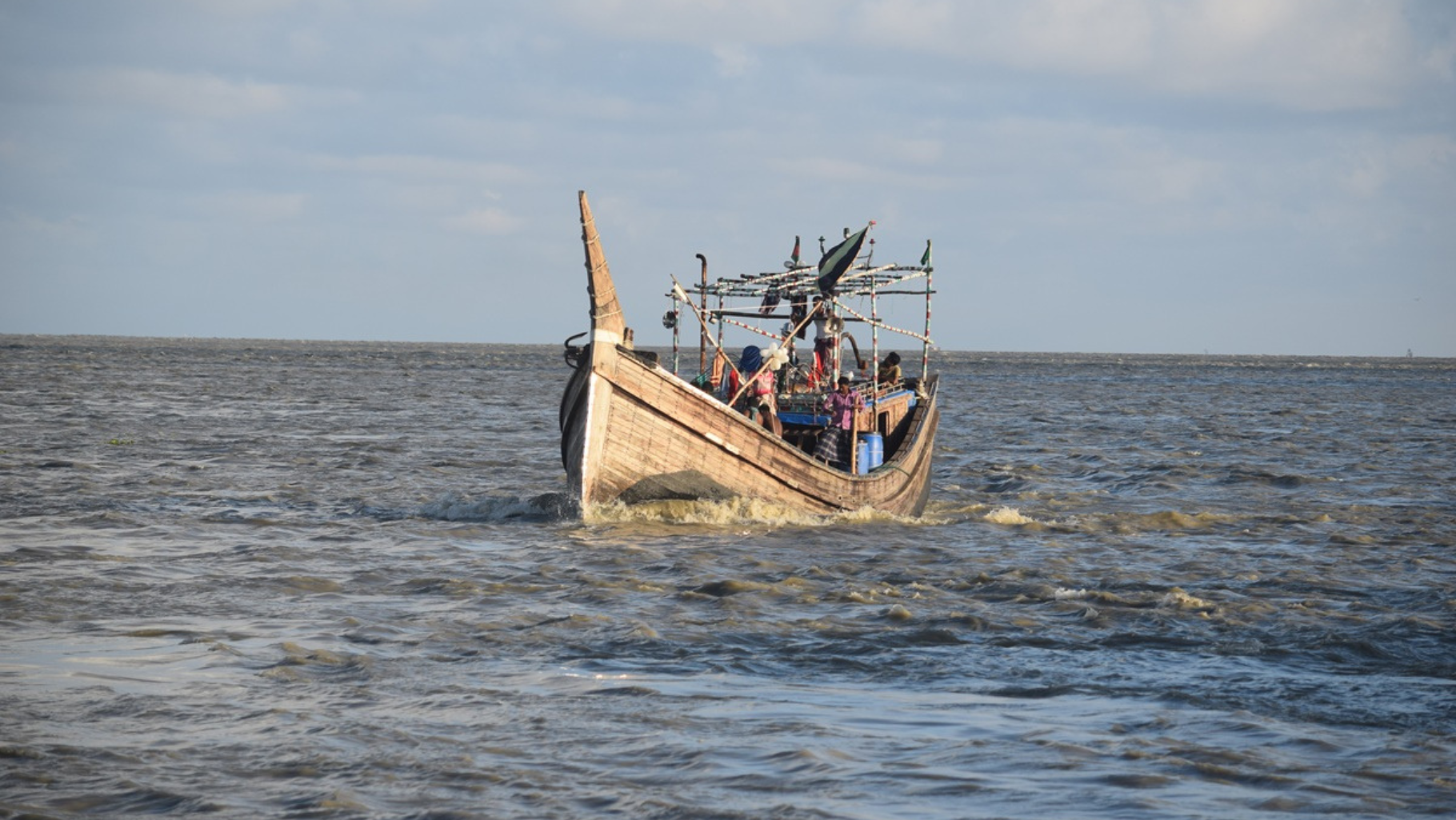
Even as the dangers of the sea continue to rise, fish stocks are steadily declining. This is severely affecting the livelihoods of coastal fishermen. Despite mounting risks and shrinking catches, many fishermen have no option but to continue going to sea in order to survive. A study titled Dwindling Coastal Fisheries Biodiversity of Bangladesh: The Causes and Effects states that coastal fish stocks are being overexploited and that many species are rapidly declining. The contribution of the marine sector to the country’s fisheries economy is decreasing every year. About 28% of coastal fish assessed by the IUCN (International Union for Conservation of Nature) are now listed on the IUCN Red List of ‘Threatened Species’.
The number of missing fishermen is rising
Every year, many fishermen go missing due to various natural hazards at sea. The sea is becoming increasingly turbulent, and the level of danger continues to rise. Nuruddin, a fisherman from Charfason in Bhola district, said, “We have been going to sea to fish since childhood. Earlier, we were not afraid, but now going to sea feels frightening. I cannot say whether it is because of climate change, but the sea has become rougher than before. We face accidents because warning signals often do not reach us in time. I myself have experienced several accidents.”
There are 19 districts in the coastal region of Bangladesh. Among them, Cox’s Bazar, Chattogram, Noakhali, Lakshmipur, Bhola, Patuakhali, Barguna, Pirojpur, and Bagerhat have the highest concentrations of sea-going fishermen. More than one million people are engaged in fishing along the coast. As accidents at sea continue to increase, so too does the number of missing fishermen. However, these numbers are not being properly documented anywhere.
The local administration in Patharghata upazila of Barguna district has prepared a list of missing fishermen. According to the list, 200 fishermen went missing while fishing in that upazila between 1993 and 2024.
Shafiqul Islam Khokon, a local journalist involved in preparing the list, said, “This list has been prepared to help connect the families of missing fishermen with different forms of government and private assistance. We have witnessed the extreme hardship faced by these families. In many households, there is no earning member left. Women are struggling to support their families under very difficult circumstances.”
The issue of missing fishermen along the coast of Bangladesh is also an important example of Non-Economic Loss and Damage (NELD), a subject now increasingly discussed in international climate negotiations.
The urgent need for rehabilitation
Local sources say that the families of missing fishermen often suffer even more than the families of deceased fishermen. If the body of a deceased fisherman is recovered, the family may receive financial or institutional support from various sources. But when the body of a missing fisherman is never found, the family cannot prove that the person has died. As a result, they are deprived of almost all forms of assistance.
Hasibul Haque, Senior Fisheries Officer of Patharghata, said, “Legally, in order to receive government assistance, the missing person must be a registered card-holding fisherman. A death certificate is also required. But in most cases, the families of missing fishermen cannot obtain death certificates. As a result, they are unable to apply for government financial support.”
Golam Mostafa Chowdhury, president of the Barguna District Fishermen Trawler Owners Association, said, “The sea has become more turbulent than before. Weather conditions have worsened. Silt has accumulated in many places. Many fishermen do not even receive warning signals properly. For these reasons, the number of missing fishermen is increasing. There is an urgent need for rescue vessels, and proper rehabilitation arrangements must be made for the families of missing fishermen.”
There is little security in the lives of fishermen. The study titled Resilient Bangladesh: Fishermen Cope with Rough Seas states that, for centuries, the traditional boats used by fishermen were strong enough to navigate the Bay of Bengal. But that is no longer the case. Fishermen are now increasingly confronting stronger storms and rougher seas. Every journey to the sea has become a gamble with life itself.
Abdur Rahim, a fisherman from Padma village in Patharghata, has spent many years fishing at sea. He said, “It is not possible for us to shift to another profession to earn a living. The risks of fishing at sea have increased far more than before. We are witnessing many changes around us. Changes in the weather are disrupting our lives. Fish stocks in the sea have declined, while the risks of natural disasters have increased. Gradually, this profession is becoming more and more uncertain.
“Ensure the safety of our lives and make arrangements for the rehabilitation of missing fishermen,” added Abdur Rahim.
Rafiqul Islam Montu is an award-winning independent journalist focusing on environmental issues, climate change, and coastal communities.
Send your articles for Slow Reads to slowreads@thedailystar.net. Check out our submission guidelines for details.
Where have Bangladesh’s hilsa gone?

Lead poisoning in Bangladesh: A crisis ignored for too long
Who recycles Bangladesh’s garment waste?
Bangladesh running out of options on Rohingya crisis: Is there a way out?
Construction of the Sugandha-Kalatoli beach road / A grave threat to Cox’s Bazar’s sand dunes
Why have Nihar Koli and Samrat been sent back to their alleged abusers?

The reality of vocational training for Bangladeshi women
Can we save young Bangladeshis from deadly Mediterranean crossings?

Breastfeeding in Bangladesh: What is holding mothers back?