


Dhaka’s fragmented Shiite heritage
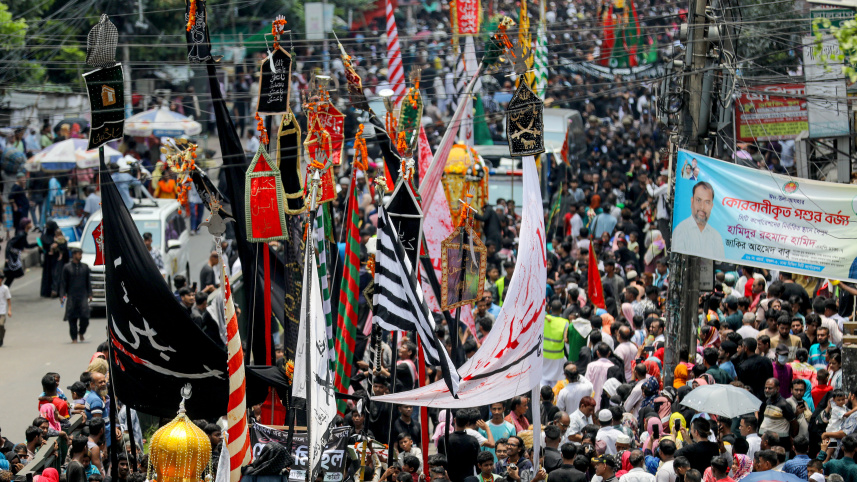
The 10th of Muharram, the first month of the Islamic calendar, marks Ashura -- a day layered with sacred memory, grief, and devotion. The word itself means “tenth” in Arabic, and on this date in 680 CE, the battle of Karbala unfolded. Imam Husayn ibn Ali, grandson of the Prophet Muhammad (Peace Be Upon Him), was martyred, his death becoming a defining moment in Islamic history.
Yet Ashura’s sanctity predates Karbala. Islamic tradition ties the day to moments of divine deliverance: Noah’s Ark finding land, Moses leading his people from Pharaoh’s grip, and the Prophet Muhammad (PBUH) himself fasting in gratitude. Many Sunni Muslims continue this practice, observing Ashura as a day of renewal and thanksgiving. For Shia Muslims, however, the date is inseparable from Husayn’s martyrdom -- a ritualised protest against tyranny, a spiritual stand for justice that reverberates across centuries.

My own childhood was steeped in these stories. My mother would read aloud from Bishwa Nabi (“The Prophet of the World”), Golam Mostafa’s celebrated Bengali biography of the Prophet. Through those readings, Karbala became more than distant history; it was a living narrative of sacrifice.
My grandmother’s two‑storied house in Purana Paltan stood near the local Imambara, where mourning assemblies gathered. That proximity meant Ashura rituals were part of my earliest memories -- majlis sermons, marsiya poetry, and the solemn rhythm of matam chest‑beating.
I grew into a devoted follower of Ma Fatema, the Prophet’s daughter, wife of Hazrat Ali, and mother of Hasan and Husayn. Her presence in Ashura sermons embodied patience, sacrifice, and spiritual liberation. When I became a mother myself, her example gave me courage to endure my own battles. Her story, woven into marsiya verses, became a mirror of resilience.
The Purana Paltan Imambara itself is modest, tucked beside the bustling North‑South Avenue. My mother would prepare sharbat -- milk, vanilla ice cream, pistachio, almonds -- and send it to the Imambara. I continue this ritual today, though in Uttara, where no Imambara exists, I distribute litres of sharbat made from fruit juices and Dhaka’s beloved ruh‑afza, garnished with petals and herbs, in local mosques. This act, simple yet profound, reflects how Dhaka’s Shiite heritage has fragmented, with only a handful of Imambaras still active.
Old Dhaka remains the heart of this heritage. Its alleys transform during Muharram into corridors of mourning, alive with tazia processions and sabeel stalls offering water and sharbat. Hussaini Dalan, the grand 17th‑century Imambara near Chankharpul, stands as the epicentre of Shia devotion. Historically, it was so respected that even Sunni Nawabs acted as its patrons. Smaller pockets of Shia communities survive in Mohammadpur and Mirpur, but the community remains a minority, its traditions visually powerful yet increasingly confined.
The ritual of offering water during Muharram is rooted in Karbala itself. Husayn’s refusal to pledge allegiance to Yazid, the Umayyad ruler, led to a siege where access to the Euphrates was blocked. Under the desert sun, Husayn, his family, and companions endured thirst, even infants denied water. That cruelty transformed into a symbol of resilience. Today, sabeel stalls -- temporary kiosks distributing water, juice, and milk -- stand as acts of charity, quenching strangers’ thirst in remembrance of Husayn’s suffering.
In new Dhaka, Ashura has become quieter, more personal -- almost a relic compared to the vibrant mourning of Old Dhaka. Yet the rituals endure: marsiya verses echo grief, tazias embody sacrifice, sabeel stalls quench thirst. In these practices, devotion and memory intertwine, keeping alive a fragmented but resilient Shiite heritage that continues to shape Dhaka’s cultural fabric.
 For all latest news, follow The Daily Star's Google News channel.
Comments