


‘Roid’ redefines cinema as an artistic endeavour

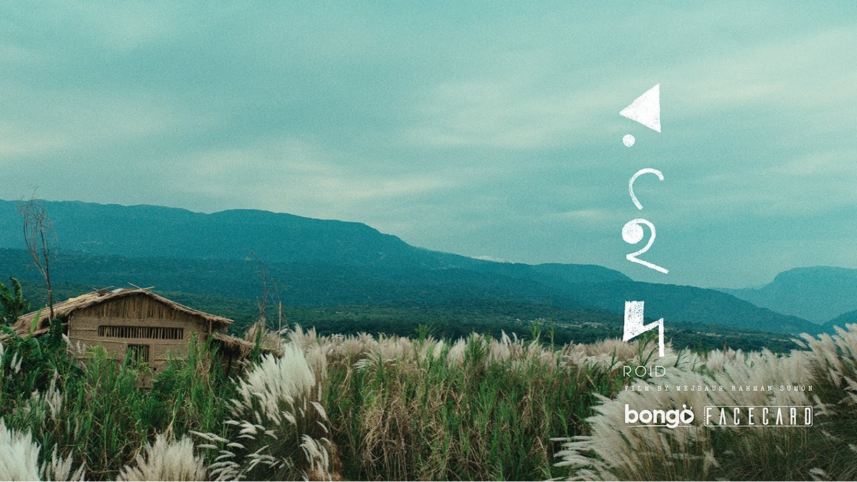
“Roid” is a movie, but more fundamentally, it is a pure artistic endeavour.
The 2026 Bangladeshi movie has stirred up many connoisseurs. Still, the reviews I have seen so far have focused on the biblical references and other symbolism used in the movie—a worthy discussion, for sure. But I would like to speak about the pursuit of artistic purity that, I believe, director Mejbaur Rahman Sumon embraced while creating “Roid”.
In Bangladeshi Bangla, roid means sunlight, the source of life. I felt that “Roid” seeks the raw nature of life—its beauty, ugliness, suffering, meanings and meaninglessness. In this sense, “Roid” is no special case; most art projects do seek meaning, in one form or another. But it is also special because every truly artistic project is unique in its own right.
The problem with art, especially these days, is the overly commercial nature of things, particularly the medium of filmmaking. Cinema is predominantly seen as a business venture—a form of entertainment that people are happy to pay for. No one would object to that.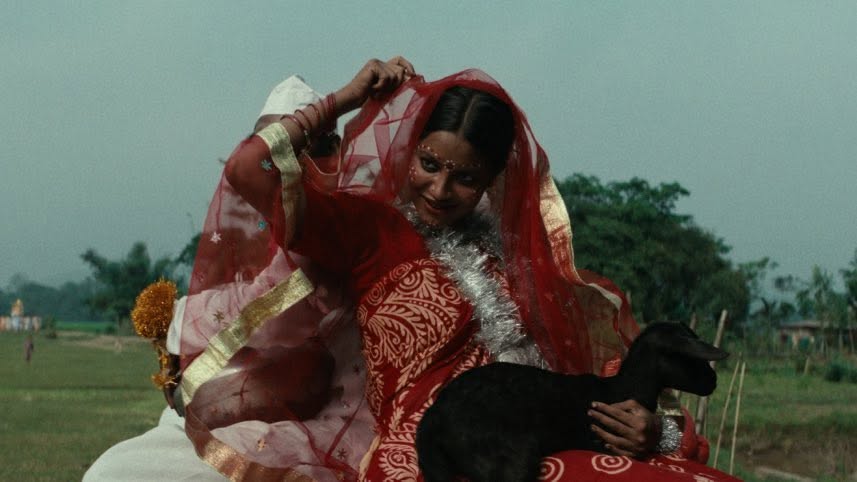
But to me, cinema is, above all, a superior art form. It concerns four dimensions: the three-dimensional physical world and its temporality. Cinema has to tell a convincing, poignant story in which every frame is a work of art and every dialogue is meaningful. Both move the story forward, frame by frame, created by hundreds, and often thousands, of people working in unison towards a shared artistic vision. And it requires money—a lot of it. Thus, should it be entertainment that is likely to sell, or art that is unlikely to succeed commercially? It is an excruciating dilemma for a director whose passion is art. Cinema is perhaps the most massive, complex and difficult art form to execute, and that is why I celebrate great cinema.
How does “Roid” transcend its status as a commercial entertainment product to become great cinema, a work of art? We can look at it from many angles. I will focus on those that struck me the most.
To begin with, the cinematography. At first, I wondered why the video was not vibrant or crisp, as if it had been shot with a cheap camera. Then I realised it was the director’s artistic choice. The story of a feudal, predominantly marginal pastoral community in an unknown, fierce natural landscape somewhere in rural Bangladesh needed a raw, close-up cinematic treatment, with little polishing.
The close-up shots were often taken with a handheld camera from intimate angles. One example is the shot of Shadhur Bou—the central character, the lunatic wife (Bou) of Shadhu, whose name remains unknown—when she was swimming towards the receding boat carrying Shadhu, who had abandoned her in an unknown jungle. Another is the close-up shot of Shadhu’s broad back as he searches for his Bou, with the seasons changing in the background.
The cinematic treatment in scenes like these immediately transfers their emotional states to the audience—the desperation of one and the fervency of the other. The panoramic shots are dramatic but not merely picturesque, still capturing the precarious rawness of the natural world in which Shadhu and his Bou’s story unfolds. Even if we do not understand the movie’s story, we can find joy in its beautiful cinematography and lose ourselves in the emotional upheaval the couple goes through.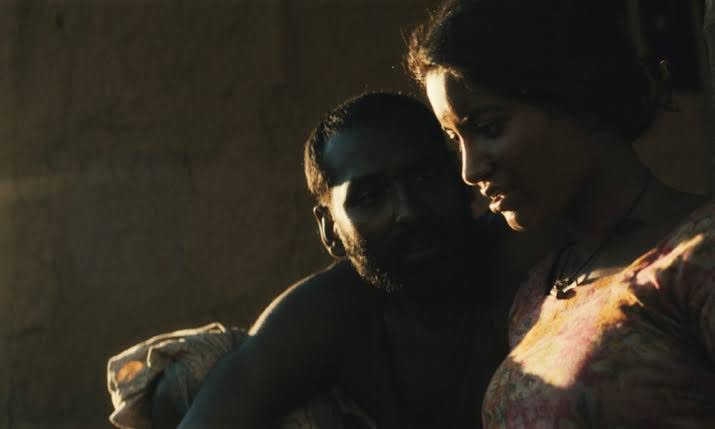
That brings me to my second point. When enjoying art, it is not necessary to understand everything—not what the creator intended to express, and not even the storyline.
Purely entertaining movies often follow a predictable storyline and spell everything out. There is no mystery. But a good movie often says little. “Roid” is not dialogue-heavy, but its dialogues are often meaningful and profound, such as: “Dhor tumi gondhom kheyei feleso, ekhon tomar ufay?” (“Perhaps you ate the fruit of sin, now what?”). The movie does not tell us what comes next.
But much more is said through expressions. In “Roid”, all the actors, especially the two central characters, act exceptionally well and say a great deal through their eyes and other facial and bodily expressions.
In “Roid”, it may appear that things are not moving much, and that, if anything, the story is circling back on itself. But a discerning viewer will appreciate how things become more intense, layered and complex with each iteration, taking on different shades and colours.
All these aspects allow the viewer to understand the story on many levels. Yes, it is perhaps a mosaic of biblical stories—lust, loss of innocence and the fall from grace—but it is also a story of pure love, conflicted minds, social marginalisation, perpetual suffering and the nature of life.
“Roid” also contains many unexplained, mystical phenomena, and it is up to us how we interpret them. There is no right or wrong story, and that is what is liberating about art. “Roid” makes us think, and its emotions linger in our minds long after we have finished watching it.
I would also like to reflect on the use of magic realism in “Roid”. It is a storytelling genre in which unreal, magical events occur. However, they still feel real—in other words, they are internally consistent—unlike fantasy, where we know it is make-believe. Crafting good magic realism is not easy; it requires delicate treading along the fuzzy line between reality and the beyond. “Roid” does it brilliantly.
Shadhur Bou appears and disappears in inexplicable ways whenever Shadhu finds a taal (the symbolic gondhom, perhaps?) that has fallen to the ground. The movie’s natural surroundings are also seemingly impossible: a turquoise lake, rugged hills and deltaic rivers that merge into a mystical landscape. But somehow, viewers do not question how these elements came to be there or laugh at their lack of grounding.
My final point is about the editing. Despite the cyclical nature of the story, each scene and each sparse dialogue moves the story forward, adding to the complexity of the characters and the depth of the events. The movie also ends exactly when it needs to—something that is glaringly missing from almost all Bangladeshi movies.
I watched “Hawa”, Sumon’s first movie. “Hawa”, too, was a work of magic realism with superior cinematography. But, in my view, it missed the mark on many of the points I have discussed here. “Roid” is Sumon’s magnum opus so far.
I do not think I fully understood the story, and I could not pinpoint where the biblical stories were depicted. And, of course, I did not understand the meaning of the last scene. I am not a cinema critic, so I may have missed the movie’s limitations. But it really does not matter.

I thoroughly enjoyed the artistic cinematography; I connected emotionally with Shadhu and his Bou, and I came away with many thoughts and emotions, as well as a sense of joy from experiencing something sublime.
Nusrat Jahan is the Head of Communications and Initiative Director at BIGD, BRAC University. She can be reached directly at jahan.nusrat@bracu.ac.bd.

 For all latest news, follow The Daily Star's Google News channel.
Comments