


Choosing an Erasmus Mundus programme that fits your journey
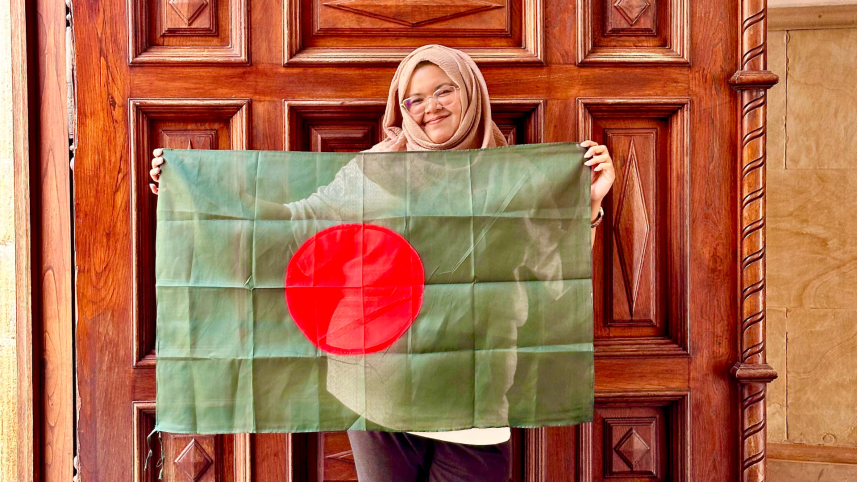
For many students, the Erasmus Mundus programme first appears as a scholarship. It is, certainly, a prestigious scholarship, offering generous financial support, international mobility, and the opportunity to study across multiple universities and countries in Europe. For students from Bangladesh, that combination makes Erasmus Mundus one of the most attractive postgraduate opportunities in Europe.


However, when I began exploring Erasmus Mundus seriously, I realised that the scholarship and its benefits were only one part of the decision. The more difficult question was much more personal: which programme would actually make sense for the work I had already done and the direction I wanted my career to take? That question eventually led me to the Erasmus Mundus Joint Master Degree (EMJMD) in Public Health in Disasters (PHID).
My professional journey had already moved through several different settings by then. I started my career in 2020 after completing my MBBS internship, first working in clinical research with icddr,b in Dinajpur. From there, I moved to Save the Children in Rangpur and later to Cox’s Bazar with RTM International, where I became involved in humanitarian public health programmes with Rohingya refugees and host communities.
Each role added something different. Clinical research introduced me to the importance of evidence in my work. Field-level responsibilities showed me how difficult it can be to translate plans into services that actually reach people. Humanitarian work pushed me to think beyond individual treatment and towards health systems, preparedness, coordination, and vulnerability.
The shift in perspective was gradual. Medicine had trained me to focus on the patient in front of me. Public health taught me to look at populations. Humanitarian work made me pay attention to everything that connects the two.
In a crisis setting, health is never only about diagnosis and treatment. A single programme may have to think about referral systems, maternal and reproductive health, mental health, disease surveillance, community engagement, protection, logistics, coordination, and emergency response at the same time. Working in that environment left me with questions that became increasingly difficult to ignore.
What makes a health system resilient? How prepared should it be before a crisis occurs? Why do some populations become more vulnerable than others? How can evidence improve decisions when circumstances are changing quickly?
Those were the questions that eventually made this programme feel less like “another master’s degree" and more like the next academic step I genuinely needed.
The EMJMD PHID is a two-year programme delivered across the University of Oviedo in Spain, Karolinska Institute in Sweden, and the University of Nicosia in Cyprus. It brings together public health, disaster preparedness and response, epidemiology, research, and health systems. The programme’s mobility structure is one of the things that drew me to it, but the appeal of that structure is not simply the chance to live in different countries.
Public health is deeply contextual; a solution that works well in one country may fail in another because the health system, resources, policy environment, or population needs are different. Studying across different institutions allows students to see those contrasts directly rather than only reading about them. That was especially relevant to me because my professional experience had already taught me how much context matters.
The application, however, required a different kind of approach.
By the time I was applying, I had a medical degree, research experience, and several years of professional work in different roles. At first, that seemed like an advantage. Then, I realised that having a broad range of experiences can create another problem: an application can easily become a collection of unrelated achievements.
The challenge, therefore, was deciding what not to include.
 For all latest news, follow The Daily Star's Google News channel.
I had worked in research, programme implementation, humanitarian response, management, and leadership roles. If I simply listed everything, the application might have looked impressive on paper but not necessarily coherent. So, I went back and looked for the connection between those experiences.
Clinical research had introduced me to evidence. Programme work had shown me the realities of implementation. Humanitarian work had exposed me to health systems under pressure. Leadership had given me a broader understanding of how programmes, teams, and systems are managed.
Once I could see that progression myself, writing the application became much easier. This was also important for the motivation statement.
A CV can tell a selection committee where you studied, where you worked, and what responsibilities you had. The motivation statement has to do something different: it has to explain what those experiences meant.
For example, my work in Cox’s Bazar demonstrated my experience in humanitarian public health. But that fact alone did not explain why PHID was the right programme for me. The stronger argument was explaining what the experience had taught me and what questions it had created around preparedness, health-system resilience, coordination, vulnerable populations, and crisis response.
While preparing my application, I kept returning to three questions: What brought me here? Why do I need this programme now? Where do I want it to take me next? Answering these helped me decide what to include in both my CV and motivation statement.
This approach, I think, is particularly important for applicants with several years of professional experience. There is often a temptation to include every certificate, workshop, conference, and training. But a longer CV is not automatically a stronger one. Relevance matters more than volume. After all, the purpose is not to prove that you have done many things. It is to make the direction of your journey understandable.
This also means there is no single ideal profile for the PHID programme. A doctor may arrive through emergency medicine, community health, epidemiology, humanitarian work, or research work. Someone from another background may come through disaster management, policy, health systems, or social sciences. The important question is not whether your background looks like someone else’s. It is whether you can explain what perspective you bring to public health in disasters and why the programme is relevant to where you want to go next.
Applicants should also start early. Gathering academic documents and references, and fulfilling language requirements, can take time. The motivation statement, especially, requires more reflection than you would expect at first.
Erasmus Mundus is highly competitive, and the scholarship is undoubtedly a major part of its appeal. The financial support and international exposure can open doors that would otherwise be difficult to access. But I still think the scholarship should come after the programme. For anyone considering applying to the Erasmus Mundus this year, perhaps that is the most useful place to start: understand the programme you want to apply to, but also take the time to understand your own trajectory. Know what has shaped you, what you still need to learn, and where you want to eventually go. Then, find the programme that makes those pieces come together. That is where the strongest application begins. And if you are invited to an interview, know your own application well enough to discuss it naturally rather than relying on memorised answers.
In the end, it was not the individual milestones that defined my application, but the thread that quietly connected them into a direction I was finally able to see clearly.
Dr Zarin Tasnim Maliha is a medical doctor and public health professional, currently pursuing the Erasmus Mundus Joint Master Degree in Public Health in Disasters (EMJM PHID).
Comments