


Russians face soaring costs and tough choices in 2022
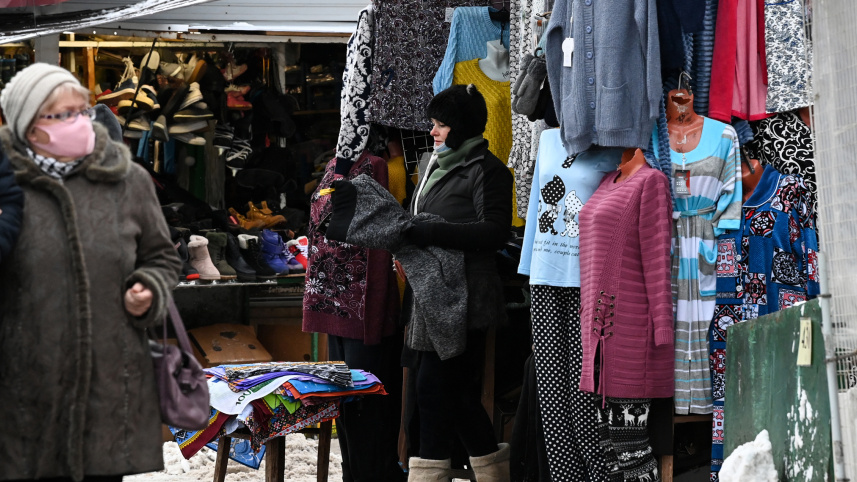
Walking through a freezing market in Moscow earlier this month, 60-year-old Sergei Borisovich recalled that he rang in the last New Year at a table laden with festive delicacies.
This year, the factory worker, who declined to give his last name, said a spike in prices meant he would have to forego caviar and other treats so he could afford a bottle of bubbly for the countdown on Russia's biggest holiday.

People are making sacrifices across the country, with soaring inflation pushing up costs and forcing cash-strapped Russians to make difficult decisions around the holidays.
"Everything is getting more expensive but wages aren't going up," said Sergei Borisovich, who was shocked that a loaf of bread now costs 100 rubles ($1.35).
President Vladimir Putin has described prices as a key concern and the embattled opposition is hoping to leverage the economic woes.
This month, inflation reached its highest since 2016, with rising everyday costs hitting hard a population whose average monthly income is 40,402 rubles ($545). Adding to that, some 43 percent of Russians do not have any savings, according to a recent survey by recruitment website SuperJob.
Sergei Borisovich said the table this year would be topped only with a salad of potatoes and peas.
"I'll buy some Shampanskoye if I can," he said referring to sparkling wine popular during the Soviet Union.
Red caviar, served with bread and butter on New Year's Eve, is the most expensive it has been since monitoring began in 2000.
Ingredients for other holiday dishes like the mayonnaise-rich salad "Olivier" are expected to cost 15 per cent more than last year, Russian media has reported citing statistics agency Rosstat. "Herring Under a Fur Coat" -- a layered dish of pickled herring and beetroot -- will set Russians back 25 per cent more than last year.
Living standards in Russia have been gradually decreasing since Moscow was slapped with a slew of Western sanctions in 2014 over its annexation of Crimea from Ukraine.Now, the dip is accelerating, hitting even those in Moscow, the wealthiest city.
Karina Strukova, an engineer on maternity leave, says the trend forced her to stop buying groceries from the upmarket Vkusvill grocery chain in favour of the lower-cost Magnit stores.
The 30-year-old told AFP her grocery bill had grown by as much as 25 percent since last year. "We're trying to cut back on spending a bit because we don't have any other sources of income," she said.
"We're buying fewer gifts and going to cheaper shops. "Kremlin critic Alexei Navalny, controversially jailed earlier this year on a fraud charge, said he had even felt the pinch behind bars.
 For all latest news, follow The Daily Star's Google News channel.
Comments