


Weak financial systems and economic woes
It is very concerning that, despite having sufficient deposits in their bank accounts, depositors cannot withdraw funds because of liquidity crises and the inability of many banks and NBFIs to honour cheques or requests. Serious patients could not receive medical treatment, while emergency family needs, including higher education, could not be met. A few banks and NBFIs are still running well, but they can be counted on one hand. The issue came to the surface after August 5 of 2024, when owners fled or went into hiding, boards were restructured, top management changed and, in some cases, the central bank appointed administrators.

Political will to ensure good governance is critical. Putting the right people in the right places is also important. Undue interference by the government and regulators should be avoided.
The question is why this happened when the central bank is responsible for monitoring and regulating the banking and financial systems, alongside the Ministry of Finance. The position on bad loans was kept suppressed, with the central bank exercising undue power over the quantum of provisions for bad and doubtful debts. It introduced tripartite meetings after statutory audits and dictated matters to external auditors, jeopardising their independence. Our experience over the past decade shows this weak governance. Tripartite meetings should only resolve disputes between clients and banks. In Bangladesh, this mechanism has been thoroughly misused.
Governance failures are apparently the key reason for this situation. Laws, rules and regulations were not adhered to; policies were not followed as they should have been; directors, especially chairmen, did not play their role as custodians, and independent directors failed to meet the expectations of depositors. Internal audit teams also failed to play their due role. Undue board influence, lack of professionalism and weak ethical standards also contributed. The failures of external auditors and senior management cannot be ignored.
My experience as a nominated director of a state-owned bank for about two years and an NBFI for more than five years was rewarding. The NBFI managed its asset quality very well. Even as an auditor for an NBFI, I had to discontinue my audit after one year of a three-year rotation because of a disagreement over the quantum of provisions for bad and doubtful debts. Neither the central bank nor the Ministry of Finance asked me about my discontinuation.
In the absence of a strong capital market, the main source of business finance is funding from banks and NBFIs. When banks and NBFIs are weak, and in some cases insolvent, business, trade, and industrialisation have no way but to suffer, while economic growth is severely affected.
Institutions are built over many years. When they fail to perform and financial systems break down, restoring them is difficult. Bangladesh is experiencing such a phase.
Political will to ensure good governance is critical. Putting the right people in the right places is also important. Undue interference by the government and regulators should be avoided. In cases of gross negligence or motivated decisions, wrongdoers should be subject to independent investigation by credible agencies. If proved guilty, they should be held accountable. Bad practices must not be repeated.
Ultimately, the situation must be addressed with due attention to timelines. Delays can be costly, and Bangladesh cannot afford them. Based on media reports, it is also alarming that the economy is likely to turn around only after four years. Although there is no visible basis for this statement, it is nevertheless hopeful that at least a ray of hope can be seen. Let us hope for the best.
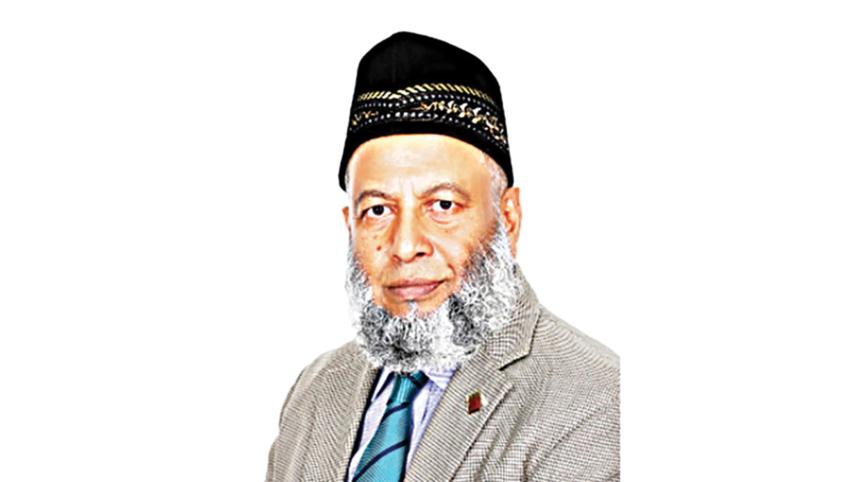
The writer is a senior partner of Hoda Vasi Chowdhury & Co and past president of ICAB
 For all latest news, follow The Daily Star's Google News channel.
Comments