


Rajshahi: The story behind Bangladesh’s cleanest city

A man finishes a bottle of water, looks around, then walks over to a bin set up by the Rajshahi City Corporation to discard it instead of throwing it on the roadside.
The small, almost unremarkable act was witnessed at the Kadirganj intersection in Rajshahi city.

In the context of Bangladesh, this perhaps explains why Rajshahi has become the cleanest city in the country.
For Ruhul Amin, a resident of the city’s Upashahar area, such civic awareness has become part of daily life.
“The city corporation collects household waste regularly. The roads are routinely swept daily. Residents also feel a kind of moral restraint about throwing waste around, and therefore play their part in keeping the city clean. This is how it has been going on,” he said.
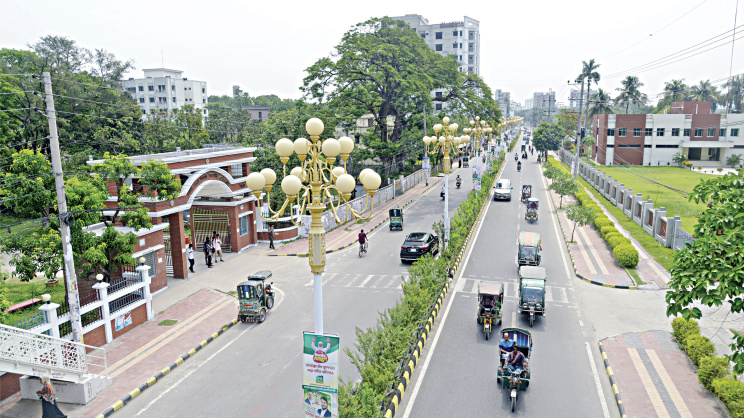
The first thing many visitors notice about Rajshahi city is not a landmark, monument or even the Padma river. It is the absence of something: garbage.
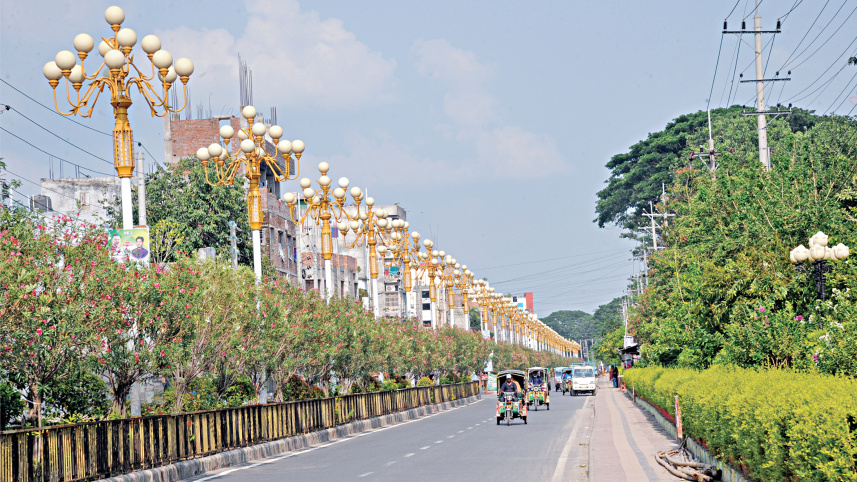
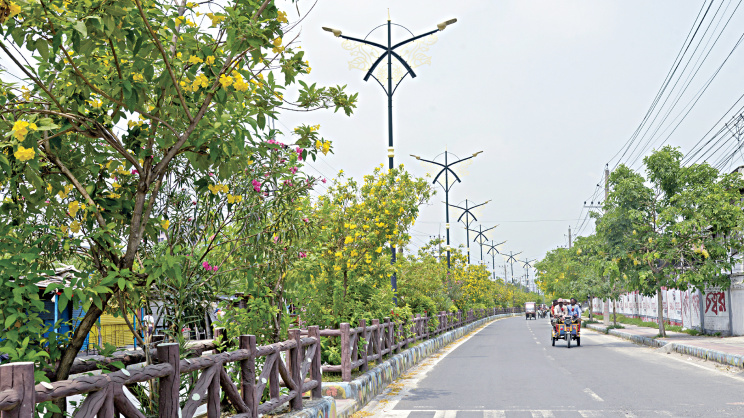
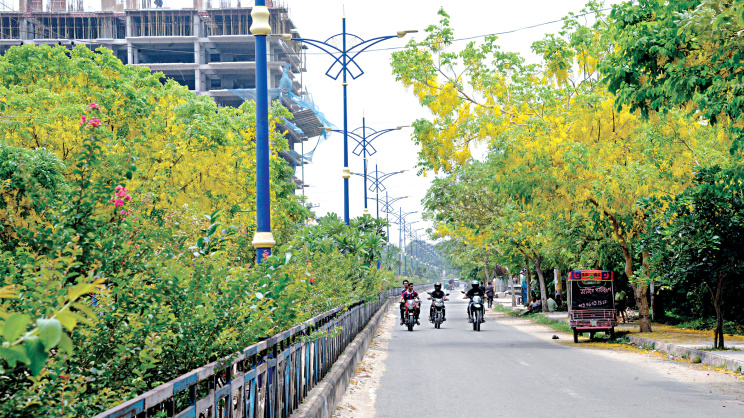
The roads are remarkably clean. Flowering plants line medians and sidewalks. Major roads are illuminated with lighting. Even at busy intersections, overflowing bins and piles of rubbish, common sights across the country, are difficult to find.
For years, Rajshahi has built a reputation as Bangladesh’s “Clean City, Green City”. However, keeping a city clean is not simply a municipal job here. It involves residents who cooperate, newcomers who adapt to the city’s habits, and a large workforce that quietly keeps the system running while the city sleeps.
The city’s cleanliness has gradually changed the way its residents think about their surroundings.
“Our thoughts and habits have become accustomed to the city’s cleanliness. Throwing a plastic packet or bottle may be a common habit among people elsewhere, but that does not normally seem to apply here. Everyone has it in their mind that the road is already clean, so it should be kept as such,” said Sumaiya Binte Samad of Talaimari area.
Sheikh Md Mamun, chief conservancy officer of Rajshahi City Corporation, said public cooperation is central to the city’s cleanliness. “Without residents’ support, no cleanliness programme can be sustained,” he observed.
Rajshahi’s present waste collection model dates back to July 2009, when the city introduced a night-time waste removal system based on Secondary Transfer Stations (STS).
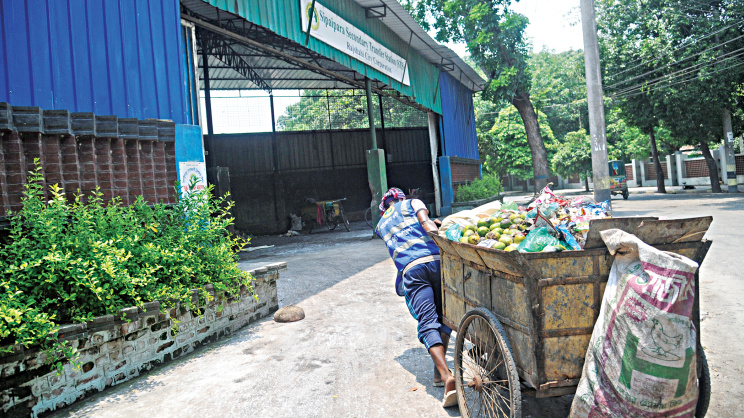
Household waste is collected from neighbourhoods across the city’s 30 wards around noon and taken to nearby STSs. From there, trucks and trailers start moving the waste to dumping grounds after 10:00pm. By the next morning, much of the previous day’s waste disappears from public view.
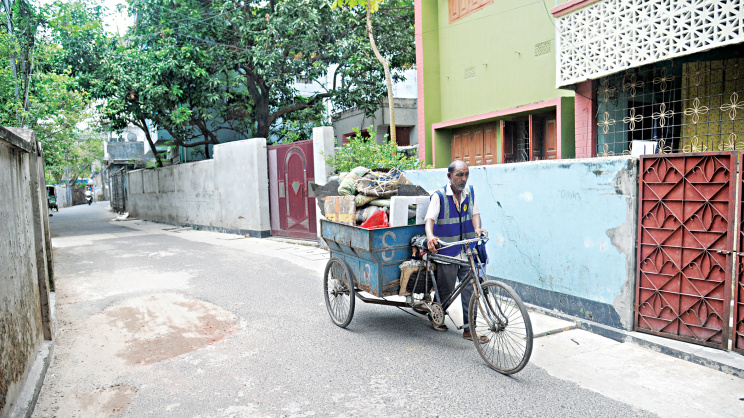
Road cleaning follows a similar schedule. According to RCC data, road cleaning begins around 9:00pm and continues until completed. Waste transportation from STSs often continues until dawn. The roads are also swept a second time early in the morning after Fajr prayers, while important roads, commercial areas and VIP routes receive additional cleaning.
Even drain cleaning is organised around the same principle. Mud and debris removed from drains are immediately loaded onto vehicles and taken away, instead of being left in the open. The result is a city where much of the public space remains clean throughout the day. The system depends on a chain of people working in coordination.
Each of the city’s 30 wards has designated routes, assigned conservancy workers and clearly defined responsibilities under a supervisor. Even mosquito-control activities are conducted following predetermined schedules, said Mamun. Also, 64 inspectors, monitoring officers and other supervisory personnel oversee the operations centrally.
“From the ward level to the STSs, from the STSs to the trucks, and from the trucks to the dumping ground, everything follows a chain,” Mamun said. The scale of the workforce behind that chain is substantial.
According to RCC data, a total of 1,253 workers is directly involved in conservancy operations, another 128 work on mosquito control, 80 for tree plantation and park maintenance, and 71 for maintaining the city’s lighting infrastructure.
For residents who see clean roads each morning, most of this work takes place while they are asleep.
Muslim Reza, a conservancy worker in ward-30, said the system works because workers know their responsibilities and help one another when necessary.
 For all latest news, follow The Daily Star's Google News channel.
 “Even when a worker is ill, another worker takes over the duties. That’s why the work is completed smoothly.”
The culture of cleanliness, according to Mamun, is something even newcomers gradually adapt to.
“If someone throws litter on the street, people around them usually speak up.”
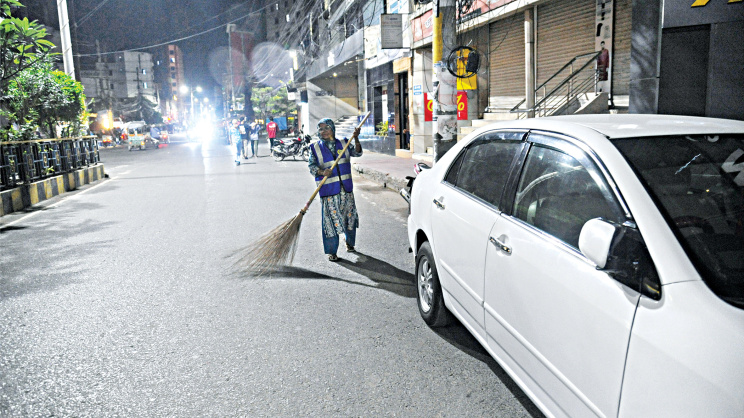
Such social pressure can turn a municipal rule into an everyday habit. Instead of seeing cleanliness as something the city corporation alone must ensure, Rajshahi residents now see their own behaviour as part of the equation.
Shishir Das, a Dhaka resident visiting Rajshahi, said the difference is immediately noticeable.
“Unlike Dhaka, Rajshahi stands out as a city with clean roads and a pleasant environment,” he said.
For Md Jabir Hossain, who recently chose Rajshahi as his workplace, the city’s environment influenced his decision.
“There are comparatively less dust and pollution here. The roads are clean, beautifully lit, with flowers and greenery across the city. The environment itself makes people feel good,” he said.
However, Rajshahi was once a dusty, barren city.
Over the years, alongside efficient waste management, extensive tree plantation along roads, medians and open spaces was also carried out, gradually transforming the city’s appearance.
Today, greenery is one of the defining features of the cityscape. Rajshahi has received national and international recognition for environmental management and tree plantation, including from organisations such as UNDP, WHO and the Red Crescent.
It also ranked among the top cities globally in reducing airborne dust particles during 2013-14, said Mamun.
The current RCC administration wants to build on that record.
RCC Administrator Md Mahfuzur Rahman Riton said they have set a target of planting 2.5 lakh trees in the next one year through collaboration with different social, cultural and educational institutions.
There are also plans to further strengthen waste collection measures and reduce the use of polythene items.
During Eid-ul-Azha, RCC distributed several lakh environmentally friendly, biodegradable bags among residents.
Riton said the goal is to gradually turn Rajshahi into a polythene-free city.
However, simply forcing people to stop using polythene is difficult because environmentally friendly alternatives cost more. Financial support for residents could make the transition easier.
There are other limitations.
Medical waste is already collected separately and processed through a dedicated private operator under RCC’s supervision. However, the city does not yet have facilities to convert its wider waste stream into electricity or fertiliser.
The administration is preparing plans for a comprehensive waste management project that would include wastewater treatment, solid waste treatment and medical waste treatment facilities. Officials are also exploring a modern waste management plant that could eventually generate electricity and gas from waste, the administrator said.
For a growing city like Rajshahi, with more people now moving there, the real challenge is to keep the system ahead of its changing needs.
Mamun believes the city’s future cleanliness will depend on the same combination that helped create its reputation: planning, disciplined operations and public participation.
“People’s needs keep growing, and new challenges emerge. Through leadership, planning and public cooperation, Rajshahi can become an even better city,” he added.
City authorities can provide the bins, trucks, STSs and workers. Cleaners can sweep the roads and remove the waste. But cleanliness cannot be sustained if people continue throwing rubbish onto the streets. Perhaps that is what makes Rajshahi’s story different.
Comments