


MFS emerges as fast-growing remittance channel

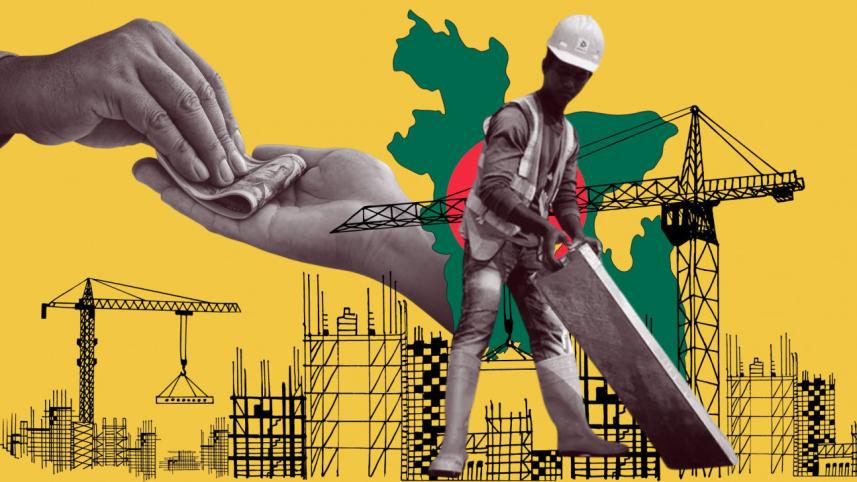
Mobile financial services (MFS) are increasingly becoming a major channel for remittances sent by millions of Bangladeshis working abroad.
Remitters sent Tk 20,236 crore through MFS, excluding Nagad, in 2025, almost double the amount -- Tk 10,786 crore -- they sent home a year ago.

Bangladesh Bank (BB) data shows that MFS accounted for a small but growing portion of remittances transferred by Bangladeshis abroad. Roughly 90 percent of them work in the Middle East, especially in Saudi Arabia.
This situation would have been inconceivable seven years ago. In 2019, migrant workers sent $18.3 billion or more than Tk 150,000 crore in remittances, out of which only Tk 315 crore came through MFS. Since then, remittances sent through MFS have grown 64 times, thanks to efforts by MFS providers, mainly bKash.
The country’s largest MFS provider has been a pioneer in delivering remittances to the doorsteps of migrant workers’ families. In 2025, these workers sent home $33 billion, or over Tk 400,000 crore, in remittances.
bKash alone handled Tk 20,000 crore in remittances last year. While the growth was substantial, the amount of remittance sent using MFS was only 5 percent of the total.
Industry stakeholders said MFS operators do not directly collect remittances from Bangladeshi migrants working abroad. Migrant workers themselves decide whether they want to send money to MFS accounts or take the more traditional route of sending remittances through bank accounts.
MFS is gaining popularity fast as it is more convenient and offers instant delivery to remote, rural areas. Another perk is that money can be sent to multiple MFS accounts instead of just one bank account, so remitters can transfer funds to a number of people without any hassle.
In the case of MFS, the ticket size is small. When one has to send a large amount of money, bank accounts are preferred. Additionally, there is a 2.5 percent government incentive on remittances. If a migrant worker sends Tk 1,000 as remittance, the recipient will receive Tk 1,025.
Promotional campaigns by MFS providers in Bangladesh’s migrant belts abroad have supported the growth.
Ali Ahmmed, chief commercial officer of bKash, said that currently, expatriates can send remittances directly to their loved ones’ bKash accounts through 135 international money transfer operators (MTOs) from over 170 countries, which get settled at 27 commercial banks in Bangladesh.
“This commitment to delivery has made bKash a preferred platform, resulting in the highest inward remittance flows among MFS channels in 2025,” he said.
“This momentum has also inspired more global money transfer companies to collaborate with us, offering exclusive Eid incentives for expatriates to further encourage the use of formal banking channels.”
A total of 41 lakh bKash accounts received these remittances, almost double that of the previous year.
While the BB data does not account for remittances sent through Nagad, Muhammad Zahidul Islam, head of Media and Communication of the platform, said they witnessed “tremendous growth” recently.
“Overall, remittance growth at Nagad exceeded 28 percent last year compared to the previous year, and the numbers continue to rise steadily,” he said.
Nagad has modernised the remittance receiving process, Islam noted, which enabled Bangladeshi expatriates to send their hard-earned money to their loved ones from anywhere in the world.
“Through our campaigns, we are also actively promoting remittances via legal channels, and these initiatives are delivering positive results, as reflected in the growing figures,” he added.
A senior BB official said policy support by the central bank -- allowing banks to transfer remittances through MFS providers -- gave the main boost.
 For all latest news, follow The Daily Star's Google News channel.
 “This way, money is sent to the end user. Almost everyone has MFS accounts,” he said.
Despite the surge in remittance transfers through MFS channels, these transactions accounted for only one percent of total transactions -- Tk 18.73 lakh crore -- in 2025.
BB, in its latest monthly review, said MFS has significantly expanded financial inclusion in Bangladesh by providing accessible, secure, and convenient digital financial services to millions of people, especially in rural and underserved areas.
Comments