


Mobile signals weaken as blackouts, fuel shortages spread

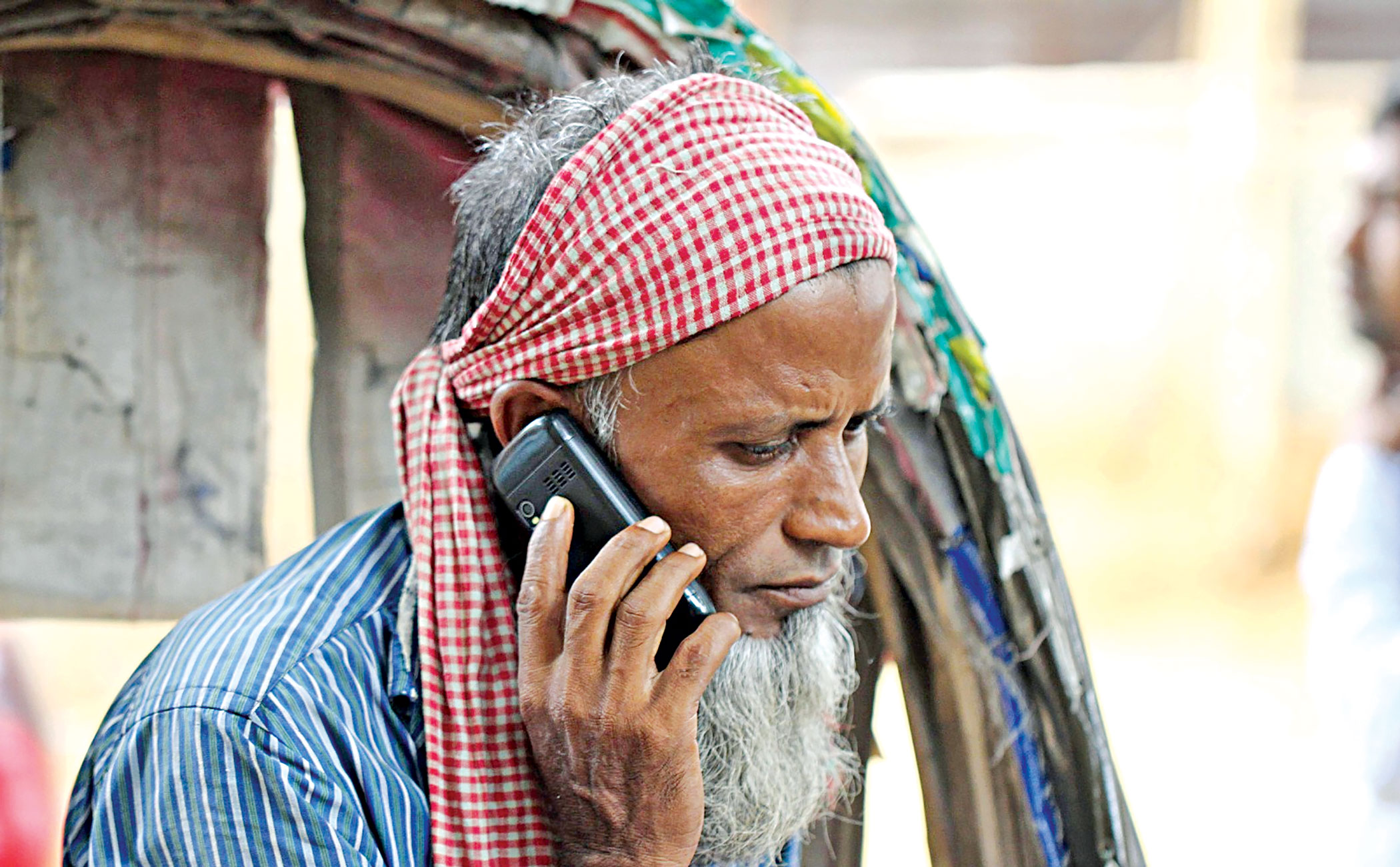
In recent weeks, making a simple phone call has become a daily struggle for Md Mosharraf at Char Bahadurpur, a village at Phulpur upazila in Mymensingh district. For it, he blames prolonged power cuts.
“Nowadays, we get electricity for less than five hours a day. Once the electricity is gone, there is no network,” said Mosharraf. “I can’t even speak through my phone most of the time.”

Currently, this problem is no longer limited to remote villages.
Mobile operators and tower companies say network quality has deteriorated over the weeks as power cuts have become more frequent and fuel supplies have worsened following the war in the Middle East.
During power outages, operators depend on battery backups at tower sites. Most sites, however, have backup capacity for only four to six hours.
“When cuts last longer than that, there is no way to recharge the batteries,” said Shahed Alam, chief corporate and regulatory affairs officer at Robi Axiata.
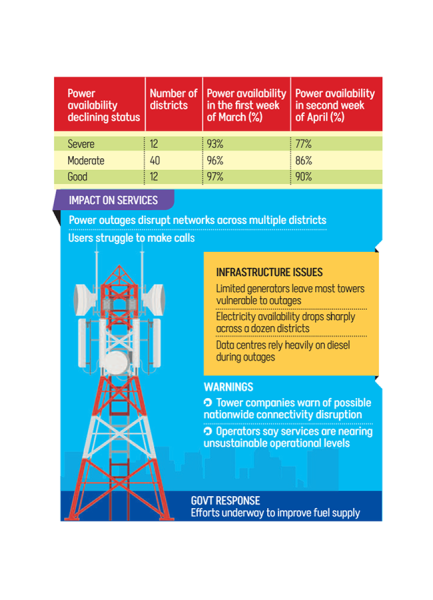
Mobile operators then turn to generators. But only about 25 percent of towers are equipped with fixed generators, forcing many to depend on portable units.
“Adding insult to injury, we are not getting fuel supply to the towers and our critical data centres,” Alam said.
There are 46,567 telecom towers across the country, operated by tower infrastructure companies and mobile operators. This provides network coverage to over 18.58 crore customers. Operators have around 27 data centres across Bangladesh.
Tower companies yesterday said that the fuel crisis could severely disrupt national connectivity.
“Bangladesh’s connectivity ecosystem is facing a real and immediate threat,” said Sunil Issac, interim president of the Bangladesh TowerCo Association and country managing director of EDOTCO Bangladesh.
He said telecom underpins all digital and economic activity and cannot be allowed to fail.
“If the telecom sector is not prioritised within national energy allocation and fuel access frameworks, we risk a cascading failure that will impact businesses, essential services, and everyday life. Ensuring uninterrupted connectivity is no longer a sectoral concern; it is a national imperative,” he said.
Data collected by tower companies through remote monitoring sensors show that electricity availability at tower sites has dropped over the past month.
In 12 districts, supply has fallen from 93 percent to 77 percent from the first week of March to the second week of April, according to tower company statistics.
A tower company official said operators run thousands of towers nationwide and track power availability continuously.
Sunil Issac said, “We have engaged with the relevant authorities to outline the risks and propose immediate, practical solutions, including priority access to fuel and enabling policy support to help the sector navigate this challenging period.”
He said that given the scale of dependency on digital networks, proactive and coordinated action is essential.
In recent weeks, mobile operators have sent at least two letters to the telecom regulator, saying an imminent nationwide disruption. The Association of Mobile Telecom Operators of Bangladesh said the electricity and fuel crisis has “reached a point where continued telecom operations can no longer be sustained without immediate government intervention.”
 For all latest news, follow The Daily Star's Google News channel.
 The association said prolonged outages have forced operators to run key infrastructure on diesel generators.
According to the letters, base transceiver stations (BTSs) consume more than 52,000 litres of diesel and nearly 20,000 litres of octane each day across operators. Each data centre uses an estimated 500 to 600 litres of diesel per hour, or about 4,000 litres a day per facility.
Industry insiders say such reliance on backup power cannot continue for long. Unlike tower sites, data centres manage call routing and internet traffic. Any shutdown at that level could cause failures across the network.
“If fuel can’t be managed and data centres go offline, it would cause widespread call drops, internet outages, and service blackouts,” said an official at a mobile operator, preferring not to be named.
Contacted, Tanveer Mohammad, chief corporate affairs officer of Grameenphone, said operators are facing electricity and fuel shortages.
“The evolving situation calls for timely and targeted measures to sustain uninterrupted telecom services nationwide,” he added.
He said that to “proactively avoid disruptions to essential services for millions”, operators need government support to secure priority electricity for critical infrastructure, streamline fuel supply and ease fuel transport for emergency operations.
Md Emdad ul Bari, chairman of the Bangladesh Telecommunication Regulatory Commission (BTRC), said, “We have been trying to coordinate for over a month and have spoken to the telecom ministry and the energy ministry. In some places, there has been priority supply.”
He acknowledged that some tower sites are facing low fuel supplies.
“The regulator will meet the Bangladesh Petroleum Corporation tomorrow and other stakeholders later this week to improve fuel availability,” he said.
Comments