


Entrepreneurs demand fuel price cut
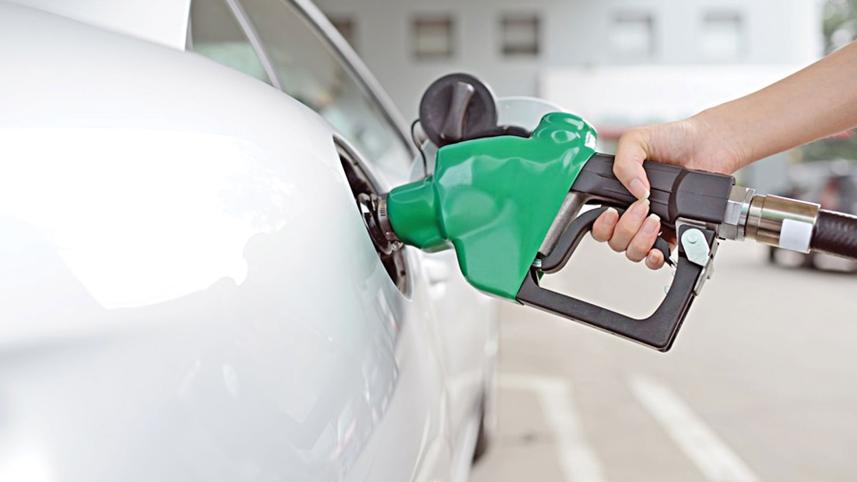
Entrepreneurs yesterday urged the government to cut fuel prices, saying the unprecedented spike in the rates of petroleum products is hurting businesses and will go on to hamper job creation and hit the whole economy.
The appeal, which was made at an event organised by the Dhaka Chamber of Commerce & Industry (DCCI) in the capital, came less than two weeks after the government raised the fuel prices by up to 51.7 per cent in order to pass their higher global prices on to the public, the second hike in nine months.

"In many ways, diesel is an essential commodity, so its rise is proving costly for the economy," said Mohammad Hatem, executive president of the Bangladesh Knitwear Manufacturers and Exporters Association.
"At a time when the fuel price is falling in the international market, such a huge price hike has stunned us," he said, calling on the government to adjust the fuel price every three months in line with international prices.
"At a time when the fuel price is falling in the international market, such a huge price hike has stunned us," said Mohammad Hatem, executive president of BKMEA
Hatem pointed out that industries in many areas, including Narayanganj, are getting an inadequate supply of gas which is hampering production.
Industries are facing a lower pressure of gas exacerbated by inadequate supply amid the government's decision not to buy liquefied natural gas from the international market and inadequate local production.
"Additional costs in the supply chain needs to be lessened to control food inflation," said DCCI President Rizwan Rahman, adding that international market and price dynamics need to be monitored to avoid irrelevant price shock.
"Essential commodities supply through the Trading Corporation of Bangladesh needs to be expanded outside Dhaka."
Rahman suggested ensuring a flexible interest rate regime to reduce inflationary pressure and stabilise foreign currency reserves.
The central bank has been maintaining a 9 per cent lending rate since April 2020, while the forex reserves have come under strain following a sharp increase in import payments amid a fall in remittance and moderate exports.
The DCCI chief said government borrowing through savings certificates needs to be reduced and cheap sources of funds from external sources must be accessed.
To boost export revenue, he recommended the expansion of the service sector and ensuring an increased capability in the ports and logistics sectors.
Currency swap can be considered to facilitate low-cost imports and improve the foreign currency reserves, he said.
To face the challenges of graduation from the group of least-developed countries, Rahman's advice has been to expedite the signing of bilateral and multilateral comprehensive economic partnership agreements with trade partners and revise the import tariff structure.
Md Shafiul Islam, a ruling party lawmaker and former president of the Federation of Bangladesh Chambers of Commerce and Industries, called the existing crisis temporary, saying the government is managing the situation in an efficient manner.
Terming the business community as the engine of growth, the businessman urged the tax department to be proactive and help businesses grow without any hassles.
Not only Bangladesh's economy but the whole global economy is going through a tough time in terms of economic stress, inflation, fuel price hike and supply chain disruptions, said State Minister for Planning M Shamsul Alam.
Some indicators are facing discomfort but the overall economy is doing well, he said.
The manufacturing sector saw a 23 per cent growth in the last fiscal year, and other facts and figures showed that the economy is on the right track.
 For all latest news, follow The Daily Star's Google News channel.
 "So, there is no need to panic that the economy may collapse like Sri Lanka."
The state minister, however, warned that as the national election is approaching, some people may want to take advantage by spreading rumours that the economy will collapse.
"The government is well-prepared to tackle the economic situation and no danger is imminent."
Prof Alam said that the government should take loans from foreign sources to ease pressure on the US dollar.
Full automation of the taxation system will reduce hassles and boost tax collection, he added.
Habibur Rahman, chief economist of the Bangladesh Bank, said the central bank was thinking about the option of a currency swap with a number of countries in order to cut the pressure on US dollars.
"But it will be possible only with the countries with which we have a lower trade gap. When the trade gap is higher, we have to diversify our foreign reserves portfolio since a currency swap involves risks."
According to BKMEA's Hatem, the government should borrow from multilateral lenders to fight the present situation instead of raising fuel prices as it has had a massive impact on the industries and the economy.
The business leader cited the activities of the National Board of Revenue (NBR) as the main barrier standing in the way of higher exports and imports.
"I have to talk to the top officials of the NBR almost every day as our members are facing harassment though they are doing businesses legally."
"If any businessman does any wrong, punish them. But don't harass honest businessmen for your unethical want."
Comments