Told surfing was not for girls, Fatema now heads to Asian Games for Bangladesh

When a teenage girl walks onto Cox’s Bazar beach carrying a surfboard, she inevitably draws attention. Some admire her; others question whether a girl should be surfing at all.
For 17-year-old Fatema Akter, a Class 10 student, such questions have been part of her six-year journey as a surfer. After overcoming social criticism and financial hardship, she is now preparing to represent Bangladesh at the Asian Games in Japan.

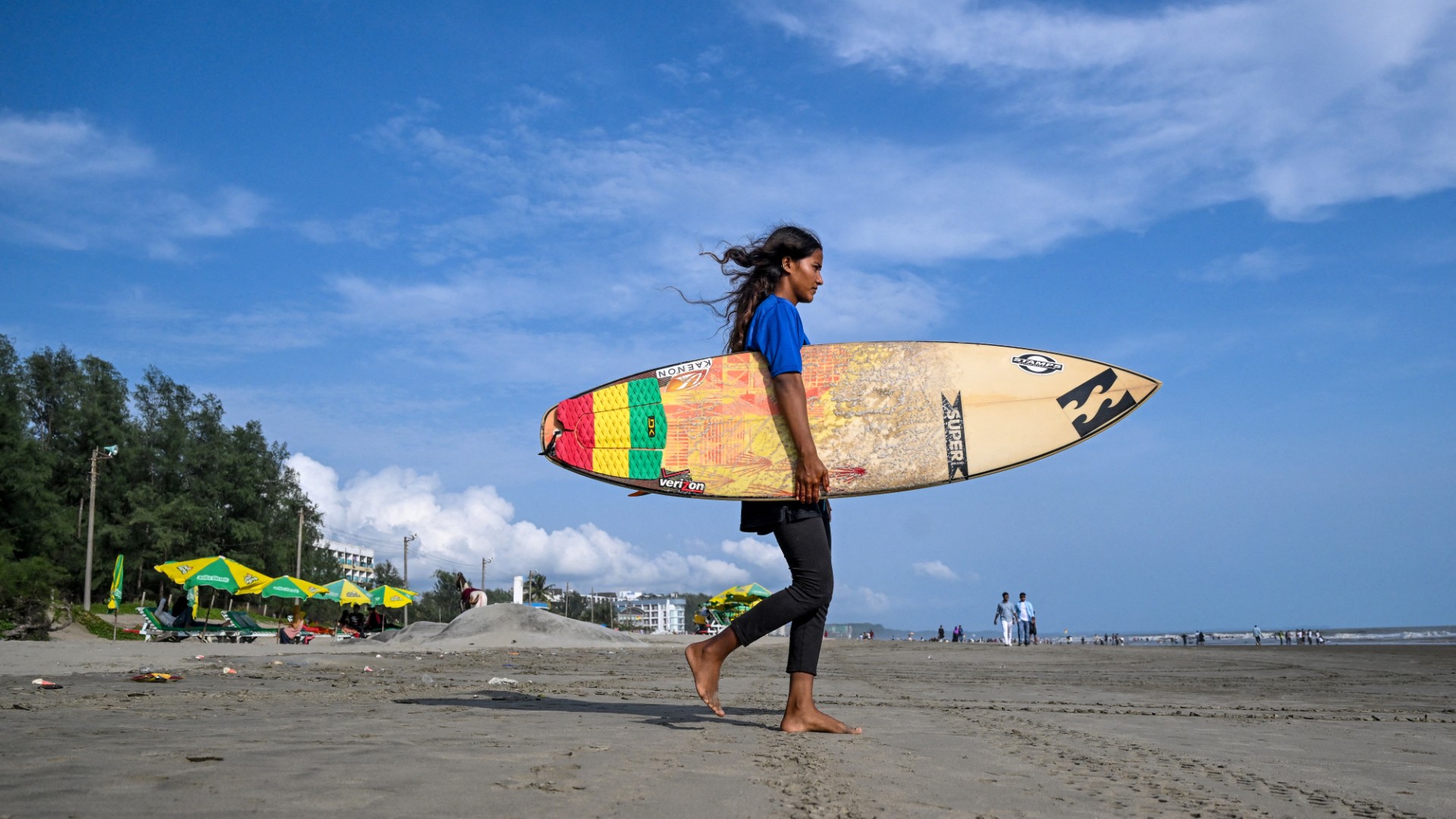
The Aichi-Nagoya Asian Games 2026, to be held from September 19 to October 4, will feature surfing for the first time. For Bangladesh, Fatema will compete in the women’s event and Abdul Mannan in the men’s event.
Fatema first became interested in surfing after seeing surfers on Cox’s Bazar beach. She picked up a surfboard out of curiosity and gradually learned to ride the waves.
Her biggest challenge, however, was not the sea.
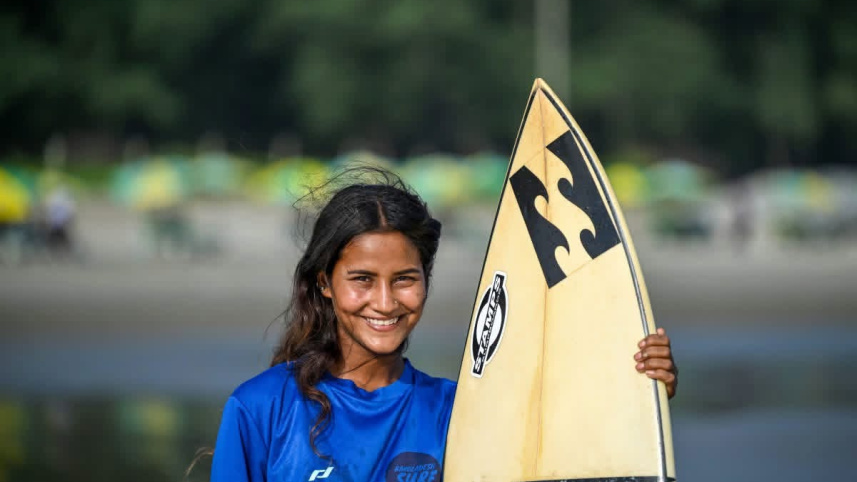
"When I first started surfing, many people made negative comments. They asked why a girl was going to the beach. They said the beach was for boys, not girls. But I did not stop. I continued surfing alongside my studies. Now, at 17, I am very happy to have qualified for the Asian Games in Japan," said Fatema.
"I never imagined that one day I would go abroad to surf and represent Bangladesh with the national flag. It is a big dream for me. I want to raise our flag on the international stage and make surfing more popular in Bangladesh so that more girls are encouraged to take up the sport," she added.
Her mother, too, initially worried about the dangers of the sea and the criticism from others. But over time, she began to support her daughter’s passion.
For Fatema, however, financial limitations remain another challenge. International-level surfing requires proper boards, regular training, physical preparation, and exposure to different types of waves.
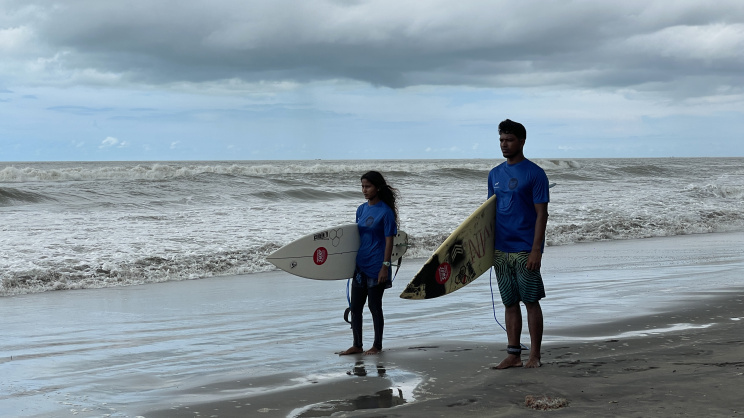
Cox’s Bazar provides the sea, but not all the training opportunities needed to prepare for an international competition.
Fatema says the waves in Japan will be significantly bigger and different from those in Cox’s Bazar.
Her coach, Rashed Alam, president of the Bangladesh Surfing Girls and Boys Association, said Fatema and Mannan had trained mainly in the waters of Cox’s Bazar.
“Japan’s sea conditions are different, so they needed training outside the country. Unfortunately, we could not arrange that training for them,” he said.
Fatema hopes that they will have opportunities to train abroad in the future, allowing Bangladeshi surfers to compete more effectively at international events.
 For all latest news, follow The Daily Star's Google News channel.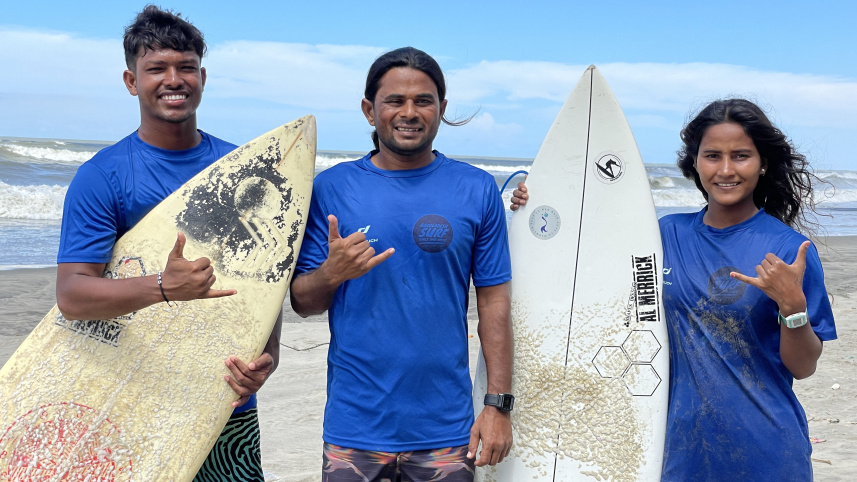
A second struggle
Mannan’s journey into surfing also began by chance. While at school, his first exposure to skateboarding was through a friend, Murad, who also introduced him to surfing in 2014, and he has continued ever since.
But surfing does not provide him with enough income to support himself. Alongside the sport, he runs a small business selling seashell jewellery and cosmetics in Cox’s Bazar’s Sugandha area.
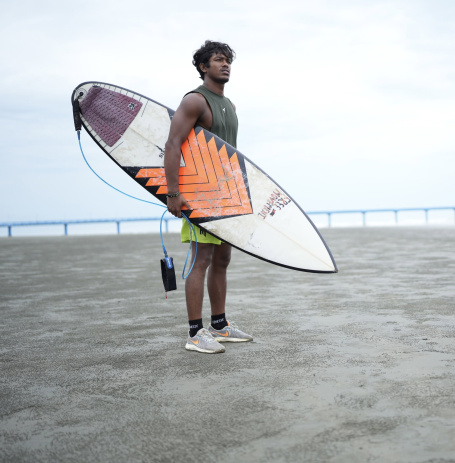
This will also be his first Asian Games, although he has competed in the Asian Surfing Championships three times. He says surfers in many other countries receive government and institutional support, including opportunities to train and compete abroad, while Bangladeshi surfers largely have to continue through their own efforts.
Mannan is also concerned about the lack of preparation time before the games. He says they still do not know exactly when they will travel to Japan.
“If we can go to Japan at least a week before the competition and practice in the local sea, we will have a much better chance of adapting to the waves and performing well,” he said.

For both Fatema and Mannan, the Asian Games represent more than a competition. They are an opportunity to put Bangladesh’s surfing on the international map. And, for Fatema, in particular, to show that a girl’s dreams need not be limited by social expectations.

Education / Pursuing a degree in urban & regional planning: What you should know

Interviews / Tufan Chakma’s Erasmus Mundus Joint Master’s in Animation journey
Events / Students from Australian International School pay a visit to The Daily Star
Off Campus / The predicaments women commuters face on public transportation

Opinion / How students can use their mistakes to learn better

Off Campus / The pitfalls of armchair psychology
Health / The struggles of students with hyperhidrosis

Education / Is the CFA worth it? Bangladeshi candidates weigh in

Education / The A level grading system explained