


'We must do better'
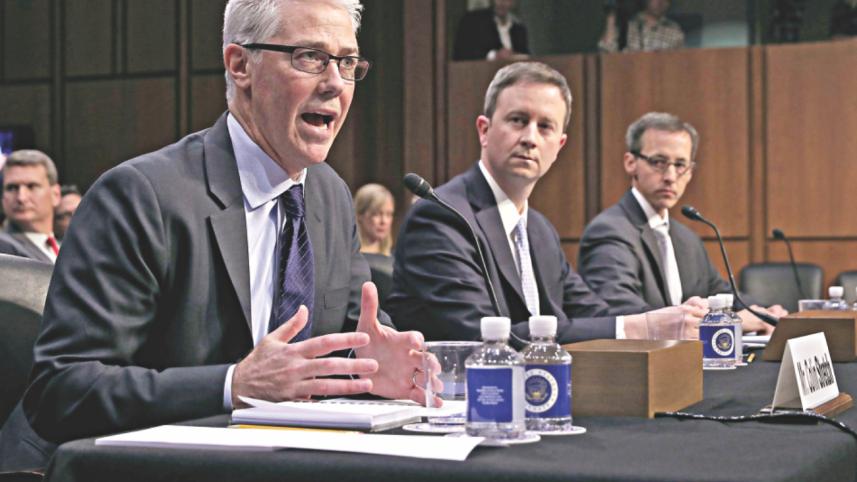
American internet giants told Congress Tuesday they were committed to cracking down on fake news operations on their platforms like the ones Russians conducted to meddle in last year's US presidential elections.
A day after bombshell indictments in a US probe of Moscow's election interference and possible coordination between President Donald Trump's campaign and Russia, Facebook, Google and Twitter sought to assure concerned lawmakers that they were taking necessary steps to rid their platforms of disinformation, propaganda and provocation.

In their testimony, the social media companies revealed startling new data showing many more millions of Americans were exposed to the fake news than previously thought.
The new information gives the broadest picture yet of the Russian effort to spread discord across US society.
"We are deeply concerned about all of these threats," Facebook general counsel Colin Stretch told the Senate Judiciary Subcommittee on Crime and Terrorism.
"That foreign actors, hiding behind fake accounts, abused our platform and other internet services to try to sow division and discord -- and to try to undermine our election process -- is an assault on democracy, and it violates all of our values."
One of three unsealed indictments brought by US special prosecutor Robert Mueller revealed early contacts between Kremlin-linked figures and a former advisor of Trump's campaign.
Testimony by the three companies, whose executives faced more congressional questioning yesterday, shows that Russian activities were far greater than they had previously reported.
Twitter's acting general counsel Sean Edgett said his company has found that nearly 37,000 automated "bot" accounts with Russian links generated 1.4 million tweets that were seen by a potential 288 million people in the three months before the November 8, 2016 presidential election.
"We agree that we must do better to prevent it," he said
Facebook testified that some 126 million US users, a potentially huge portion of the voting public, may have seen stories, posts or other content from Russian sources.
Senator Lindsey Graham, the subcommittee's chairman, said social media manipulation by terror networks and foreign governments is "one of the greatest challenges to American democracy" and national security.
Analysts say Russia's social media interference was part of a broader effort to help Trump defeat Democrat Hillary Clinton.
 For all latest news, follow The Daily Star's Google News channel.
Comments