


Trump returns with 'America first' ringing in Asian ears
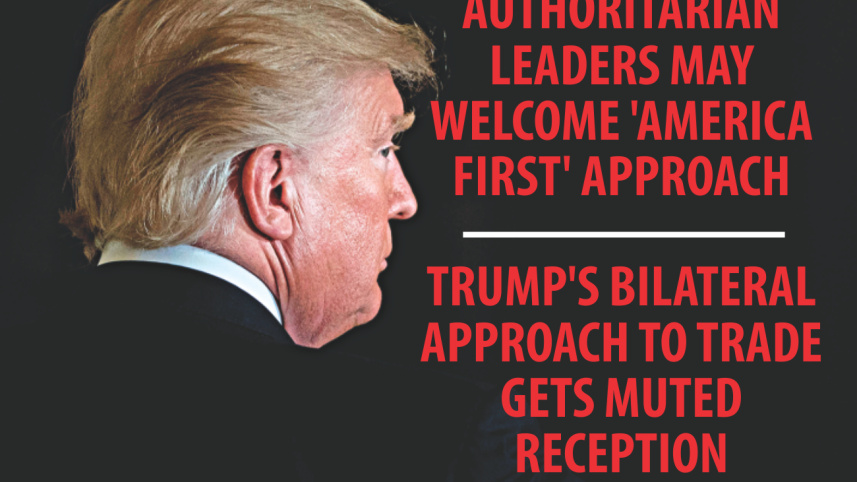
As Air Force One took off from Manila on Tuesday at the end of the longest trip to Asia by an American president in more than quarter of a century, at least two of the region's leaders had good reason to feel satisfied.
At a summit in the Philippines, Donald Trump forged a "great relationship" with President Rodrigo Duterte, who only a year ago had cursed "son of a bitch" Barack Obama for decrying his administration's bloody war on drug pushers and addicts.

"You are a great man to me," Cambodia's authoritarian prime ministerHun Sen said, addressing Trump at a meeting with other Southeast Asian leaders, and then referenced Trump's 'America First' policy.
"I would like to inform you that if you follow your new policy in respect of the independence and sovereignty of other countries, the United States will have a lot of friends and you will be much respected and loved."
For other leaders across Asia, however, Trump's go-it-alone instincts must have represented a puzzling departure from his predecessors, who were - to varying degrees - standard bearers of multilateralism, democracy and rights.
During a tour that took him to Japan, South Korea, China and Vietnam and the Philippines, Trump called for joint efforts to tighten the screws on North Korea and its development of nuclear weapons.
But at an Asia-Pacific summit in Vietnam, he declared that redressing the uneven balance of trade between Asia and the United States was at the centre of his "America First" policy, which he says will protect US workers.
Trump's vision has up-ended a consensus favouring multinational trade pacts whose regional champion is now China. On the sidelines of the Vietnam meeting, 11 countries kept alive a Trans Pacific trade deal that Trump walked away from last year in the name of protecting American jobs.
Although there were few weighty deliverables from Trump's tour, for Asian nations looking nervously at China's increasing assertiveness, it may be welcomed as a sign that his administration is still committed to the region.
"What regional countries wanted was for him to simply show up – to underscore that America remained at least notionally committed to Asia," said Shahriman Lockman, a senior analyst at the Institute of Strategic & International Studies in Malaysia.
 For all latest news, follow The Daily Star's Google News channel.
Comments