


Final Raqa push begins
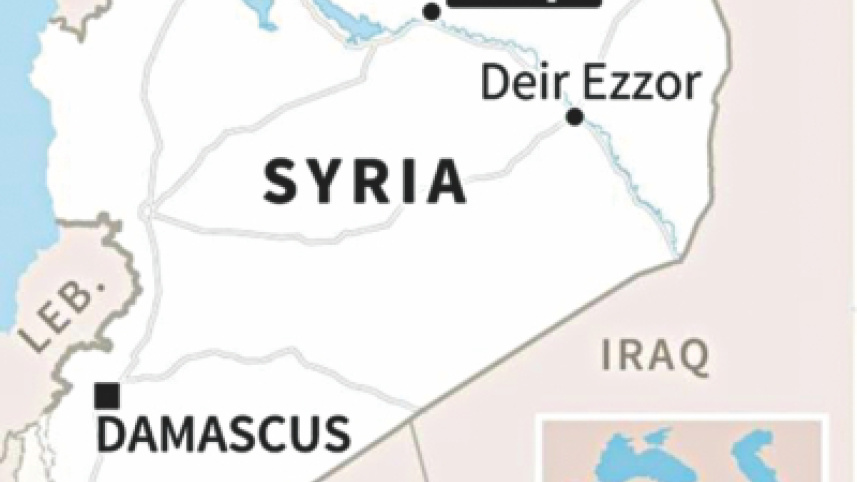
US-backed militias said they had launched their final assault on Syria's Raqa yesterday after a convoy of Islamic State fighters left the city, leaving only a hardcore of jihadists to mount a last stand.
"The battle will continue until the whole city is clean," said a statement by the Syrian Democratic Forces (SDF), a US-backed alliance of Kurdish and Arab militias.

SDF spokesman Talal Selo told Reuters that 275 Syrian Islamic State fighters had withdrawn from the city along with civilian family members, leaving "no more than 200-300" foreign militants to fight on.
Under the terms of their withdrawal, all other civilians left in Raqqa were to be allowed safe passage out of the city, Selo said, adding that he believed only a few remained.
Selo said 275 Syrian fighters left along with their family members. Laila Mostafa, head of the Raqqa Civil Council, formed under SDF auspices to oversee the city, said that figure included both the fighters and their family members. She said an earlier comment by another council member that some foreign fighters had left in the convoy was wrong.
The convoy would head to the remaining Islamic State territory in eastern Syria, Omar Alloush of the Raqqa Civil Council said on Saturday.
It was still in territory held by the SDF on Sunday morning, Selo said. Bali described the civilians who left with Islamic State fighters in the convoy as human shields.
The jihadists had refused to release them once they left the city as agreed, wanting to take them as far as their destination to guarantee their own safety, he said.
Raqa's fall to the SDF now looks imminent after four months of battle.
Raqa was the first big Syrian city to fall to Islamic State as it declared a "caliphate" and rampaged through Syria and Iraq in 2014, becoming an operations centre for attacks abroad and the stage for some of its darkest atrocities.
But Islamic State has been in retreat for two years, losing swathes of territory in both countries and forced back into an ever-diminishing foothold along the Euphrates river valley.
 For all latest news, follow The Daily Star's Google News channel.
Comments