


Climate talks becoming irrelevant!
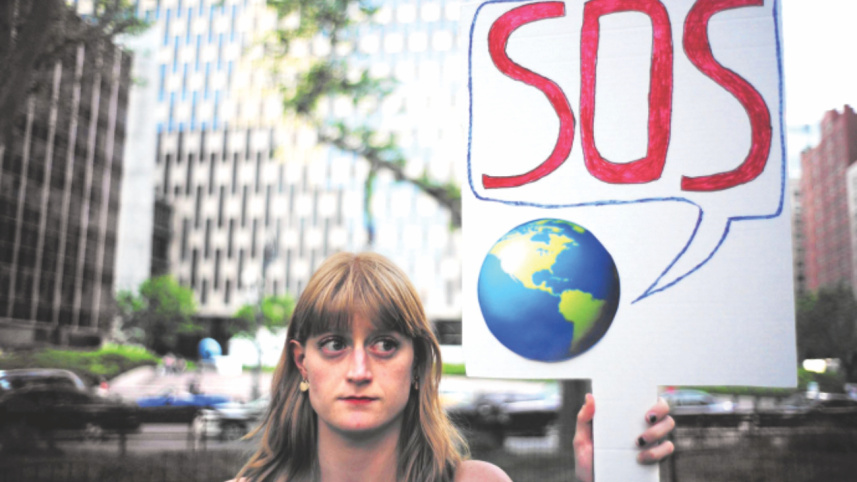
There was a telling moment at the 23rd edition of UN climate talks that underscored both the life-and-death stakes in the fight against global warming, and how hard it is for this belaboured forum to rise to the challenge.
Twelve-year-old Timoci Naulusala from Fiji, a nation disappearing under rising seas, was delivering a testimonial to ministers and heads of state with crisp English and irresistible charm.

Suddenly, describing the devastation wrought by Cyclone Winston last year, his words became measured, his voice hushed.
"My home, my school -- my source of food, water, money -- was totally destroyed," he said. "My life was in chaos. I asked myself: Why is this happening? What am I going to do?"
The answer to Timoci's first question has become frightening clear: climate change. But Timoci's second question remains open: What is he, and by extension the world, going to do?
At first, the answer seemed straight-forward: humans must stop loading the atmosphere with the greenhouse gases that drive global warming. The successful repair of the ozone hole suggested a way forward: an international treaty.
But it took a quarter of a century to get one, in 2015, and even then it is woefully inadequate: voluntary national pledges to curb carbon pollution would still allow the global thermometer to go up 3 C, a recipe for human misery on a vast scale.
Since Paris, the UN climate talks -- known to participants as "COPs", or Conferences of the Parties -- have focused on working out an operational handbook for the treaty, which goes into effect in 2020.
But as the years tick by, the byzantine bureaucracy -- where hundreds of diplomats can argue for days over whether a text will say "should" or "shall" -- has struggled to keep pace with "the real world".
A veteran EU climate diplomat, meanwhile, bemoaned the lack of dynamism in talks. "I've never seen a COP with so little adrenaline," he told AFP.
The UN climate process risks falling out of step in two key ways, experts suggest.
One is in relation to the unforgiving conclusions of science, which show that the window of opportunity for avoiding climate cataclysm is rapidly narrowing to a slit.This year's climate talks kicked off with negotiators learning that CO2 emissions -- after remaining stable for three years, raising hopes that they had peaked -- will rise by two percent in 2017, a development one scientist called "a giant step backwards for humankind".
Negotiations were also reeling from US President Donald Trump's decision to pull out from the Paris Agreement.
The UN's 12-day negotiations came to an end yesterday with an agreement to hold a stocktake in 2018 of national efforts to cut fossil fuel emissions.
 For all latest news, follow The Daily Star's Google News channel.
Comments