


The case for reshaping Dhaka’s social housing landscape


Dhaka is a city of startling contrasts, where shimmering glass towers often stand shoulder-to-shoulder with the fragile corrugated iron of informal settlements. While the elite neighbourhoods of Gulshan and Banani represent the nation’s economic aspirations, they are held aloft by an invisible workforce that retreats to the shadows at sunset. According to World Bank data, approximately 3.5 million people live in Dhaka’s informal settlements, occupying less than 5% of the city’s land mass while essentially powering its service economy. Furthermore, research by the Centre for Policy Dialogue (CPD) highlights a widening urban divide, where land speculation has made safe housing inaccessible even for the middle class, let alone the marginalised.
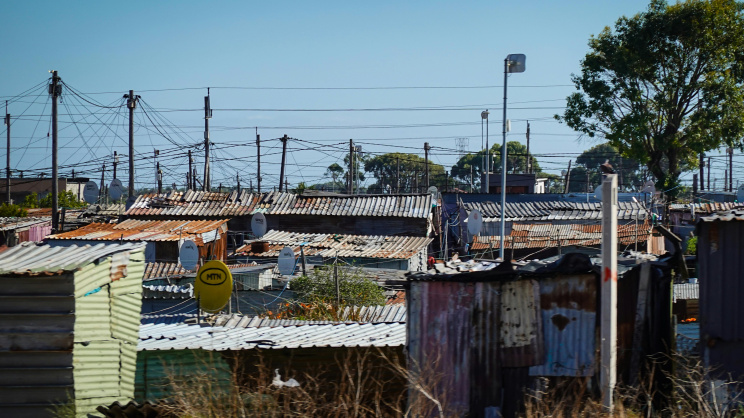
In a metropolis this dense, social housing cannot be discussed as a question of shelter alone; it is a multidimensional system that defines our collective future. Too often, debates are stifled by a "NIMBY" (Not In My Backyard) mindset—the idea that such communities are necessary, but only if they remain invisible. To understand the future of Dhaka, we must first recognise that people living in informal settlements are not outsiders; they are the very gears that keep the city running.

Redefining Architectural Urban Dignity
The primary fear cited by property owners is that social housing will devalue the "premium" vibe of a district. Sharif Uddin Ahammed, the Principal Architect and founder of STHAPOTIK suggests this is a failure of imagination rather than architecture. To him, architectural dignity does not mean copying the marble-clad luxury of Gulshan. Instead, it is about designing housing where working-class residents are not visibly marked as inferior.
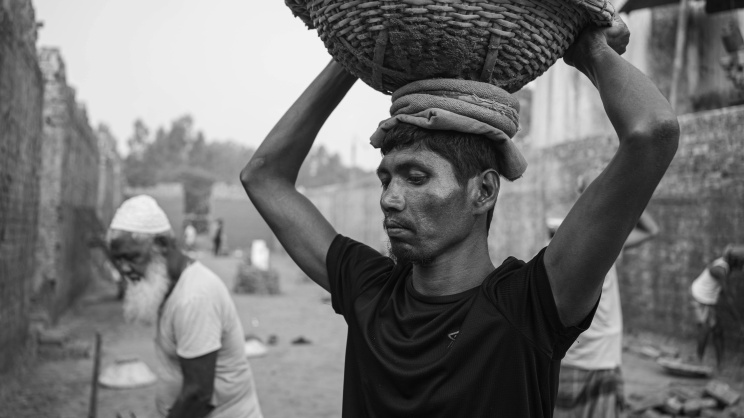
"Dignity comes from the ability to remain connected to the city and its opportunities," Ahammed confirms. He challenges the standard measurement of housing units, noting that in the Bangladeshi context, success should be measured by healthy living environments. This includes adequate daylight, climate-responsive design, and child-friendly spaces. Social housing near high-value areas should not be hidden behind walls but integrated through active ground floors, shaded pedestrian edges, and clinics. Ultimately, making visible the labour that already supports these elite neighbourhoods does not devalue them; it legitimises the urban economy.
Mitigating Shared Disaster Risks
From a structural safety perspective, the argument for formalising housing is often framed around protecting neighbouring luxury assets from fire. While replacing a fire-prone slum with a fire-rated block does lower the "disaster risk profile," Ahammed insists that the residents' safety must be the central ethical concern. Furthermore, informal settlements face risks because of combustible materials and a lack of emergency access, but physical construction is only half the solution.
Architectural dignity isn't about luxury aesthetics; it’s about creating inclusive, climate-responsive environments where working-class residents are not treated as second-class citizens or visibly marked as inferior.
A planned block can become just as dangerous if maintenance is poor or fire exits are blocked. Ahammed points out that the Bangladesh National Building Code (BNBC) 2020 provides the necessary framework, but enforcement is where the city falters. "The real issue is not 'slum versus building'; it is whether we have enforceable urban safety systems," he remarks. For social housing to be a safer alternative, it must include community fire drills, maintenance funds, and resident committees to ensure the building remains a refuge rather than a vulnerability.
Solving Infrastructure Planning Exclusion
There is a persistent narrative that informal settlements strain the city’s water, gas, and drainage grids. Many residents depend on illegal connections because they are systematically excluded from formal utilities. In an ironic twist, these low-income workers often end up paying higher rates to informal middlemen than wealthy residents pay to the state.
Disaster mitigation must prioritise the safety of marginalised residents over protecting neighboring assets. A fire-rated building only works if it is socially managed, affordable, and strictly code-compliant.
Engineered housing provides infrastructure relief for the entire neighbourhood by allowing the city to map demand and regularise consumption. Ahammed suggests that formalisation allows for water metering, designed drainage capacity, and improved waste collection. He maintains that social housing should provide legal connections and rainwater harvesting systems, benefiting the wider district. "Formal housing must reduce both technical risk and everyday injustice," he argues, ensuring that the grid is designed for the actual population density of the city, not just its registered taxpayers.
Bridging the Social Divide
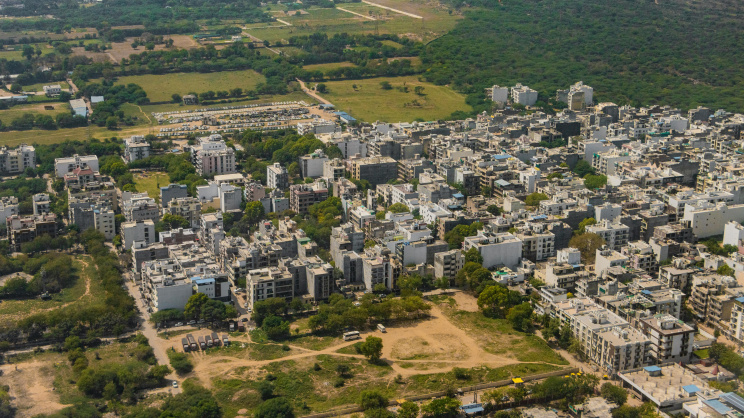
Can shared amenities like public parks or community markets really bridge the gap between luxury and social housing? Ahammed believes they can, provided they are not "residual spaces" left over after construction. He places immense value on community markets, noting that low-income residents rely on home-based work, from tailoring to repairs.
"If social housing removes these livelihood spaces, it may produce cleaner architecture but deeper poverty," Ahammed warns.
While global benchmarks like Singapore demonstrate that integrated neighbourhoods are inherently more resilient, applying such a model to Dhaka requires a cautious, localized lens. Singapore’s success is built upon a foundation of strong state land control and public finance which are luxuries that Dhaka’s fragmented land ownership and speculative markets do not share. To ensure that integration does not become a convenient slogan used to push the vulnerable to the urban periphery, the city must move beyond aesthetics. For Dhaka to truly succeed, it needs a framework that prioritizes land-value capture and robust protection against displacement, ensuring that the poor remain anchored to the urban heart.
The Right to Belong
Perhaps the most important question is not where social housing should be built, but who has the right to belong in the city. The workers who clean our homes, drive our vehicles, and construct our towers are the very people most vulnerable to exclusion. This contradiction lies at the heart of our urban crisis.
Housing should not be viewed merely as shelter.
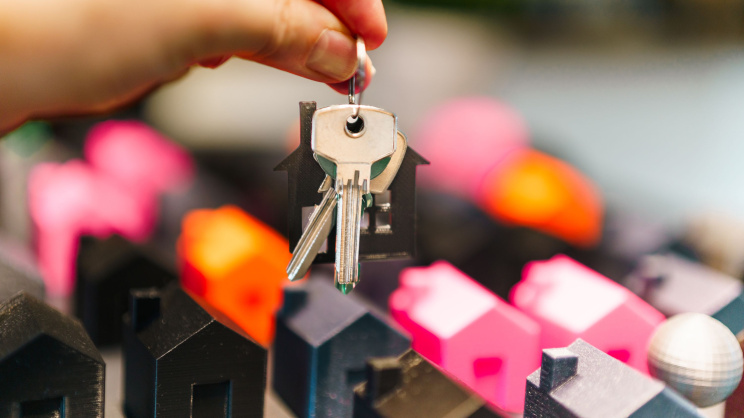
It is urban infrastructure, social infrastructure, and economic infrastructure all at once. If Dhaka aspires to become a truly global city, it must move beyond the divide between luxury and low-income housing. It is time to establish the "Right to the City"—a public system that protects the right to remain in the urban heart with dignity. Only by creating integrated, resilient neighbourhoods for everyone can we build a harmonious, inclusive, and democratic Dhaka for all.
 For all latest news, follow The Daily Star's Google News channel.
Comments