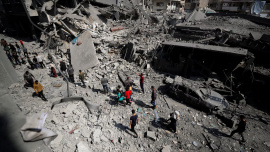
India’s push-ins are not a border problem

On June 25, 2026, India’s new High Commissioner to Bangladesh, Dinesh Trivedi, presented his credentials at Bangabhaban. Within hours, he announced the resumption of tourist visas for Bangladeshi nationals after a two-year suspension. The same day, he was accorded the rank of Union Cabinet Minister in India’s Table of Precedence, a designation with no precedent for a diplomatic posting to Dhaka. The optics were carefully managed: reset, goodwill, and a senior political figure with Bengali roots dispatched to steady a wobbly relationship.
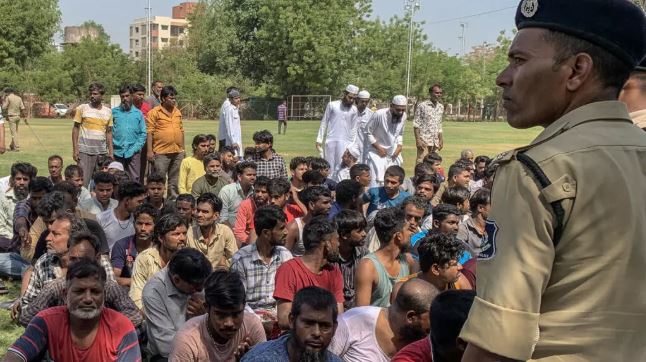
All this comes after weeks of heightened tension surrounding what is popularly called the “push-in” from India. Between May 2025 and January 2026, the Border Security Force pushed 2,479 people across into Bangladesh, of whom at least 120 were later confirmed to be Indian nationals. Since Suvendu Adhikari’s BJP government took office in West Bengal in May 2026, running on an explicit “detect, delete, and deport” campaign, approximately 5,000 people have been expelled without judicial review. Human Rights Watch documented BSF personnel escorting groups through cuts in the border fence at night.
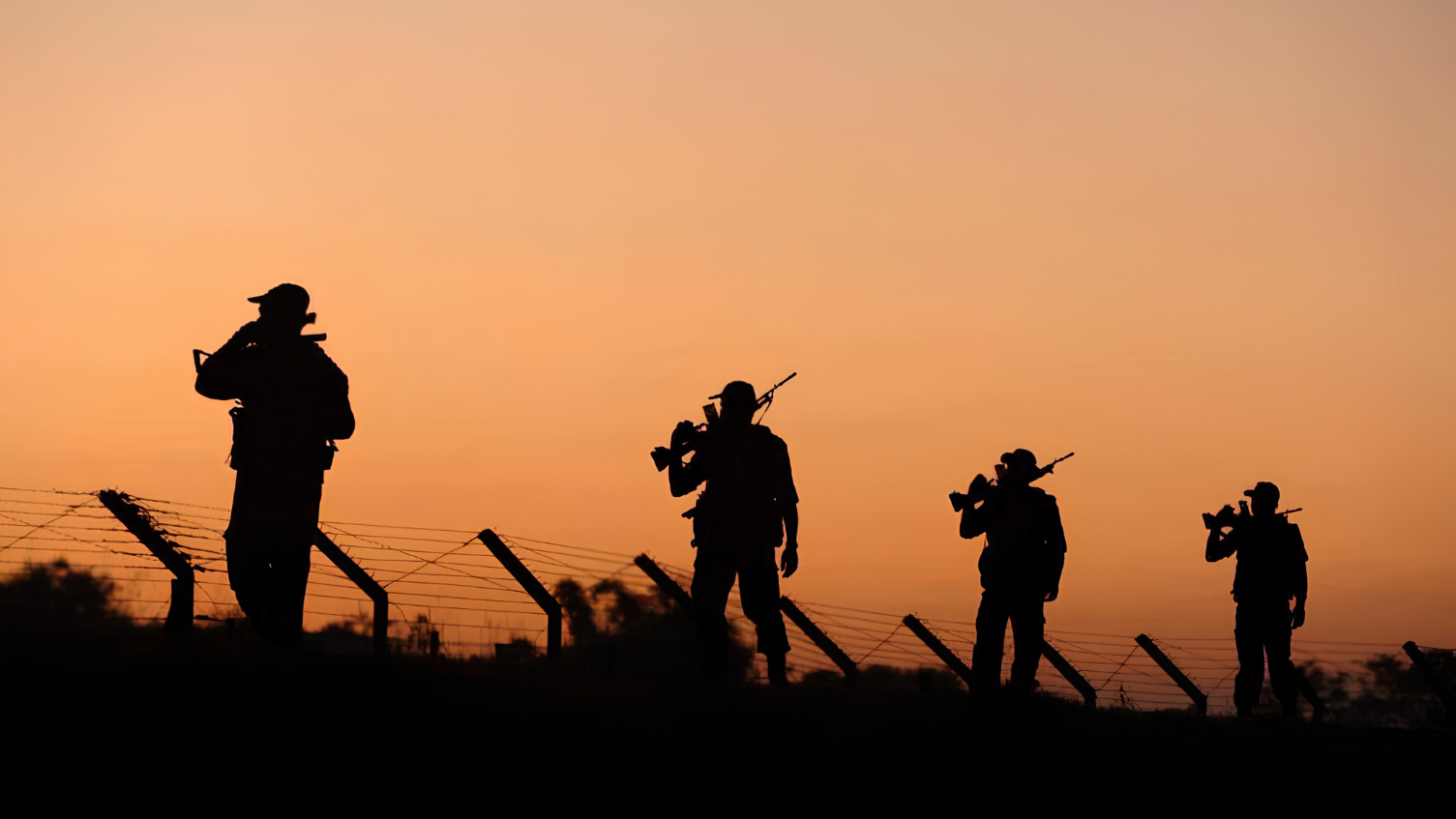
Border Guard Bangladesh has resisted at least 21 such attempts since June 1 alone. The 57th BGB-BSF Director General-level conference, held in New Delhi on June 9, produced no binding commitment. India maintained that its deportations were lawful under domestic law. Bangladesh maintained that they violated international norms. Both sides returned home.
And yet, visas were resumed. A Cabinet-rank envoy was installed. The message from New Delhi was: the relationship matters, and we are investing in it.
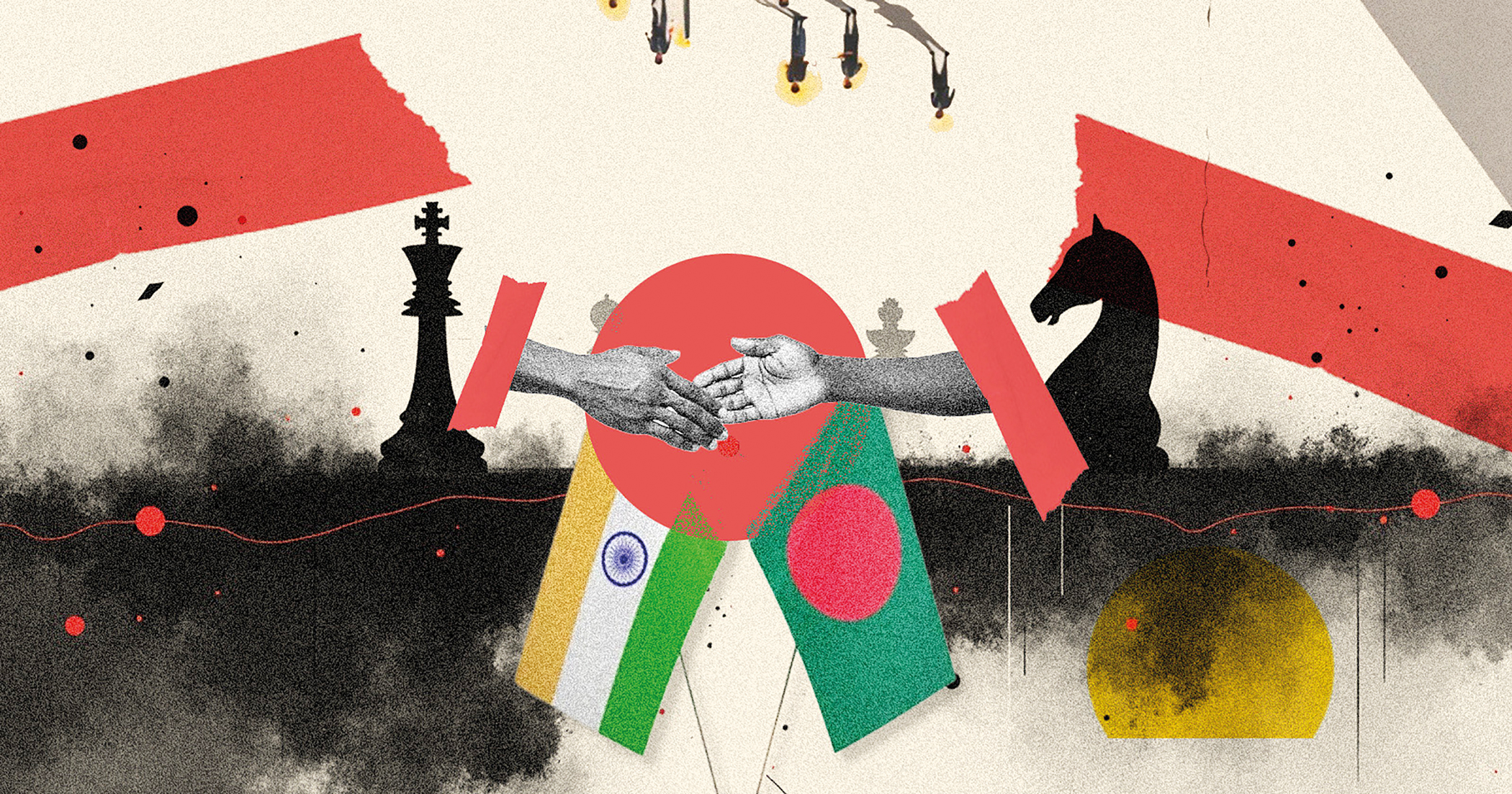
The most credible reading is not that India is trying to reset the relationship in Bangladesh's favour. Rather, it is trying to manage the relationship while its domestic political compulsions remain unchanged.
In my book, India’s Bangladesh Problem, I have argued that seemingly contradictory actions were, in fact, part of a larger, congruous plan. These two things—the push-ins and the diplomatic gestures—similarly appear contradictory, but are, in fact, part of the same policy, operating at two levels simultaneously.
Robert Putnam’s two-level game remains one of the more useful frameworks for understanding how states behave when domestic and international pressures pull in opposite directions. At the domestic level (Level I), leaders respond to constituency pressures, electoral mandates, and factional competition. At the international level (Level II), they manage interstate relations, negotiate agreements, and project a face appropriate for diplomacy. The skill lies in the overlap: what Putnam called the “win-set,” the range of agreements at the international level that can also survive domestic ratification.
India’s current Bangladesh policy makes no sense if analysed only at Level II. At that level, New Delhi’s behaviour is incoherent: it sends a high-profile envoy to stabilise relations while its border forces dump families into no-man’s land at gunpoint. But when analysed across both levels simultaneously, the logic becomes clear.
At Level I, the BJP has built its decade-long political economy in part on the Bangladeshi Muslim as a threat. The rhetoric has moved through stages: from the “infiltrator” language of the early 1990s, to Amit Shah’s description of migrants as “termites” in 2019, to the institutional codification of the Citizenship Amendment Act, which for the first time imposed a religious test on asylum seekers by creating a path for non-Muslim minorities while excluding Muslims. By 2025, the BJP had won a landslide victory in West Bengal, where Adhikari had campaigned on driving out Bangladeshi Muslims while exempting Hindus under the CAA. The “detect, delete, deport” directive was not a policy deviation. It was a campaign promise. It was the win-set.
At Level II, India needs Bangladesh. Bangladesh is India’s largest trading partner in South Asia. The Teesta water treaty remains unresolved. Transit access through Bangladesh matters for India’s North-east. The Hasina years provided India with a government in Dhaka that subordinated Bangladesh’s interests to India’s strategic preferences, sometimes at considerable domestic political cost to Hasina herself. That arrangement collapsed in August 2024. What followed, under the Yunus interim government, was the most volatile period in bilateral relations since 1975.
Trivedi’s appointment at Cabinet rank is India’s attempt to reconstruct the Level II relationship without conceding anything at Level I. The visa resumption signals normalcy. The Cabinet rank signals strategic priority. But neither comes with any offer to halt the push-ins, verify nationality before expulsion, or accept the return of the 120 confirmed Indian nationals Bangladesh has already documented.
It would be a mistake to analyse the push-in crisis purely through the lens of bilateral relations or Hindu nationalist ideology. Both matter, but neither fully explains the structural mechanism by which poor, working-class Bangladeshi migrants, alongside Indian Muslims mistaken for them, have become the primary target of a state security apparatus.
In India’s Bangladesh Problem, I argued that the marginalisation of Bengali Muslims in India does not follow the logic of simple exclusion. It follows the logic of differential neoliberalism: a formation in which the liberalisation of markets, labour, and capital proceeds alongside the selective securitisation of specific populations. The Bengali Muslim migrant occupies a particular position in this formation. As labour, they are absorbed into India’s informal economy—construction, domestic work, and the garment supply chain. As a political figure, they are constructed as the perfect outsider: the infiltrator whose presence justifies the NRC, the CAA, the holding centre, and the border fence.
During Narendra Modi’s election campaign in 2014–15, the BJP discovered that the Bengali Muslim “infiltrator” could perform double ideological work: consolidating the Hindu vote in West Bengal by activating demographic fear, while providing the national security narrative that justified expanding state surveillance infrastructure. The NRC in Assam found approximately two million people stateless, the majority of them poor, Muslim, and Dalit.
Trivedi's appointment at Cabinet rank is India's attempt to reconstruct the Level II relationship without conceding anything at Level I. The visa resumption signals normalcy. The Cabinet rank signals strategic priority. But neither comes with any offer to halt the push-ins, verify nationality before expulsion, or accept the return of the 120 confirmed Indian nationals Bangladesh has already documented.
The 2025 Immigration and Foreigners Act accelerated this logic by removing the Foreigners Tribunal from the deportation chain. Previously, suspected foreigners in Assam were supposed to appear before a tribunal before expulsion. The administrative bypass enabled by the new law—which West Bengal has adopted for its holding centre operations—means the determination of foreignness is now a police function. This is not simply an efficiency measure. It is the conversion of citizenship into a security category, one determined by phenotype, language, religion, and suspicion rather than by documentation.
The result is that a pregnant woman from Birbhum with an Aadhaar card and a voter ID can be deported to Bangladesh within forty-eight hours. A Calcutta High Court later called this deportation illegal and carried out in “hot haste.” The Supreme Court ordered her return on humanitarian grounds after she had already given birth. These are not edge cases produced by administrative error. They are what happens when the state’s deportation mechanism is deliberately designed to operate faster than judicial oversight can follow.
Dinesh Trivedi is a former Railways Minister, a BJP member with roots in the Trinamool Congress, and a politician with a constituency base in Barrackpore, West Bengal. He is not a career diplomat. He has never served in any foreign posting. India has never before sent a political appointee as High Commissioner to Dhaka.
This is worth sitting with. At a moment of acute bilateral tension over deportations that Bangladesh has described as illegal, inhumane, and in violation of international law, the Indian government has decided that its diplomatic needs in Dhaka are best served not by a seasoned IFS officer with technical expertise in bilateral mechanisms, but by a Bengali politician with deep familiarity with the domestic politics of West Bengal.
The most credible reading is not that India is trying to reset the relationship in Bangladesh’s favour. Rather, it is trying to manage the relationship while its domestic political compulsions remain unchanged. Trivedi’s Bengali identity and political experience make him better equipped than a career diplomat to navigate the cultural register of the relationship and to translate Indian domestic politics to a Bangladeshi audience in ways that minimise blowback. His Cabinet rank ensures that when he meets Tarique Rahman or Bangladesh’s foreign ministry, he carries sufficient protocol weight to signal that India is serious about the relationship, while insulating the push-in operations from formal diplomatic accountability.
It is thus no anomaly that, at Level I, the BJP continues to run holding centres in all districts of West Bengal, continues to process deportees without court hearings, and continues to describe Muslims expelled across the border as “infiltrators”, while, at Level II, it sends a Cabinet-rank envoy, resumes visas, and offers cultural goodwill through a politician who understands Bangladesh.
Dr Navine Murshid is the author of India’s Bangladesh Problem: The Marginalisation of Bengali Muslims in Neoliberal Times and Associate Professor of Political Science at Colgate University.
Send your articles for Slow Reads to slowreads@thedailystar.net. Check out our submission guidelines for details.
Shared rivers, shared responsibilities: The case for water treaties

Bihar wants Delhi to not renew Ganges treaty. What does it mean for Dhaka?
Bangladesh and the United States: Beyond the tariff bargain
From the Carter Doctrine to the Mecca Pact: A changing Gulf security order

More capability, less autonomy? Bangladesh’s emerging security dilemma
An anti-West network is emerging: How should Bangladesh respond?
The Mecca Pact: Deterrence, Israel, and the new Gulf security equation
What Nepal’s flood devastation means for Bangladesh, India and China
Five reasons why Bangladesh shouldn’t join the Mecca Pact