The real crisis behind India-Bangladesh border push-ins

The push-in dispute looks like a quarrel about migration. It is really a quarrel about due process — and neither government can afford to keep getting that wrong.
In June last year, a family from Birbhum in West Bengal — daily-wage workers with two decades in Delhi — was picked up during an identity-verification sweep and pushed across the border into Bangladesh within forty-eight hours. They carried Aadhaar cards, voter IDs and birth certificates. They were Indian citizens. It took a Calcutta High Court order, which called the deportation illegal and carried out in “hot haste”, to bring them home. A schoolteacher in Assam’s Morigaon was taken from his home days later; a migrant worker near Mumbai was deported despite his family producing every document asked of them. These are not exceptions to a system under pressure. They are the system working as designed.
Both governments agree, on paper, that verified Bangladeshi nationals should be returned through established channels. What changed since mid-2025 is not the goal but the method — and the scale.
Border Guard Bangladesh recorded at least 2,303 people pushed across between May 2025 and January 2026, among them 126 Indian nationals and 38 from Myanmar. In the first two weeks of June alone, the BGB foiled more than 30 attempts, including one in Jhenaidah where BSF personnel allegedly drove a prison van towards the fence before being forced to retreat.
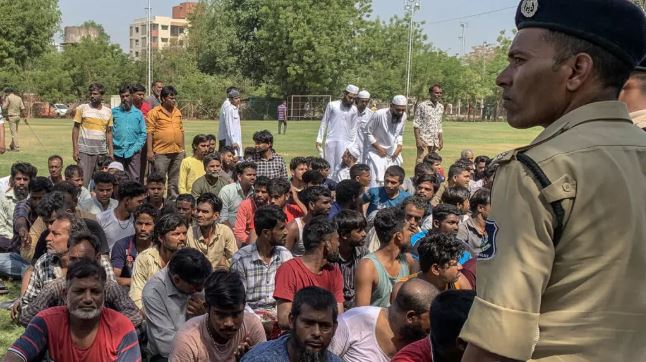
The language itself reveals how far apart the two sides stand. India calls these “pushbacks” — a term from European and American border enforcement, implying someone caught mid-crossing and returned. But the people in these tallies were picked up in Maharashtra, in Assam, in Delhi, and driven to the fence. When 126 Indian nationals end up on Bangladeshi soil, the word has lost its meaning. Bangladesh’s term, “push-ins”, is the more honest one.
The narrative driving the policy is weaker than its volume implies. The familiar claim of ten to twenty million “illegal Bangladeshis” has never rested on a real count — and even if true, it would amount to barely one percent of India’s population.
When Assam completed its Supreme Court-supervised National Register of Citizens in 2019, it left out 1.9 million people — far below the figures politicians had floated — and, by the chief minister’s own later account, fewer than half were Muslim; many were Bengali Hindus, Assamese Hindus and Gorkhas.
The economic premise is shakier still: on nominal per capita income, Bangladesh has drawn level with India in recent years, and migration researchers on both sides — India’s Sreeradha Datta and Bangladesh’s CR Abrar among them — note that the flow is demand-driven. Indian employers want the labour, which is why neither fences nor expulsions have stopped it.
So why now, and at this intensity? Three compounding triggers, each political. A February 2025 Supreme Court order to deport sixty-three declared foreigners, which Assam used to launch a far broader drive. The April 2025 Pahalgam attack and Operation Sindoor, after which India’s home ministry instructed states to verify suspected “illegal immigrants” within thirty days. And the BJP’s landslide victories in West Bengal and Assam, with West Bengal’s new chief minister, Suvendu Adhikari, announcing a “Detect, Delete, Deport” drive and Assam’s Himanta Biswa Sarma posting, “Assam will fight. Pushback will continue.”
The mechanism mattered as much as the motive: India’s new Immigration and Foreigners Act, 2025, and the colonial-era Assam expulsion law together enabled removals that bypassed Foreigners Tribunals and nationality verification altogether — no FIR, no hearing. That legal shift from court-supervised deportation to administrative pushback is what turned a chronic irritant into a near-daily confrontation.
India says more than 2,860 nationality-verification requests remain unanswered in Dhaka, some pending for more than five years. Bangladesh, meanwhile, hosts around a million Rohingya and understands better than most how verification processes can slip into indefinite limbo. The technological tools to confirm nationality within days already exist, from India’s Aadhaar system to Bangladesh’s national ID database. The obstacle is not capacity but political will.
According to Ain o Salish Kendra, 34 Bangladeshis were killed by the BSF in 2025 — the highest toll in five years, up from 18 in 2021. In the first five months of 2026, at least eight more have been killed. A young Bangladeshi, Mujib Ali, was shot dead at the Moulvibazar border on 12 June — hours after the 57th BGB-BSF director-general conference in New Delhi issued its joint statement pledging “peace and tranquillity”.
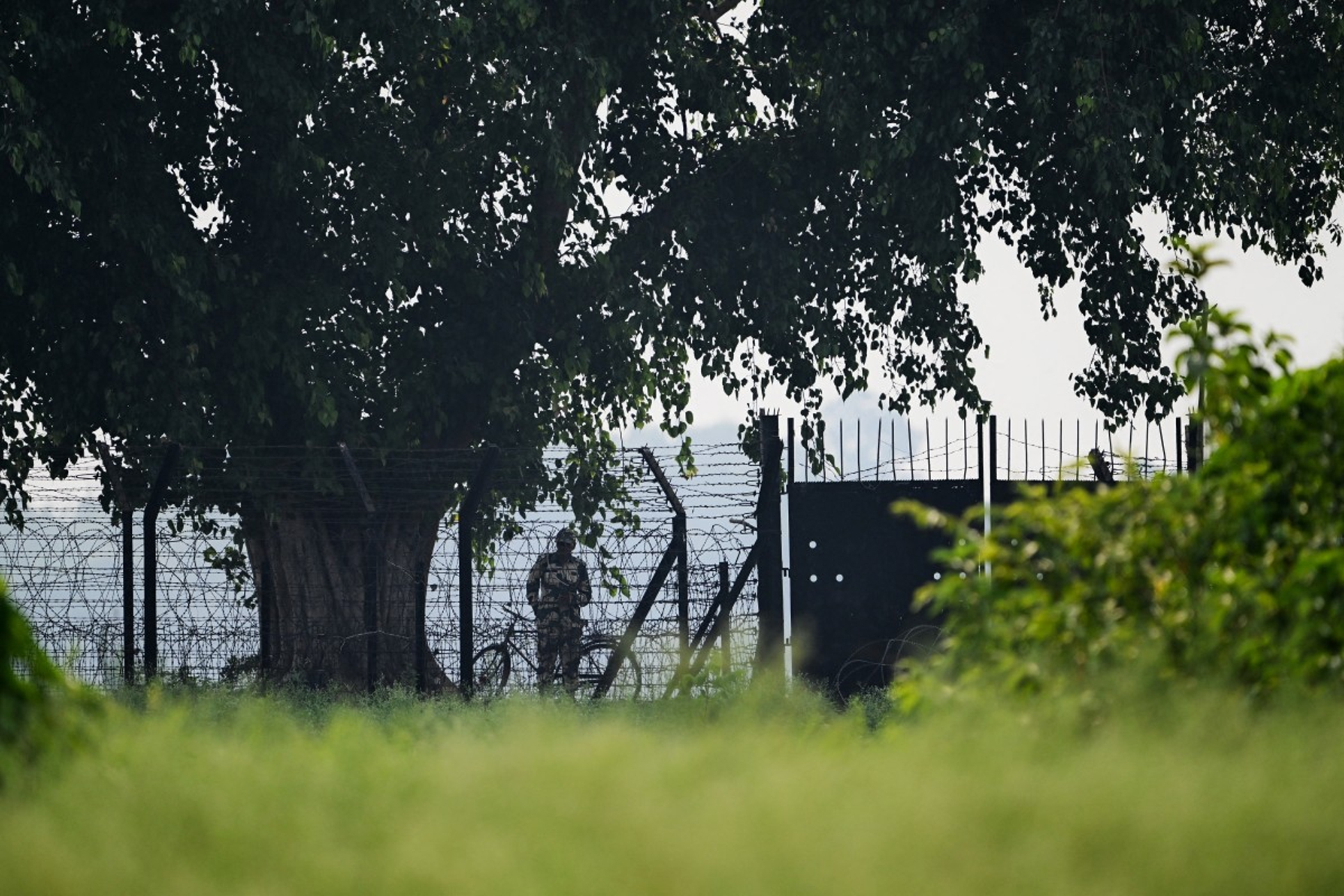
Since 2009, at least 27 of those killed have been minors. And this is not like India’s other frontiers — open with Nepal, sealed and militarised with Pakistan. This border runs through contiguous, densely settled villages; an unverified expulsion deposits people into inhabited communities, or strands them on the zero line for days.
In May 2025, roughly 40 Rohingya holding refugee papers were reportedly placed on an Indian naval vessel and forced into the Andaman Sea to swim towards Myanmar — acts a UN expert called unconscionable.
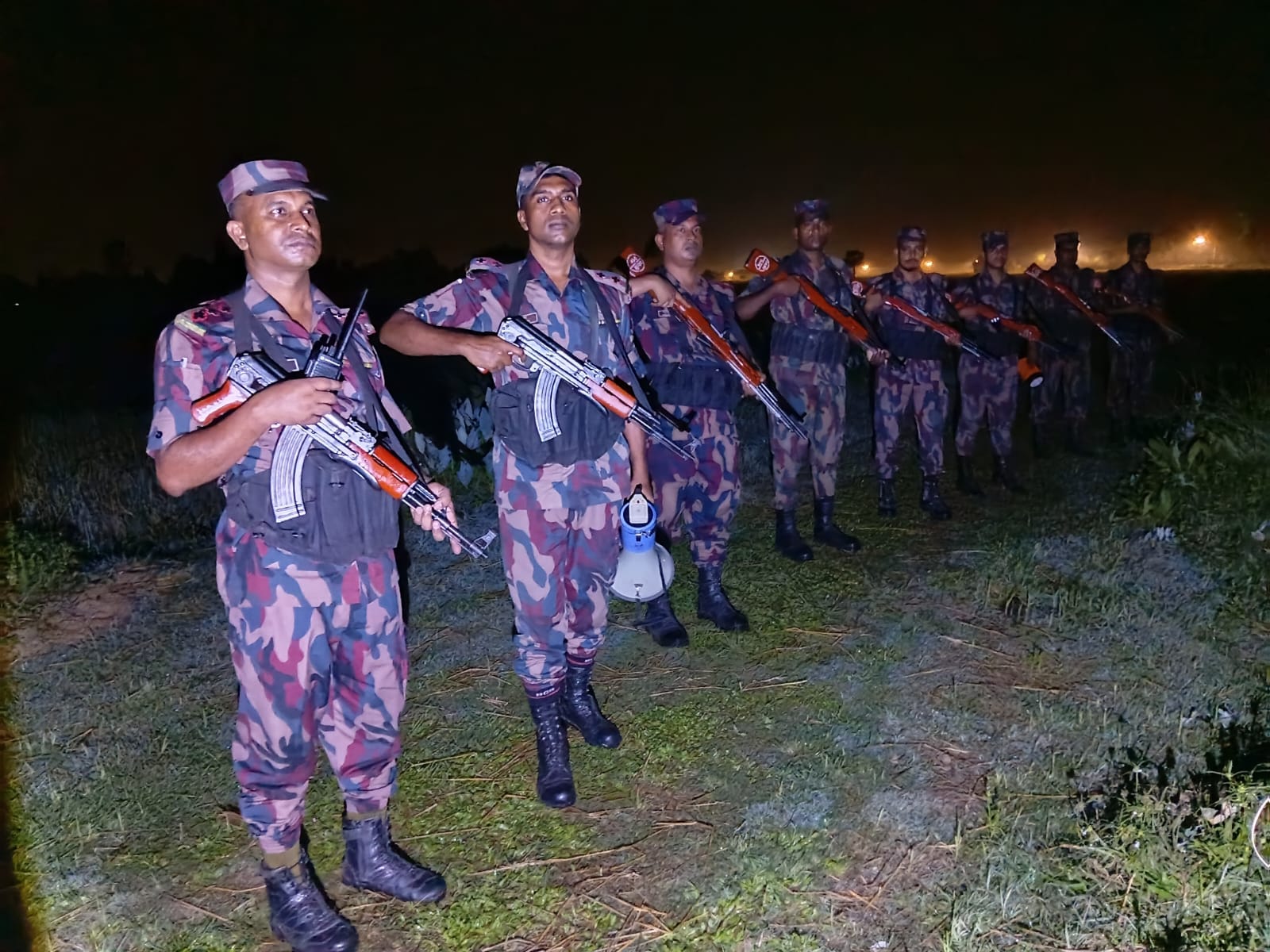
More worrying still, the safety valve itself is failing. In early June, battalion-level flag meetings at Panchagarh, Chapainawabganj, Lalmonirhat and Jamalpur all failed to resolve push-in standoffs. Ten people, including three children, were stranded in no-man’s land at Panchagarh for three days amid thunderstorms. At Jamalpur, BSF personnel threatened to open fire after their push-in was blocked; BGB troops responded: “Do you think only you have guns?” When the mechanism built to de-escalate cannot resolve a single incident, the gap between a stranded family and a lethal standoff narrows to a trigger finger.
Drift is not neutral: the calendar carries a harder test still. The 1996 Ganges Water Treaty expires in December 2026, and renewal talks are already snagging over how to measure flows as the river’s dry-season flow shrinks.
There is also a deeper inconsistency at work. India protests vigorously when its own citizens face mistreatment abroad — demanding consular access, fair procedures and humane treatment. Yet the practices now documented at its own border mirror the very violations it condemns elsewhere.
When those Indian nationals turned up in Bangladesh, Dhaka returned them through established channels — the very procedure it is asking India to follow. That asymmetry does not merely erode India’s standing; it hands every future negotiating partner, from Dhaka to Beijing, a ready-made precedent. Consistency is not a favour to Bangladesh. It is a strategic interest for India.
The way forward requires less grand diplomacy than administrative discipline. Both governments should insulate border management from electoral politics, establish a joint and time-bound nationality-verification mechanism, and suspend unilateral push-ins while disputed cases are reviewed. Where citizenship is genuinely contested, neutral technical support from organisations such as UNHCR or IOM could help ensure credibility and transparency. Reviving border haats and strengthening local cooperation would also do more to build trust than another exchange of diplomatic notes.
The families stranded on the zero line are not statistics or political messages. They are people caught between two neighbours that have repeatedly shown they can resolve difficult disputes through cooperation. The challenge now is to bring that same commitment to the border before procedural failures evolve into a deeper crisis of trust.
Badrul Hassan is a development and humanitarian professional. He can be reached at badrulsocial@gmail.com.
Send your articles for Slow Reads to slowreads@thedailystar.net. Check out our submission guidelines for details.
Can Bangladesh capitalise on the Bay of Bengal’s strategic rise?

Who pays for Israel’s nuclear dominance?

How much higher can oil prices go?

Beyond the ‘end of history’ and the ‘clash of civilisations’ / What kind of world order is emerging?

The South Korea opportunity Bangladesh is overlooking
Geopolitical ghosts and the United Nations
BRICS is bigger, but can it deliver?
Can Tarique Rahman’s plan break the Rohingya repatriation deadlock?
Diplomacy in a turbulent world: How Bangladesh should navigate bilateral ties and regional platforms