


Compassion at the frontlines

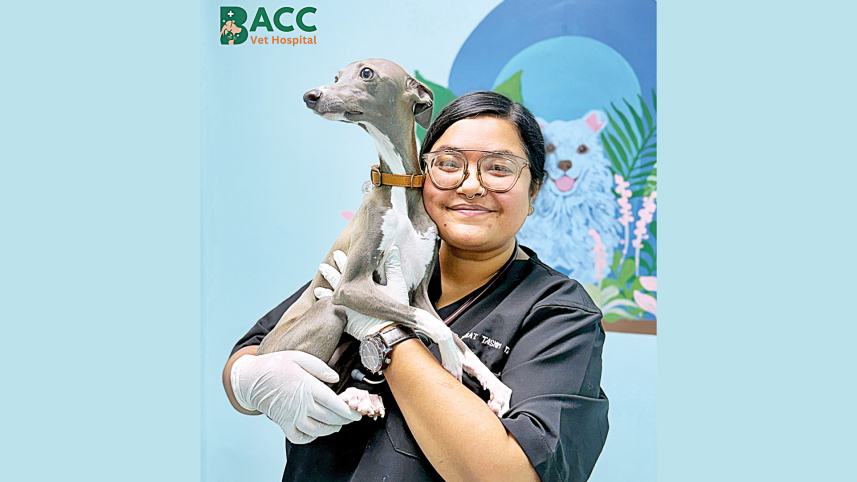
Dr Mir Nishat Tasnim Tania
Senior Veterinarian
Bangladesh Animal Care Center (BACC) vet hospital

“In many localities, people still choose cruelty to control populations. We must prioritise spaying and neutering over violence and practice deep empathy to ensure a healthy coexistence within our society.”
World Veterinary Day is a global tribute to professionals standing at the vital intersection of animal welfare, environmental preservation, and public safety. This year’s theme, "Veterinarians are essential health workers", emphasises their indispensable role within the "One Health" framework, recognising that human well-being is inextricably linked to animal and environmental health. To explore these critical issues, we spoke with Dr Mir Nishat Tasnim Tania, Senior Veterinarian at the BACC Vet Hospital. With her extensive experience, Dr Tania provides profound insights into the deeply intertwined relationship between public health and animal welfare.
The Daily Star (TDS): Why is animal health and welfare important for both pets
and society?
Mir Nishat Tasnim Tania (MNTT): Animals are integral to our shared ecosystem. As zoonotic diseases transition to humans, safeguarding animal health is a prerequisite for maintaining human safety and ecological balance. Beyond biology, animals significantly enrich our mental health and social lives. A society fostering compassionate coexistence ensures a more harmonious world. Ultimately, when we protect the animals around us, we protect the stability and well-being of our entire community.
TDS: What are the most common health problems you see in pets, and how can they be prevented?
MNTT: We can categorise pet health issues into three groups. First are medical or genetic conditions. The most common problems we find in all age groups are anaemia and gastrointestinal issues like vomiting and diarrhoea, which can be prevented by regular deworming and maintaining a proper diet. Also, dermatological issues, including fungal infections and flea-borne allergies, are extremely prevalent in our country due to the weather. Secondly, we face high rates of viral diseases that are highly infectious. In dogs, parvovirus is common, while cats frequently suffer from panleukopenia, both having over an 80% mortality rate. These infectious diseases are nearly completely preventable through rigorous vaccination and hygiene. Finally, we see many traumatic injuries resulting from "Fall off Building" (FOB) accidents in cats and "Hit by Car" (HBC) incidents in stray animals. Cat parents must take proactive measures, like "cat-proofing" the whole house and making sure cats stay indoors, and the general public should drive carefully to ensure the animals remain safe in dense urban environments.
TDS: How important are vaccination, deworming, and proper nutrition in responsible pet care?
MNTT: These pillars are the foundation of pet wellness and longevity. As mentioned before, infectious diseases have high mortality rates, and only timely vaccination can prevent them, including zoonotic threats like rabies. There is a misconception in Bangladesh that kittens and puppies should only be vaccinated after they are three months old. Contrary to this, WSAVA guidelines confirm that puppies and kittens should start their core vaccinations at 6-8 weeks and that these vaccinations should be boostered for maximum immunity; the vaccine for rabies should be given at 3 months of age. Deworming is also vital, as internal parasites can cause anaemia and gastrointestinal complications.
Furthermore, nutrition must be tailored to the individual. Owners should avoid tap water, even if it is filtered, as heavy metals can cause irreversible kidney damage, especially in cats. A diet should be formulated according to veterinary guidance to meet specific health needs or recovery requirements during illness and also to prevent early onset of degenerative diseases.
TDS: How often should pets have a routine veterinary checkup? What does a basic checkup usually include?
MNTT: Healthy adult pets require an annual booster vaccination and checkup. However, senior pets can benefit from biannual exams with advanced diagnostics to catch degenerative diseases early.
Young animals need a visit at 6-8 weeks to get their first dose of core vaccine. We give a booster dose of core vaccines after 14-21 days and the rabies vaccine at 12 weeks.
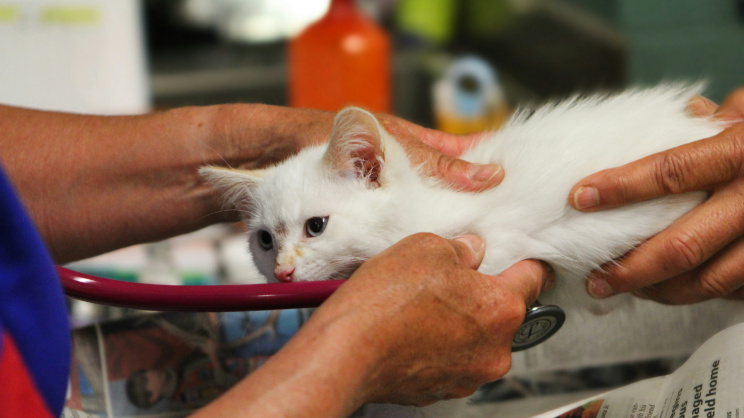
At BACC, a routine checkup begins with a comprehensive physical exam for all body systems and full medical history. Since animals cannot verbalise distress, we meticulously examine the eyes, ears, teeth, gums, skin, and lymph nodes. We palpate organ systems to detect abnormalities. If our examination reveals red flags, we proceed to specific diagnostic tests, such as blood work or imaging, ensuring a precise diagnosis. This procedure ensures we diagnose underlying disease for proper treatment, contrary to treating the symptoms.

TDS: What should pet owners look for when choosing a good veterinary clinic or pet care service?
MNTT: Pet owners should always prioritise a qualified veterinarian. Vet clinics should adhere to standards set by the Bangladesh Veterinary Council (BVC). A veterinary facility should at minimum offer proper hygiene, internal medicine diagnosis and treatment, emergency stabilisation services and routine surgeries. Hospitals that have diagnostics, pharmacy, treatment and hospitalisation/ICU services could be ideal choices for emergency situations. I must warn pet owners against "quackery" found in some home-service cases and giving consent to perform surgical procedures at home. This can be extremely dangerous due to the lack of a sterile environment and not having proper equipment to address any surgical complications which may arise. Always prioritise your pet’s health by choosing licensed professionals who operate within legitimate, well-equipped clinical settings rather than opting for convenience through untrained and unlicensed quacks.
TDS: What role do veterinarians play in protecting public health and food safety?
MNTT: Veterinarians are the primary guardians of the food supply chain. We ensure that animal products consumed by the public are free from zoonotic pathogens. . Additionally, through vaccination campaigns and awareness, veterinarians act as a frontline defence, preventing the spillover of contagious diseases from animal populations into human society, maintaining a secure environment for everyone.
 For all latest news, follow The Daily Star's Google News channel.
 Our main responsibility is to ensure responsible antibiotic usage for both livestock and pets, reducing antimicrobial resistance (AMR). By ensuring animals are not over-treated with antibiotics, we must prevent bacteria from getting resistant to critical life-saving antibiotics for humans.
TDS: What can be done to improve care for stray and community animals in Bangladesh?
MNTT: The priority must be rabies eradication through mass vaccination, as stray dogs are highly vulnerable. We also need to implement humane population control through spay and neuter programmes. Unfortunately, some communities still resort to cruelty to manage stray numbers, which is unacceptable. A collaborative effort involving the government, NGOs, and the veterinary community is essential to manage these populations ethically. Furthermore, we must cultivate empathy. Teaching the public to coexist peacefully with community animals is vital for a compassionate society.

TDS: How can clinics, pharma companies, and pet service providers work together to improve animal care?
MNTT: Collaboration is the only way to overcome current industrial limitations. Clinics should establish referral networks so patients receive specialised care and vets can learn from each other, improving the overall quality of veterinary care. Pharmaceutical companies must focus on producing vet-specific medicines and vaccines for critical diseases. Meanwhile, breeders and shelters must be held to strict ethical and hygienic standards. Finally, the government must provide rigorous regulatory oversight across the entire veterinary sector. By working in a synchronised ecosystem, where the government regulates, pharma supplies, and clinics treat, we can build a robust animal care community and supporting infrastructure that ensures a safer world for all animals.
Interview conducted by Samia Chowdhury
Comments