


Forging a future where every woman thrives


The dawn of International Women’s Day 2026 arrives with a sombre resonance. While the streets of Dhaka are often decorated in shades of purple, the headlines tell a grimmer story. Recent incidents of violence in Sitakunda, Madhabdi, and various others serve as haunting reminders that for many Bangladeshi women, the struggle for basic safety remains a daily battle. As we observe this day, the air is thick with a sense of urgency. Yet, amidst the shadows of insecurity, a parallel narrative of indomitable resilience is being written in our stadiums, our schools, and our financial boardrooms.
Aligning with the United Nations 2026 theme, “Rights. Justice. Action. For ALL Women and Girls”, this year’s focus shifts from mere awareness to dismantling structural barriers. It is a call to move beyond symbolic gestures toward a reality where justice is swift and progress is inclusive.

“Women remain hindered by hostile workplaces and a humiliating justice system. Financial independence is the power to fight, yet systemic harassment continues to strip them of dignity. True progress requires both economic freedom and legal respect.”
A prerequisite for progress
Safety is not a luxury; it is the foundation of development. Fauzia Moslem, president of Bangladesh Mahila Parishad, points out the stark gap between policy and practice. “We are observing a lack of gender-addressed programmes from the newly elected government,” she notes, highlighting that nearly 97% of rape cases in the country do not result in punishment. This lack of accountability creates a climate of fear that hinders women’s mobility and potential.
She further emphasises that “employability” is intrinsically linked to safety. Unfavourable working environments and harassment during commutes hold women back even as they progress.
For her, true empowerment requires an “emergency policy” and a national master plan to ensure that justice is not just a word but a protocol that protects a woman’s dignity from the police station to the courtroom.
A legacy of sporting action
If action had a definitive face in Bangladesh, it would be the triumphant national women’s football team. Their back-to-back SAFF Championship titles—the victories that captivated the nation—have evolved from singular sporting moments into a permanent cultural shift. By 2026, the “SAFF effect” had moved beyond the stadium; it had dismantled the structural myth that sports are “not for girls”.
This victory serves as a loud rebuttal to the barriers of the past. It proves that when girls are provided with infrastructure and societal support, they don’t just participate—they dominate. This legacy of action has sparked a grassroots revolution, with thousands of young girls across rural districts now seeing the pitch as a field of freedom, proving that a girl’s potential is limitless when her right to play is protected.
The Literacy of Leadership
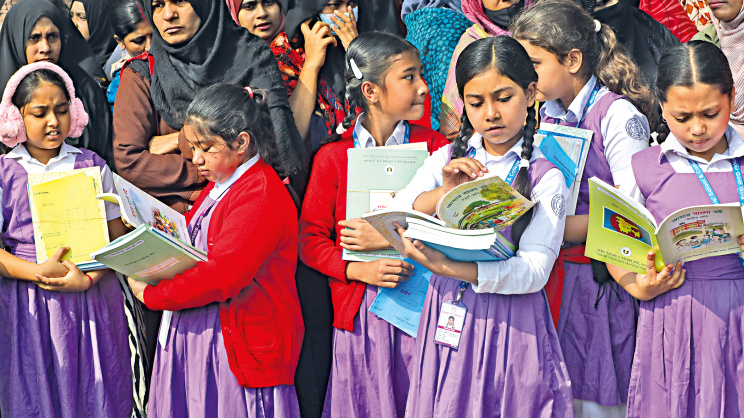
The narrative of the “thriving woman” begins in the classroom. According to UNICEF, Bangladesh has achieved remarkable gender parity in primary education, with female youth literacy (ages 15-24) soaring above 95%. However, as Fauzia Moslem cautions, the “dropout rate” remains highest among girls as they transition to higher education. Addressing this is ensuring safe transport and social security so that academic potential isn’t cut short by external threats.

Banking on resilience
While sectors like sports and education show upward trajectories, the corporate world presents a more complex challenge. According to a recent report by the central bank, women’s participation in the banking sector has seen a slight decline, dropping by 4.96% in the first half of 2025. This dip highlights the structural barriers the UN aims to remove—ranging from a lack of childcare to rigid work-life balances that favour traditional male roles.
Despite these declining macro numbers, leading financial institutions are providing the blueprint for a fix. Ahsan Zaman Chowdhury, Managing Director and CEO of Trust Bank PLC, asserts that the future of banking lies in specifically designing systems for women. “When you design credit properly for women, they repay. “The data is clear,” he states. At Trust Bank, women account for 25% of the depositor base, and their non-performing loan (NPL) ratios often outperform the broader portfolio.
This is echoed by Shaila Abedin, SEVP, Head of Liability & Women Banking and core member of diversity & inclusion at Prime Bank PLC, who argues that “symbolic gestures are not enough.” She emphasises that reversing the decline in female participation requires a “culture of accountability, equity, and respect.” The fix isn’t just about hiring more women but about creating an environment where they can reach the top table of leadership without being hindered by domestic or safety-related barriers.
Ultimately, progress in sports, banking and education is fragile without the bedrock of justice. This Women’s Day, we celebrate the gold medals and the high literacy rates, but we pledge our action toward a future where every girl can walk to school, every woman can lead a bank, and every citizen is protected by a system that values her life as much as her contribution.
 For all latest news, follow The Daily Star's Google News channel.
Comments