


Bangladesh face Asian reality
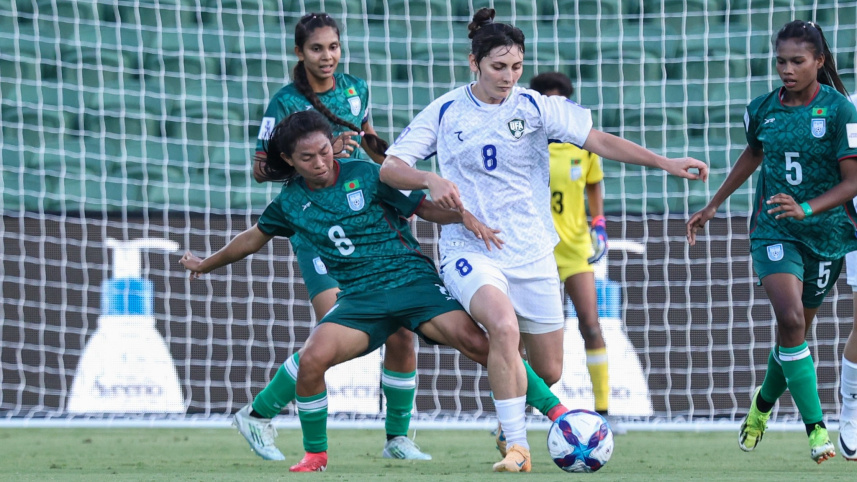
Bangladesh’s historic debut in the AFC Women's Asian Cup ended without a point, or a goal scored, as the women in red and green expectedly lost all three group-stage matches in Australia, finishing the campaign with yesterday’s 4–0 loss to Uzbekistan in Perth.
However, the experience of playing in Asia’s top-flight competition is widely seen as a crucial step forward for the country’s women’s football.

Bangladesh were the only team among the 12 participants with a FIFA ranking beyond 100 -- and also the youngest. The next lowest-ranked side, Iran, were placed 44 spots higher, highlighting the considerable gap the women in red and green had to bridge.
While the 3–0 and 5–0 defeats to powerhouses China and North Korea were largely expected given the differences in footballing standards, many had hoped Bangladesh might frustrate Uzbekistan, as they did against Myanmar in the deciding fixture in the qualifiers last year.
At the Perth Rectangular Stadium yesterday, a victory over the Central Asian side could have pushed the team into the quarterfinals, opening the door to opportunities such as competing in the Olympic Games qualifiers and the 2027 FIFA Women's World Cup.
The country’s women’s football still faces significant limitations in infrastructure, domestic league structure, training facilities and international exposure. Comparing the facilities available to Uzbekistan with those in Bangladesh, head coach Peter Butler said post-match, “The opposition brings TV cameras and video equipment -- luxuries that we simply do not have.
“At times, it feels like a boxer entering a fight with one arm tied behind his back. At the AFC level, you face teams that are far better prepared than we are, both physically and logistically.
“A major issue we face is that we do not have a designated training pitch in Bangladesh. This is one of the primary challenges for our development.”
Despite the defeats, Bangladesh’s qualification for the Asian Cup itself marked a milestone for the country’s women’s football. The team have already shown their regional dominance by winning the SAFF Women’s Championship in 2022 and 2024, but the Asian Cup campaign provided a valuable reality check about the standards required at the continental level.
“I have nothing but praise for the girls; they have come a long way. I have a lot of respect for them and I am very proud of what they have achieved,” Butler remarked.
Rather than being treated as a one-off achievement, the appearance should serve as a foundation for long-term development. For that to happen, Bangladesh Football Federation must use this experience to provide the platform the players need and deserve -- starting with basic requirements such as a “designated training pitch”, an issue captain Afeida Khandaker also highlighted during the tournament.
 For all latest news, follow The Daily Star's Google News channel.
Comments