


Why Manchester City fans brought inflatable bananas to Anfield
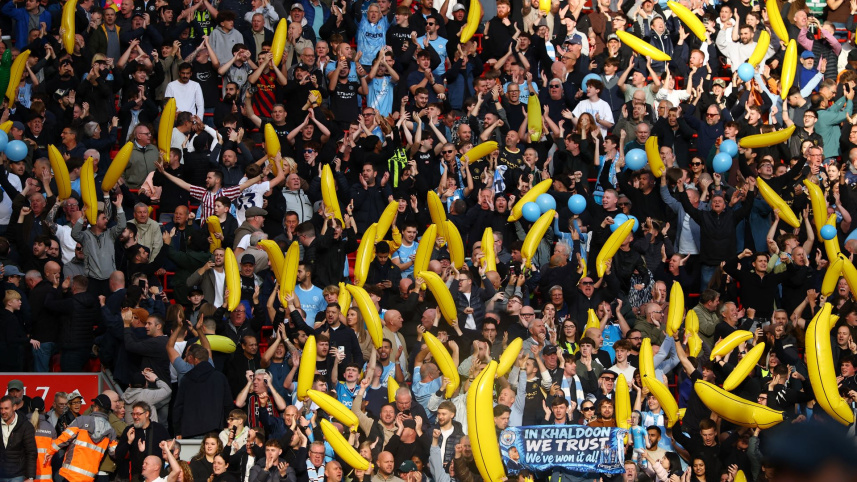
Manchester City’s trip to Anfield was about more than football. With tensions running high following an independent commission’s findings over the club’s finances, the travelling supporters arrived to face a hostile reception from Liverpool fans.
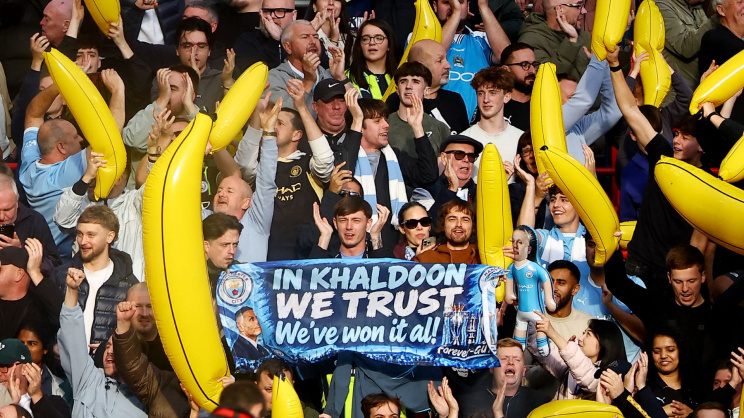
Yet among the boos, banners and heated chants, one unusual sight stood out in the away section: a sea of bright yellow inflatable bananas.

The display was not a new response to controversy. Instead, it revived a quirky tradition that has been part of City’s supporter culture for nearly four decades, reminding everyone that the club’s identity stretches far beyond its modern success.
The story behind the bananas
The tradition dates back to the 1987–88 season and has its roots in a playful nickname given to former City striker Imre Varadi, who joined the club from West Bromwich Albion in 1986.
Varadi recalled that the joke began when a supporter waved a banana in the stands and called out his name alongside the unusual nickname “Imre Banana”. What started as a single fan’s joke quickly caught on.
“I came jogging out one evening and someone was waving a banana,” Varadi told the Manchester Evening News. “They started to call me Imre Banana and I'm thinking what?! The following game, there were 25–30 bananas and everyone was calling me Imre Banana.”
City supporter Frank Newton helped turn the joke into a lasting tradition. According to reports, he brought a large inflatable banana to a match against Plymouth Argyle in August 1987. Other supporters followed his lead, transforming an amusing moment into a recognisable feature of the club’s matchday culture.
Before long, the craze extended beyond fruit. Fans brought inflatable sharks, dinosaurs, monsters and other oversized objects to games, adding colours and humour to football grounds during a difficult period for the English game.
For Varadi, the appeal was simple: supporters had found a way to make football fun. He later explained that the tradition was about bringing humour back into the sport at a time when it faced considerable public criticism.
Why the Bananas returned at Anfield
The inflatable display took on fresh significance when City travelled to Liverpool following the independent commission’s findings concerning alleged breaches of Premier League financial rules between 2009–10 and 2018–19.
City denied wrongdoing and announced plans to appeal. The findings nevertheless intensified the already fierce rivalry between the clubs, with sections of the Liverpool support making their feelings clear before kick-off.
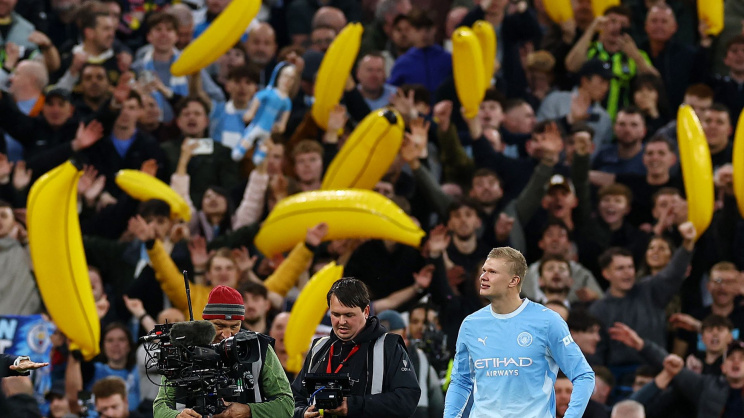
Against that backdrop, the City supporters’ group 1894 organised the distribution of more than 1,000 inflatable bananas among travelling fans. As the players approached the away section before the match, the bright yellow objects bounced above the crowd, creating a striking contrast with the tense atmosphere surrounding the stadium.
Some Liverpool supporters displayed banners referring to the commission’s verdict, while visiting fans responded with chants backing City and chairman Khaldoon al-Mubarak. The team bus also attracted considerable attention, prompting a substantial police presence around Anfield before the visitors entered the ground without incident.
For the travelling supporters, the bananas offered a familiar expression of loyalty during an afternoon dominated by scrutiny and confrontation. Rather than inventing a new gesture for the occasion, they reached back to a tradition that had survived changes in football, the club’s fortunes and generations of supporters.
A tradition that outlasts the headlines
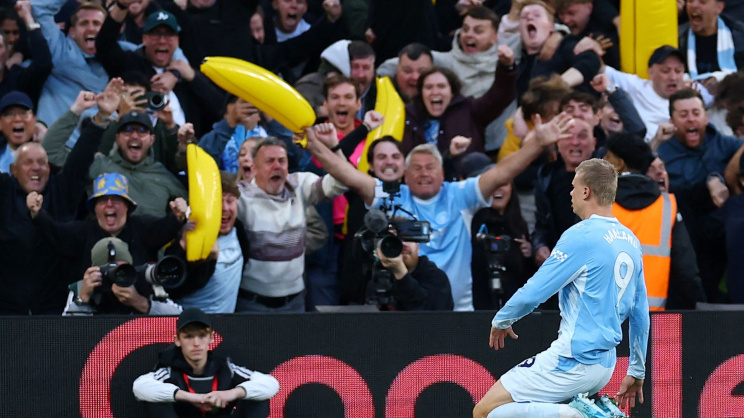
City’s history has included difficult relegations, periods outside the top flight and, more recently, sustained success at the highest level. The inflatable bananas connect those different eras through a shared sense of identity and humour.
Their appearance at Anfield also demonstrated how a seemingly ridiculous joke can become something meaningful to a football community. What began with a nickname and one supporter’s inflatable prop evolved into a tradition recognised by generations of City fans?
The result added another memorable detail to the occasion. City won 3–0 against Liverpool, maintaining their position at the top of the Premier League table at the time.
 For all latest news, follow The Daily Star's Google News channel.
 The commission’s findings and the club’s planned appeal remained serious matters, but the bananas told a different story: one about supporters preserving their history and finding ways to express their allegiance even when the atmosphere turns hostile.
Nearly 40 years after the joke first caught on, City fans are still bringing inflatable bananas to matches. Their meaning is rooted not in financial controversy, but in a piece of football folklore that has endured because it remains colourful, distinctive and, above all, fun.
Comments