Why Dhaka University should rethink its rules for female students

Imagine that, after midnight, a female student living in a dormitory at the University of Dhaka suddenly becomes seriously ill. Or suppose she suffers an accident, breaks an arm or leg, and needs to be taken to the hospital immediately. But this may not be possible if she is living in a female dormitory at DU. Before leaving the hall for treatment, she may have to go through several administrative procedures. She must call the teacher on duty and wait for permission. If the teacher does not answer the phone, it remains uncertain whether the hall gate will be opened at all.
When even a few minutes can determine life or death in a medical emergency, why should a student have to wait because of administrative chaos?
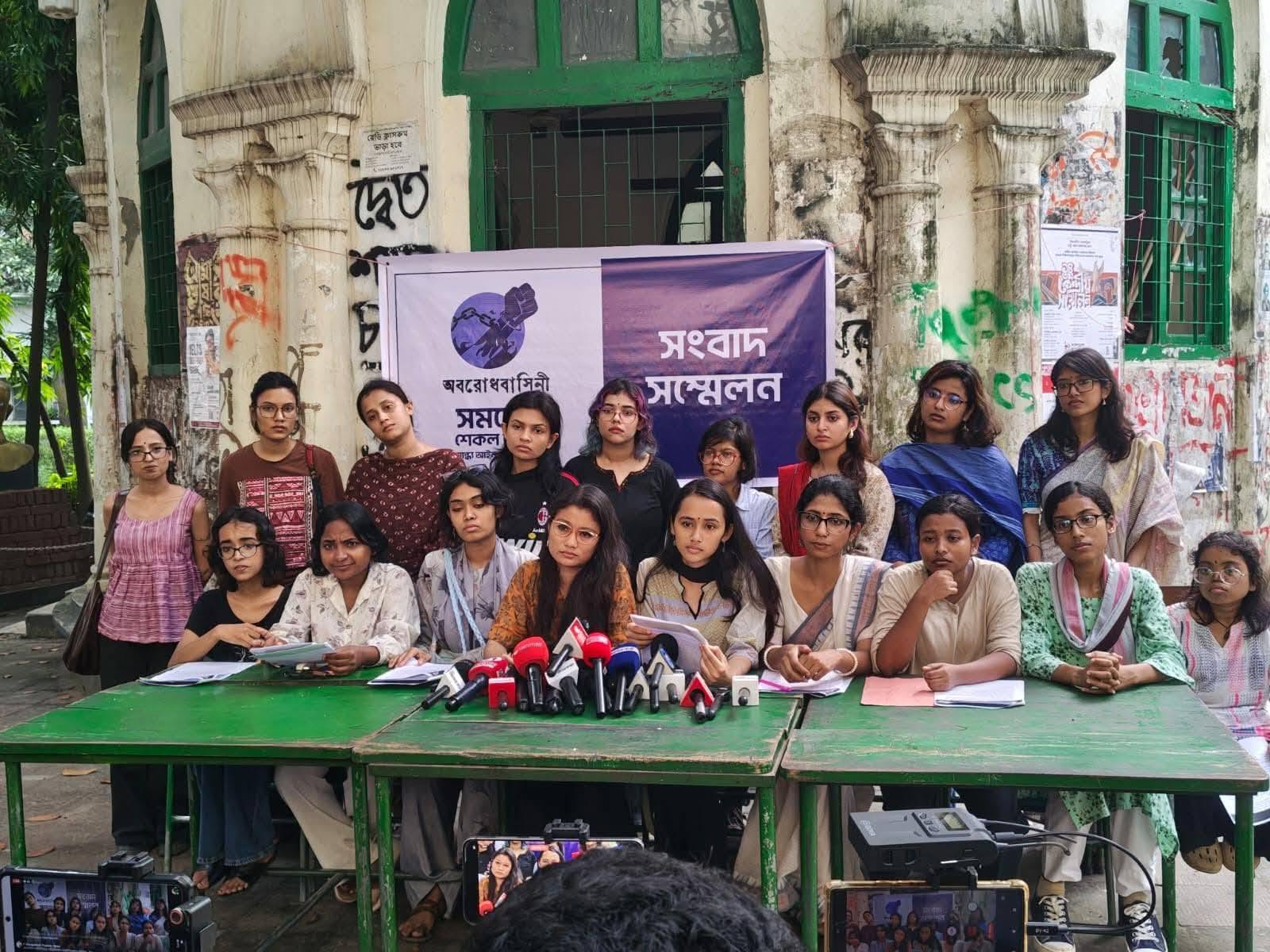
Again, imagine receiving the devastating news of a relative’s death in the middle of the night, yet being unable to rush to your grieving family. Instead, a female student may be forced to write an application to the provost and wait for permission to leave the hall, even while her local guardian stands helplessly outside the locked gate.
Now the question is: should an adult female student’s right to make decisions during personal and family emergencies depend on administrative delays?
Sufferings of non-residential students
A large number of female students at the University of Dhaka do not receive residential accommodation. Because of the shortage of seats, they are forced to remain non-residential students. Yet non-residential female students are not allowed to enter the halls to which they are officially attached.
Students travelling to campus from distant areas remain busy from morning until afternoon with classes, examinations, laboratory work, assignments and other academic activities. During breaks, they may reasonably wish to rest for a while in their hall, have lunch or sit in a friend’s room. However, simply because they are classified as non-residential students, they are deprived of these facilities.
A student remains non-residential mainly because the university has failed to provide sufficient accommodation. Why, then, should students be punished for an administrative failure? Even more surprisingly, a female student from one hall is not permitted to enter another women’s hall.
A mother’s journey ends at a locked gate
A mother may spend an entire day travelling from a distant village simply to see her daughter. Naturally, she would want to enter the hall, see the small room her daughter calls home, and understand the environment in which she lives and studies. Yet, in many women’s halls, even the mothers of residential students are denied entry and left waiting outside the gate.
What possible justification can there be for preventing a mother from seeing her own daughter’s living space? Security concerns can be addressed through identity checks, visitor registration and fixed visiting hours. But instead of adopting such reasonable measures, the authorities impose a lengthy official procedure that takes around a week to complete and allows only one hour for the visit.
A double standard in a coeducational institution
The University of Dhaka is a coeducational institution. Male and female students study in the same classrooms, move around the same campus, and participate in the same social and cultural activities. Yet female students have reportedly been discouraged or prevented from sitting on the upper deck of university buses.
I personally faced questioning from members of a bus committee because I had taken a seat on the upper deck of a university bus. I was repeatedly told to move downstairs, but I refused. In a coeducational institution, the logic of such a policy becomes questionable when others decide where a female student may sit on a bus.
Preventing a woman from sitting in a particular place despite the availability of empty seats is not a matter of security. It is an unreasonable interference with her freedom of movement and her ability to make her own decisions.
Five halls for half the university
Although women constitute nearly half of the student body at the University of Dhaka, the number of residential halls available to them is significantly lower. There are only five halls for female students, compared with 13 for male students.
Ensuring the safety of students within the university is the responsibility of the university administration. Yet female students are being forced to pay the price for the administration’s failure to provide adequate security by surrendering their freedom of movement and independence.
As a result, a large number of female students who wish to live on campus are unable to secure a seat. They are forced to commute daily from distant areas. Despite the shortage of hygienic and affordable food around the university, non-residential students are also denied access to the dining halls and canteens in their own halls. The housing shortage is an administrative failure. It is therefore unjust to deprive female students of opportunities for rest, food and a safe place to stay because of that failure.
The 10:00 p.m. rule and students’ reality
The University of Dhaka is a centre of education, culture, intellectual freedom, and political and social movements in Bangladesh. Many students participate in cultural groups, debate clubs, volunteer organisations and other activities centred around the TSC. These activities often continue late into the evening.
However, the rule requiring the gates of women’s halls to close at 10:00 p.m. restricts female students’ participation in such activities. A resident student who is delayed while carrying out responsibilities at a cultural or social programme may be forced to remain outside the hall gate.
After the Eid holidays, I returned to my hall following a long and exhausting journey, only to find the gate of Rokeya Hall locked. Five or six other female students were also left standing outside because, under the hall rules, the gate could not be opened before 6:00 a.m. Even after travelling through the night, we were forced to wait outside our own residence because of an inflexible and deeply insensitive administrative rule. Ironically, this restriction, too, is justified in the name of "security". But what kind of security leaves exhausted female students stranded outside a locked hall gate in the early hours of the morning?
Ensuring the safety of students within the university is the responsibility of the university administration. Yet female students are being forced to pay the price for the administration’s failure to provide adequate security by surrendering their freedom of movement and independence.
Protection or restriction?
A common justification is offered for almost every restriction imposed in women’s halls: the safety of female students. Their safety must certainly be ensured. However, ensuring security and controlling freedom are not the same thing.
An adult female student should have the right to decide when she will return to her hall, when she must leave during an emergency, where she will sit on a bus, and when she may enter her own hall. The university’s responsibility is to provide safe transport, effective emergency services, adequate security personnel, well-lit roads and rapid access to medical care. Confining students is not a sustainable solution to safety concerns.
Male students enjoy many rights and freedoms, while female students must comply with additional rules, permission requirements and questioning to exercise the same rights. This discrimination is not merely administrative. It reflects a wider social mentality that views women not as independent individuals, but as people who must remain under control.
The system must be reformed
The Constitution, the supreme law of the country, guarantees equality and equal opportunity for citizens. Yet, at the country’s leading university, female students remain subject to rules that restrict their freedom of movement and their rights to education, rest, food, medical care, and participation in social and cultural activities.
The safety of female students should be ensured not by taking away their freedom, but by expanding the necessary facilities and services. Measures could include opening hall gates without prior permission during emergencies, providing round-the-clock ambulance and medical services, introducing digital access systems, allowing visitors to enter after identity verification, granting non-residential students access to common hall facilities, and adopting equal rules for male and female students.
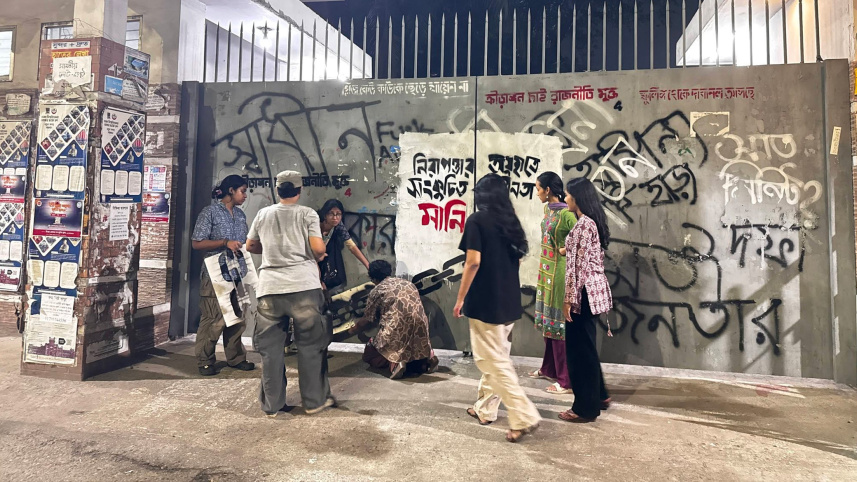
Encouragingly, female students themselves are now speaking out against these discriminatory regulations, raising questions and building public awareness. Their demand is not for special privilege. It is a demand for equal dignity, freedom and citizenship rights.
If the University of Dhaka truly wishes to represent intellectual freedom, progress and equality, it must move beyond the outdated mentality of controlling female students in the name of security. Security should never be treated as the opposite of freedom. Genuine security exists in an environment where a woman can make her own decisions without fear, discrimination or unreasonable restrictions.
Ashia Akhter Rameza is a student of Economics at the University of Dhaka. She can be reached at ashiarameza5@gmail.com
Send your articles for Slow Reads to slowreads@thedailystar.net. Check out our submission guidelines for details.
Inherited Memories / One railwayman's line-box, three eras of history

The strange grief of seeing our parents age

After the PhD: The loneliness nobody talks about

The Palestine lesson from Spain's World Cup victory

The memories hidden inside my grandmother's tureen
What Bangladesh lost with the Baibari Ghar

Why does the bride always leave? Rethinking South Asian marriage

The saree I could not give away

What the World Cup means for women in Bangladesh