Dhaka's forgotten residents: Rethinking our relationship with animals
Last year, as part of my undergraduate research, I spent weeks at Bahadur Shah Park in old Dhaka, not for the monuments, but for what lived in and around them. My own work was on the park's dogs and cats: who fed them, who shooed them away, how their presence quietly shaped which corners of the park belonged to whom, and when. At that time, I encountered Shrobona Shafique Dipti's research on Dhaka as a multispecies city. Her study explored various aspects, including the neighbourhoods of old Dhaka, monkeys, and the surprisingly close, almost kin-like relationships that some residents have with them.
My own fieldwork had been circling insistently around the idea that, in this and other parts of Dhaka, the city's non-human residents are not incidental to urban life. They are woven into it, shaping who belongs where and under what conditions.
But belonging in Dhaka has never been distributed evenly, not among people, and certainly not among the non-humans who share the city with them. Same city. Two entirely different grammars for what a non-human resident is allowed to be: kin in one neighbourhood, family in another, surplus elsewhere. That gap is not an accident, and it is not new. It is the residue of an old argument about who gets to count as belonging in a city, one that colonial administration brought to Dhaka, that the independent state inherited largely without examination, and that is still being settled, with real consequences, on the city's streets right now.
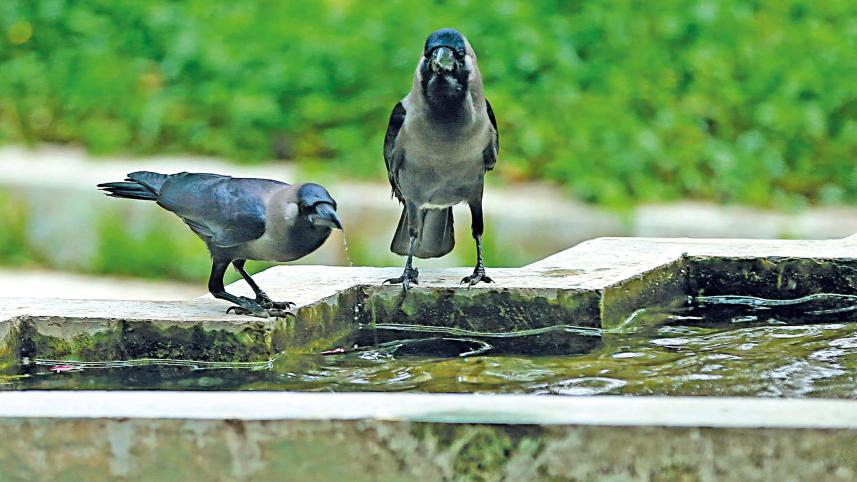
Animal as property, animal as nuisance
Before colonial administration reorganised South Asian cities around new categories of property and public order, non-humans in a place like Dhaka existed within dense, particular relationships: as labour, as kin, as fixtures of specific trades, neighbourhoods, and rituals. This is not to romanticise the past; cruelty existed long before any modern law named it. But a non-human's place in the city was something worked out locally between humans who lived alongside it, not assigned from above through a single administrative category.
Colonial law replaced that patchwork with something much narrower. The Cruelty to Animals Act, 1920, which would remain Bangladesh's governing statute on this question for almost a hundred years, defined non-humans as "animals" for the purposes of the entire law, meaning any domestic or captured animal. A creature that belonged to no one, that survived on the street through its own resourcefulness, simply fell outside the law's vocabulary. It was neither protected nor acknowledged; it was, legally speaking, nothing in particular.
The penalties the Act did prescribe say something too. Cruelty to an owned "animal" could draw a fine that topped out in the low hundreds of takas. The law carved out explicit exceptions for killing carried out for a "bona fide scientific purpose" or in accordance with religious rites. None of this was really about non-human suffering as an end in itself. It was about regulating how humans could use, display, or dispose of non-human property without becoming a nuisance to other humans, specifically within the colonial administration's idea of a properly ordered town.
This pattern was not unique to Bengal. Scholars working on street animals across colonial South Asian cities have argued that colonial governance produced something like a state of exception for non-human life in urban space: other-than-human beings were classified as "not-persons", and the city itself was redefined as territory that belonged, by definition, to humans of a particular class. Everything else, including stray dogs, the urban poor, and informal settlements, became a kind of trespasser, to be managed, displaced, or removed as the administration saw fit.
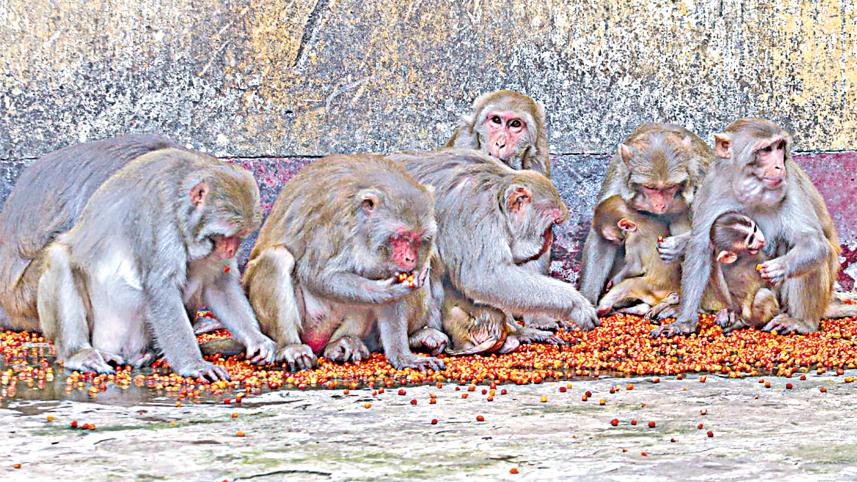
The resistance this produced could be fierce. In 1832, when colonial authorities in Bombay launched a campaign to exterminate the city's street dogs, the backlash, driven partly by religious objections to the killing, escalated into open rioting, serious enough that the policy was revised. But look closely at what the revision actually was: not a recognition that the dogs had any claim to the street, but a shift from extermination to relocation. The underlying premise was that the state decides whether "excess" non-human life survives intact. It is, almost word for word, the premise that Dhaka South City Corporation acted on in 2020, nearly two centuries later.
Independence, and the categories that didn't change
1947 and 1971 transformed almost everything about who governed Dhaka and in whose name. They did remarkably little to alter the categories through which the city understood and governed its non-human residents. The 1920 Act remained on the books, essentially unaltered, until 2019, meaning that for the first forty-eight years of Bangladesh's existence as an independent state, the operative legal definition of which animals merited any consideration at all was still the one a colonial legislature had settled on in February 1920.
Administrative practice moved in step with this. By the 1980s, Dhaka's then-undivided city corporation had begun systematically culling stray dogs as a form of population control, a policy framed, as such policies usually are, around public health and carried out largely through poisoning. This continued for decades with little institutional pushback until 2012, when the High Court issued a ruling barring city authorities from simply killing stray dogs outright. It was the first time in nearly a century that a Bangladeshi institution had formally declared that the state could not treat non-human lives as expendable simply because their numbers were deemed inconvenient.
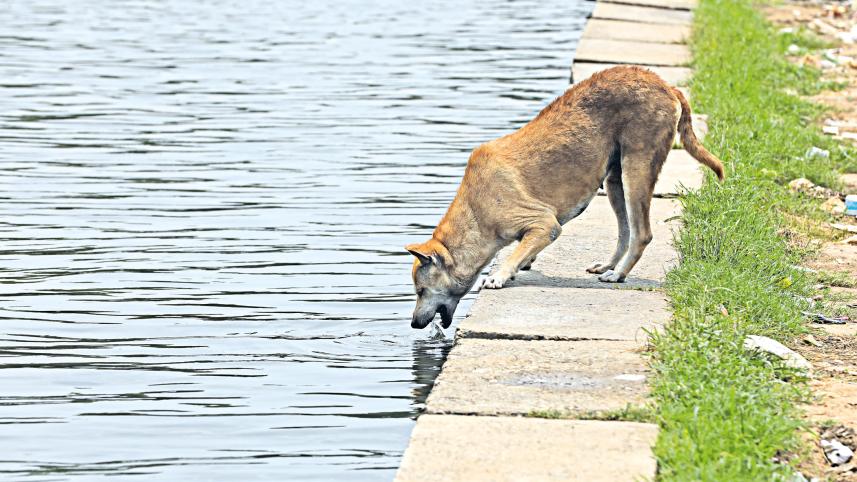
But a ruling against one method is not the same as a framework that recognises that other-than-human beings belong anywhere. It closed off poisoning as a tool while leaving the underlying question untouched: what does the city owe to the non-humans living in it? That question would resurface, in almost exactly the same form, less than a decade later.
2019, and the limits of reform
When the Animal Welfare Act of 2019 finally replaced the 1920 law, it was, on its own terms, real progress: a much longer list of recognised cruelties, penalties raised from token fines to actual imprisonment, and explicit reference to international standards for the humane treatment of sick or injured animals. But read closely, the Act's centre of gravity is still domesticated and farm animals, and how livestock should be fed, housed, transported, and slaughtered. It details what is owed to a non-human that someone owns. It has almost nothing to say about the non-humans who belong to no one: the free-roaming dog, cat, or troop of monkeys that make up so much of urban Bangladesh's non-human population, and whose situation was precisely what the 2012 court ruling had been about.
That gap did not remain purely theoretical for long. Despite concerns from animal welfare groups about the 2020 Matuail relocation, which correctly noted that the mass removal of free-roaming dogs conflicted with both the 2019 Act and the 2012 court order, the move went ahead. The protests gained widespread attention beyond Bangladesh, but the dogs were still relocated. Five years later, similar patterns re-emerged, often attracting less scrutiny the farther they occurred from the capital. In late 2025, residents of Gopalganj reported municipal workers catching and injecting poison into street dogs at night; the municipality denied involvement, and the district livestock office claimed ignorance. An animal welfare organisation raised the issue with the ministry, citing international rabies-elimination guidance that explicitly rejects culling as neither scientific nor effective. The recurring pattern remains: framing non-human populations as problems and, almost reflexively, resorting to removal.
An inheritance the law forgot to look for
Go back to those old Dhaka mohallas, where the relationship between specific families and specific troops of monkeys, sustained across generations, is understood by the people living it as part of who they are. This is not a curiosity. It is evidence that a different framework for multispecies urban life has been operating in Bangladesh the entire time, parallel to the legal one and largely invisible to it. Nobody needed a statute to tell these families that the monkeys belonged on their street. That belonging was already there, woven into the neighbourhood's ordinary life, older than the 1920 Act and likely to outlast whatever eventually replaces the 2019 Act.
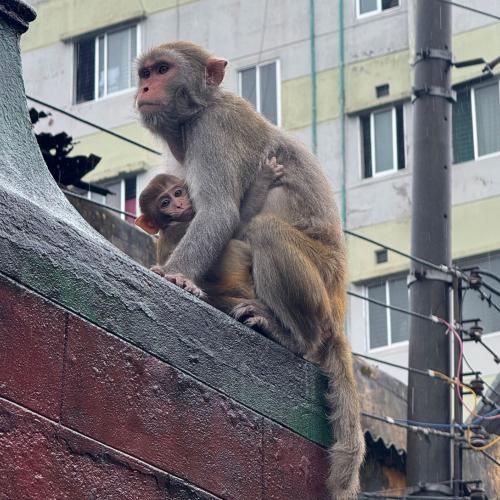
This matters because of what it does to the argument. The case for a more inclusive system is not a case for importing some foreign notion of "animal rights" into a culture that has none of its own. It is a case for the law catching up to a relationship that large parts of urban Bangladesh have maintained all along, one that the colonial-derived legal architecture spent a century quietly but persistently working against.
What catching up would look like
The legal definition of "animal" needs to move beyond "domestic or captured" to formally recognise free-roaming community non-humans, not as property, not as vermin, but as residents with some standing of their own. Culling and mass relocation need to be unambiguously prohibited in statute, rather than being left to a single 2012 court order that successive city administrations have shown they know how to circumvent. And urban planning itself needs to stop proceeding as if the city were a purely human artefact; decisions about zoning, waste management, and green space are made today as though the animals living among us were not part of the population being planned for.
None of this is really about "rights" in the abstract sense in which that word often becomes trapped. It is closer to the idea of ownership that the question itself points towards: not non-humans as owned things, but as having a stake, a claim, an ownership of place in a city that has depended on their presence as labourers, companions, and kin for far longer than it has had any law governing them at all.
The non-humans were never the ones who left this city's story. For the better part of a century, the law simply declined to incorporate them. The mohallas of old Dhaka have known better all along. The only real question left is whether the rest of the city's institutions are finally willing to know it too.
Shopnil Chowdhury is a researcher and multispecies anthropologist. He can be reached at: s.h.o.p.n.i.l101110@gmail.com.
Send your articles for Slow Reads to slowreads@thedailystar.net. Check out our submission guidelines for details.
Why Dhaka University should rethink its rules for female students

Inherited Memories / One railwayman's line-box, three eras of history

The strange grief of seeing our parents age

After the PhD: The loneliness nobody talks about
The Palestine lesson from Spain's World Cup victory

The memories hidden inside my grandmother's tureen

What Bangladesh lost with the Baibari Ghar

Why does the bride always leave? Rethinking South Asian marriage

The saree I could not give away