More capability, less autonomy? Bangladesh’s emerging security dilemma
Bangladesh is confronting two security questions almost at the same time. One concerns the possibility of joining a new collective defence arrangement involving Saudi Arabia, Türkiye and Pakistan. The other concerns a major modernisation of the Bangladesh Air Force, centred on the possible acquisition of Chinese J-10CE fighter aircraft.
Taken separately, each can be defended on reasonable grounds. Bangladesh needs stronger defence capabilities. It also has legitimate reasons to deepen security cooperation with countries beyond its immediate neighbourhood. But when these developments are considered together, a more difficult question appears.
The real issue is not simply whether Bangladesh should buy a particular fighter aircraft or join a particular defence arrangement. It is whether a series of apparently rational security decisions could, over time, reduce the very strategic freedom that Bangladesh wants those decisions to protect.
For a small state, military capability and strategic autonomy are related, but they are not the same thing. More weapons do not automatically produce more autonomy. More security partners do not automatically produce more security. Much depends on the obligations, dependencies and political signals that come with them. That is the emerging dilemma for Bangladesh.
Security cooperation is not the same as a security commitment
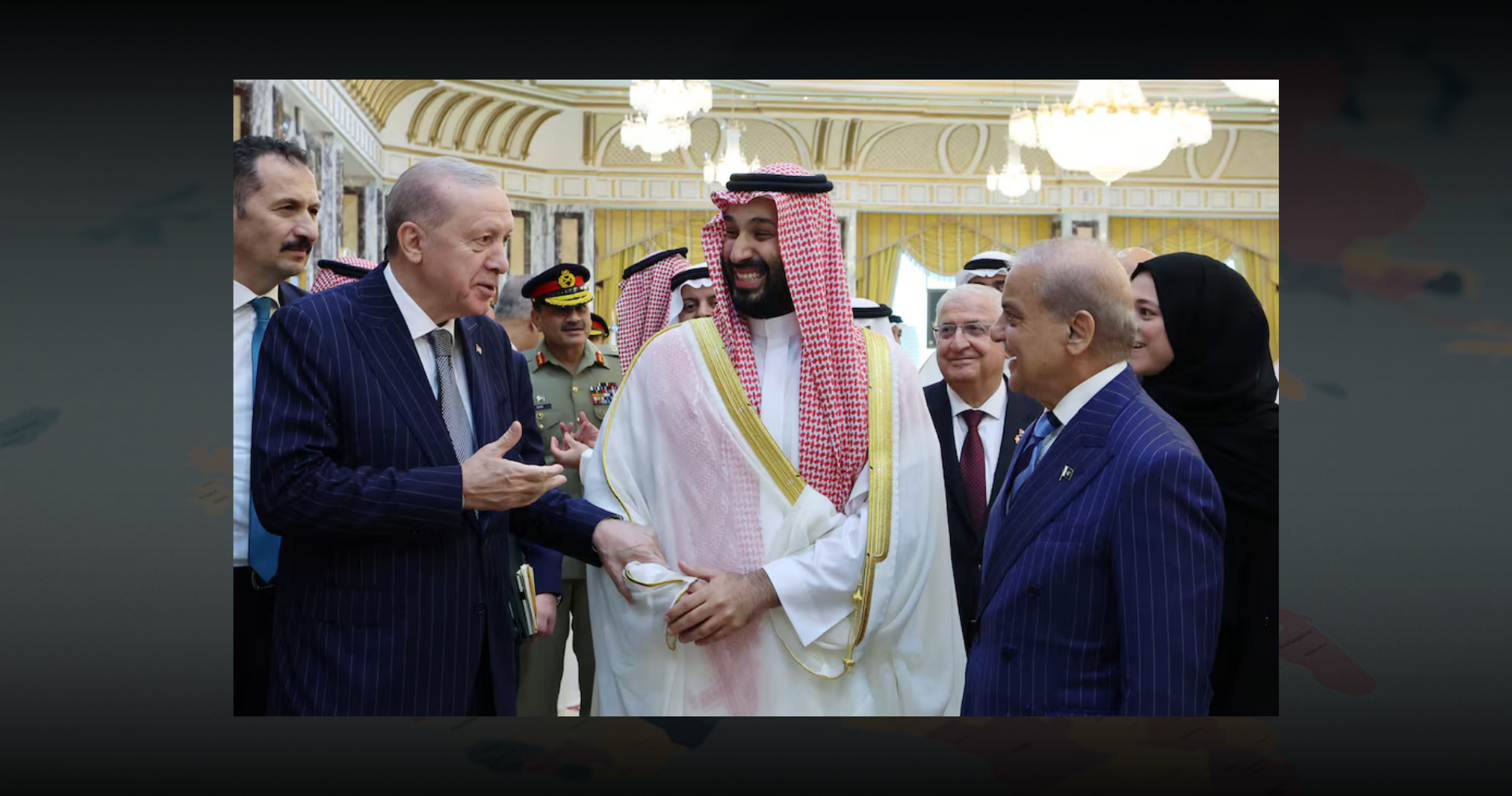
There is, first, a factual distinction that should not be overlooked. Bangladesh has not joined the Mecca Joint Defence Agreement. Foreign Minister Khalilur Rahman told parliament on August 27 that Bangladesh would consider membership positively if invited, while also saying that the question had not formally arisen because Dhaka had not received such a proposal from the existing members.
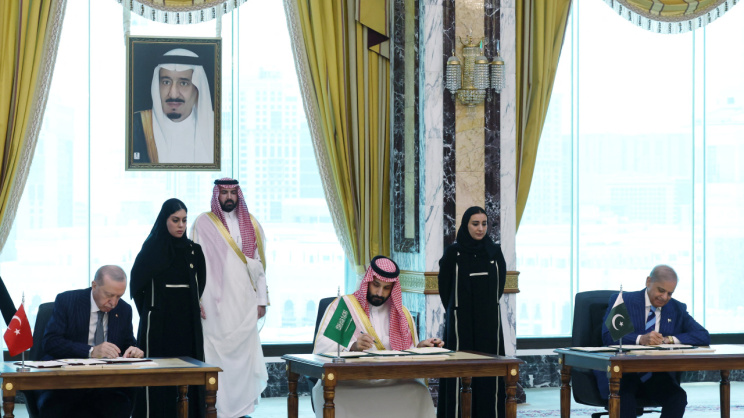
That distinction matters because the Mecca agreement is not merely another framework for military training, defence dialogue or arms cooperation. The agreement, signed on August 7 by Saudi Arabia, Türkiye and Pakistan, states that an armed attack against one member will be treated as an attack against all three.
This changes the nature of the calculation. Bangladesh already conducts defence cooperation with many countries. Such relationships can expand its options. A collective-defence commitment does something different: it can restrict the freedom to decide, case by case, whether another state’s conflict is also Bangladesh’s conflict.
This is why a security guarantee is never entirely free. In return for the possibility that others may help defend you, you accept the possibility that you may have to support them.
The real issue is not simply whether Bangladesh should buy a particular fighter aircraft or join a particular defence arrangement. It is whether a series of apparently rational security decisions could, over time, reduce the very strategic freedom that Bangladesh wants those decisions to protect.
But there is an additional question worth asking. What happens when a possible collective-defence commitment develops at the same time as Bangladesh is becoming more deeply tied to a particular external source for high-end military capability? That is where the J-10CE becomes strategically important.
Buying a fighter aircraft also means buying a relationship
The case for modernising the Bangladesh Air Force is not difficult to understand. An air force cannot remain credible indefinitely with ageing platforms while military technology around it advances.
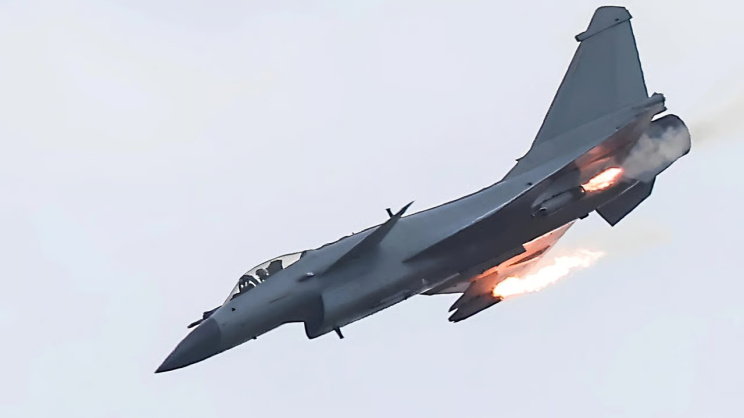
The government says it is moving forward with the procurement of J-10CE multirole fighter aircraft, attack helicopters and UAV systems. A committee has already negotiated elements of the proposed purchase and prepared a draft agreement. There are also understandable operational reasons for considering the Chinese aircraft. Adviser Zahed Ur Rahman has pointed to its recent combat performance and its lower cost compared with some European alternatives.
It would therefore be too simplistic to argue that buying Chinese fighters is itself a loss of strategic autonomy. A country capable of choosing its own weapons supplier is exercising sovereignty, not surrendering it. The problem lies elsewhere.
A modern fighter aircraft is not a one-time purchase. It creates a relationship that may last for decades. The buyer needs training, spare parts, weapons, maintenance, software support, upgrades, technical expertise and logistical infrastructure. The aircraft may be delivered within several years, but the dependence created by operating it can continue much longer.
The strategic question is therefore not simply: is the J-10CE a capable aircraft? It is: what degree of long-term dependence accompanies that capability?
China is already Bangladesh’s principal supplier of major military hardware. Reuters reports that, over the past two decades, Beijing has supplied Bangladesh with combat aircraft, naval vessels, tanks, missiles and other equipment.
There is nothing inherently dangerous about having a major defence supplier. Almost every military depends on foreign technology to some extent. The risk appears when too much of a country’s critical capability becomes tied to one source. For a small state, supplier diversification is therefore not simply a commercial matter. It is a form of strategic insurance.
Intentions are ours; perceptions belong to others
There is another difficulty that Bangladesh cannot control entirely. Dhaka may view the J-10CE purely as an instrument of defence modernisation. Beijing may view the sale primarily as defence cooperation. But neighbouring countries are free to interpret it differently.
India has already said that it is closely following Bangladesh’s expanding engagement with China, including discussions concerning the possible J-10CE acquisition, and that it would take relevant developments into account in its broader approach towards Bangladesh. That does not mean Bangladesh should allow India to veto its defence decisions. A sovereign state must retain the right to acquire the capabilities it considers necessary.
But sovereignty does not remove consequences. This is one of the hardest realities facing small states: they make their own decisions, but they cannot determine how larger neighbours interpret those decisions.
A military step intended to make one country safer can make another country feel less secure. The second country then responds, producing greater suspicion on both sides. International relations scholars call this a security dilemma, but its logic is quite simple: defensive intentions do not guarantee defensive interpretations.

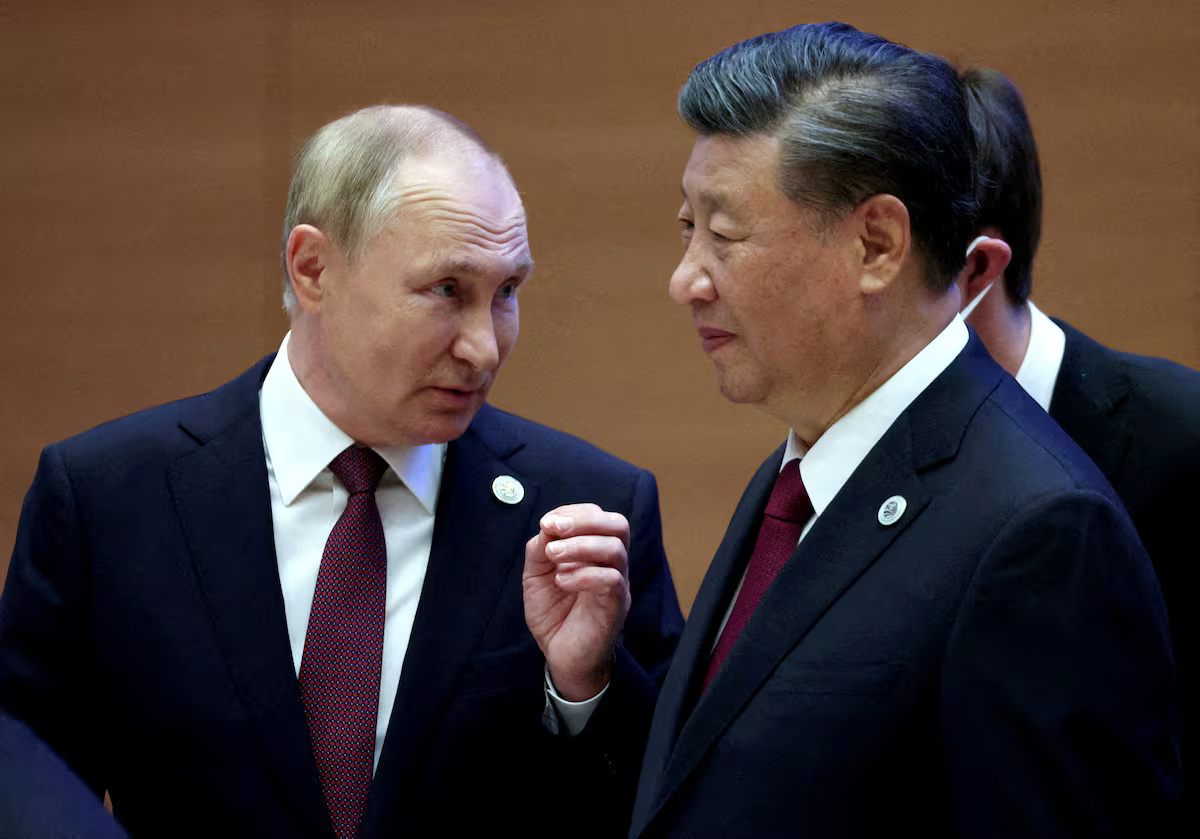
Now place the two developments together. China is already Bangladesh’s most important defence supplier. The proposed J-10CE purchase could deepen that military relationship considerably. Meanwhile, Bangladesh is publicly expressing a positive attitude towards a collective-defence arrangement in which Pakistan—India’s principal military rival—is a founding member.
Neither development by itself means that Bangladesh is aligning against India. But states respond not only to individual decisions; they also respond to patterns. If Dhaka simultaneously deepens its high-end military dependence on China and considers entering a defence structure that includes Pakistan, New Delhi may interpret the combination differently from the way Bangladesh intends it. And this is precisely where greater military capability can paradoxically reduce diplomatic room.
Bangladesh could gain better aircraft while facing a more suspicious India. It could gain additional defence partners while creating new expectations among those partners. It could acquire stronger deterrence while making its security relationships harder to separate from wider geopolitical rivalries. The risk is not that Bangladesh suddenly becomes part of one geopolitical camp. The more realistic danger is a gradual narrowing of options.
A military step intended to make one country safer can make another country feel less secure. The second country then responds, producing greater suspicion on both sides. International relations scholars call this a security dilemma, but its logic is quite simple: defensive intentions do not guarantee defensive interpretations.
Strategic autonomy is the ability to say both yes and no
Strategic autonomy is sometimes misunderstood as staying equally distant from everyone. Scholarly, that is neither realistic nor particularly useful.
Bangladesh should cooperate with China where cooperation serves its interests. It should maintain a working relationship with India because geography makes that unavoidable. It should deepen relations with Türkiye, Saudi Arabia, Japan, the United States, Europe and others where doing so produces economic or strategic benefits.
Autonomy does not mean avoiding partnerships. It means retaining enough choices so that no single partnership determines the country’s behaviour towards all the others.
That is why the present debate should move beyond the old question of whether Bangladesh is “pro-China”, “pro-India” or “pro-Western”. Those labels are analytically weak because Bangladesh can cooperate with different powers in different fields.
The better question is whether Bangladesh is building a sufficiently diversified set of relationships to prevent any one external actor—or combination of actors—from acquiring disproportionate influence over its choices.
That instinct is correct. If Bangladesh buys the J-10CE, the lesson should not be to stop buying Chinese weapons. It should be to ensure that the country’s entire defence system does not become unnecessarily concentrated around one supplier. Similarly, Bangladesh can cooperate closely with Saudi Arabia, Türkiye and Pakistan without necessarily accepting an automatic commitment to their future conflicts. Partnership and alignment are not the same thing. Good small-state strategy depends on preserving that distinction.

The economic question cannot be separated from the strategic one
Military procurement also has an opportunity cost. Bangladesh’s proposed defence allocation for FY2026-27 is around Tk 42,497 crore. A fighter programme worth more than $2 billion would therefore represent a major long-term national investment. That does not automatically make it excessive. National defence costs money, and delaying necessary modernisation can itself become expensive.
But a small state has less room than a major power for procurement mistakes. A fighter purchase should therefore be judged not by prestige or by the performance of an aircraft in another country’s war, but by Bangladesh’s own threat environment. What precise mission will the aircraft perform? What weapons and surveillance systems will support it? How much will it cost to operate over its full life? How vulnerable will Bangladesh be to disruptions in spare parts and upgrades? And does the purchase fit within a broader defence doctrine? These questions matter more than whether one aircraft defeated another aircraft somewhere else.
Encouragingly, the government has also discussed building a domestic defence industrial base specifically to reduce dependence on foreign suppliers. Prime Minister Tarique Rahman has spoken of a “Made in Bangladesh” defence initiative and a possible defence industrial zone aimed at greater long-term self-reliance.
That is strategically more important than it may first appear. A country that can maintain, repair, manufacture and eventually develop more of its own military systems has greater freedom than one that simply imports increasingly advanced platforms.
Bangladesh needs an integrated security doctrine
The greatest weakness in the present debate is that individual decisions are too easily discussed in isolation. The Mecca Pact is treated as a foreign-policy issue. The J-10CE is treated as a procurement issue. Relations with India are treated as a bilateral issue. Relations with China are discussed separately again.
But foreign governments will not view them separately. Bangladesh therefore needs to evaluate them together. Before accepting a collective-defence commitment, Dhaka should ask what specific threat that commitment is intended to address and under what circumstances Bangladesh could be required to act. Before finalising a major weapons purchase, it should examine not only the acquisition cost and combat performance but also the full chain of technological and logistical dependence.
And before making either decision, policymakers should consider how the combination will affect Bangladesh’s relationships with India, China, the United States, the Gulf states and other partners.
None of this requires Bangladesh to seek another country’s permission. It requires something more valuable: strategic foresight. For decades, Bangladesh’s greatest geopolitical advantage has not been military strength. It has been its ability to work with countries that compete with one another. China can be a defence partner, India an indispensable neighbour, the United States an important economic and security partner, Japan a major development partner, and the Gulf countries crucial economic and labour destinations—all at the same time.
That flexibility is an asset. Bangladesh should be careful not to exchange it too cheaply for security arrangements whose long-term obligations are not yet fully understood. The choice before Dhaka is therefore not between military weakness and strategic autonomy. That would be a false choice. Bangladesh needs stronger defence capabilities. It also needs wider security relationships.
The challenge is to build both without becoming trapped by either. More capability does not have to mean less autonomy. But capability without diversification, security partnerships without clear limits, and procurement without a larger strategic doctrine can produce exactly that result.
For a small state, the strongest defence is not simply the ability to acquire more powerful weapons or more powerful friends. It is the ability to strengthen itself while preserving the freedom to decide—each time, and on its own terms—when to cooperate, when to remain outside a conflict, and when to say no. That is the strategic autonomy Bangladesh should protect.
Mohd Amdadul Haque is a doctoral candidate in the Department of International Politics at Shandong University and an Assistant Professor in the Department of Political Science at Gopalganj Science and Technology University. His work focuses on geopolitics, maritime security, great-power rivalry, and Bangladesh's foreign policy. He can be reached at milon93@gmail.com.
Send your articles for Slow Reads to slowreads@thedailystar.net. Check out our submission guidelines for details.
An anti-West network is emerging: How should Bangladesh respond?

The Mecca Pact: Deterrence, Israel, and the new Gulf security equation

What Nepal’s flood devastation means for Bangladesh, India and China
Five reasons why Bangladesh shouldn’t join the Mecca Pact

Why Gaza peace deals keep falling apart
Rohingya genocide: Will the ICJ verdict bring justice?

Should Bangladesh join the Mecca Pact?

Documenting Rohingya history / Rohingya repatriation needs more than diplomacy

Nine years on, Rohingya refugees need more than shelter