



157th Birth Anniversary of Mahatma Gandhi / Gandhi’s return to Noakhali
6 October 2026
•
In Focus
Why does Tagore still trouble Bangladesh’s idea of ‘us’?
5 October 2026
•
In Focus

Can Bangladesh make better use of its zakat money?
4 October 2026
•
In Focus
Three revolutions that reshaped the world
2 October 2026
•
In Focus
Paradise lost and found: Rediscovering early modern Bengal
1 October 2026
•
In Focus
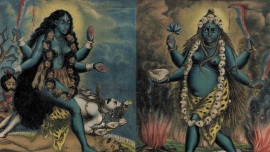
Unbound Mother: The making and remaking of Kaali in Bengal
30 September 2026
•
In Focus
Do great leaders make history, or does history make them?
29 September 2026
•
In Focus
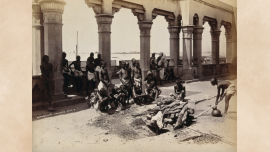
Poison and cremation: A forensic history of colonial Bengal
28 September 2026
•
In Focus
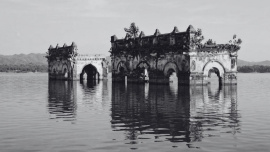
Partition, Bor Porong and the Chakmas’ unfinished struggle for belonging
27 September 2026
•
In Focus
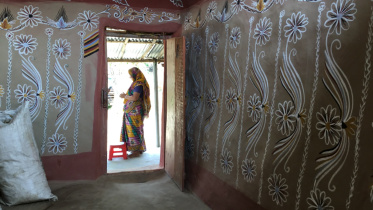
The painted cosmology of Tikoil village
In Tikoil, the painted wall is not the heritage itself; rather, it is the outcome of a deeper cultural system.
12 April 2026

The proclamation that gave Bangladesh its statehood
The proclamation laid the foundation for the country's distinct political identity and its eventual path to independence.
10 April 2026
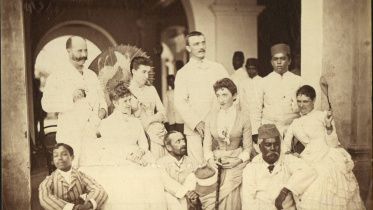
How the British shaped the way we dress today
British rule transformed Indian attire into a political tool, enforcing cultural hierarchy and dismantling traditional sartorial identities.
9 April 2026
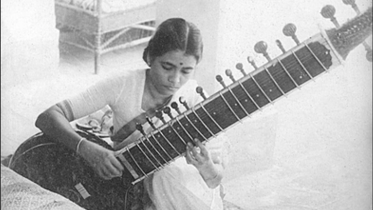
Annapurna Devi and the gendered silences of classical music
Annapurna Devi, always adhering to the teachings of her ustaad, had paid no heed to public recognition, choosing instead to treat music as shadhona and to teach her shishyas (pupils) free of cost.
7 April 2026
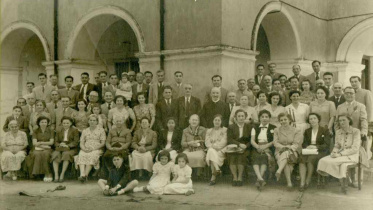
Armenian heritage in Bangladesh
The unravelling of family history and their associated stories can sometimes take unusual twists and turns. Armenian family history in Asia is no different. For those of you who like facts and figures, sources and citations as well as biographical details, this is for you.
7 April 2026
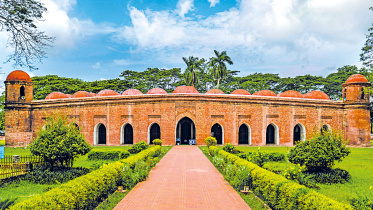
'Islamisation in Bengal has no parallel in South Asia'
Deeper Brahmanical roots in West Bengal made the East more receptive to Islam’s later scriptural arrival.
6 April 2026
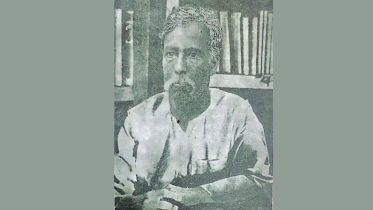
Kedarnath Majumdar: The forgotten historian of Bengal
Kedarnath’s interest in history was not academic. He wanted to record the life of the people - their customs, beliefs, and struggles.
5 April 2026
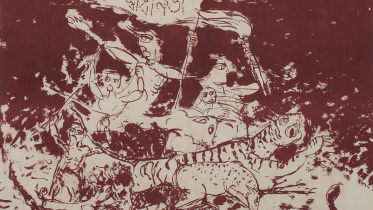
Banglay Bidroho: A rare collection of Liberation War paintings
These prints combine elements of public art and modernism, reflecting protest, social reality, and an effort to communicate with the masses.
2 April 2026
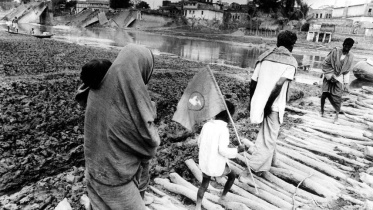
Once again the debate over Bengali nationalism
From the immediate aftermath of the 1971 Liberation War to the present day—and perhaps even into the future—historians have debated whether the birth of Bangladesh was a sudden rupture, a continuation of the Partition of Bengal in 1947, or whether its roots can be traced further back to the first Partition of Bengal in 1905.
31 March 2026
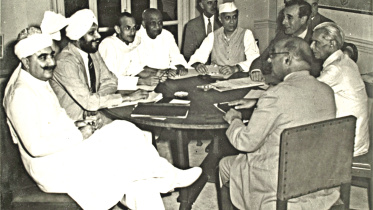
Does South Asia need secularism?
In conversation with Akeel Bilgrami, Sidney Morgenbesser Professor of Philosophy and a faculty member of the Committee on Global Thought at Columbia University, and a renowned scholar of political philosophy.
30 March 2026
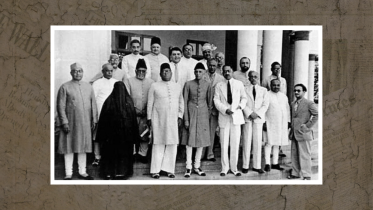
Did Jinnah lose faith in the Two-Nation Theory after 1947?
Abdul Haque also draws attention to Jinnah’s choice of the terms “Hindu” and “Muslim” in his writings and speeches before and after Partition, right up to the end of his life. Interestingly, however, just after the creation of Pakistan on August 14, 1947, Jinnah began to speak of Hindus and Muslims as communities rather than as nations.
26 March 2026
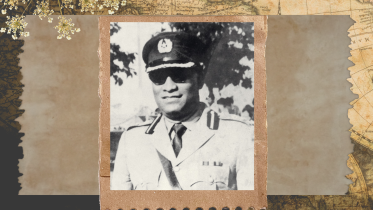
The black flag at Rajshahi and the officer who chose conscience
As the Deputy Inspector General of Police of Rajshahi Range, Mamun Mahmood occupied a position of significant authority. Yet, at a time when many chose caution, he chose conscience
26 March 2026
Echoes of Anne Frank in Swati’s war diary
Morning does not bring relief. It brings curfew. The city becomes a prison of smoke and silence. From behind closed doors, they glimpse fires still raging, hear distant shots. Anyone who dared step outside, she records, was shot.
25 March 2026
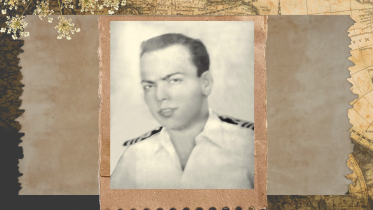
The naval hero who envisioned a nation
Moazzem became a leading proponent of Bengali rights, eventually becoming the focal point of the infamous ‘Agartala Conspiracy Case’.
25 March 2026
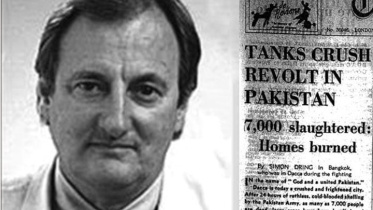
Genesis of a genocide report
This was the first account of Dhaka University by a foreign reporter reporting from the ground zero of the genocide zone.
25 March 2026
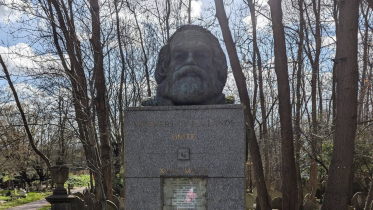
At Highgate, remembering Karl Marx
14 March of this year marked the 143rd death anniversary of Karl Marx, a revolutionary philosopher whom I do not need to introduce to my readers.
22 March 2026

Celebrating Eid: Thousand years of history in three embraces
There is something extraordinary about traditions that have stood the test of time.
21 March 2026
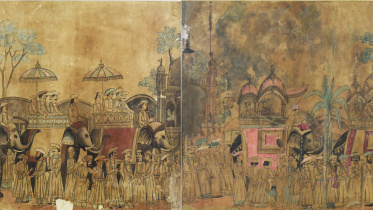
Historical glimpses of Eid processions in Dhaka
The Eid processions of 1952 and 1953 often presented political and social issues satirically.
20 March 2026
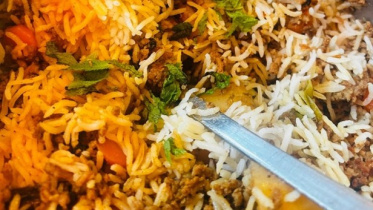
The Biryani excavation
This article will examine nine biryanis across the subcontinent, each representing a different historical layer.
19 March 2026

Prelude to an order for genocide
AS President Yahya flew out of Dacca on the night of March 25 he took with him the last hopes of a united Pakistan. For the final two days he had been holed up in the Dacca cantonment with the junta of generals who rule Pakistan, putting the finishing touches to Operation Genocide.
18 March 2026