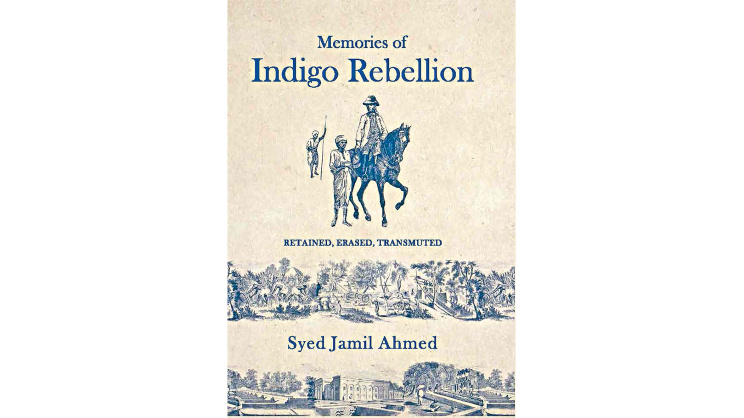
Memories of Indigo Rebellion and the question of national identity
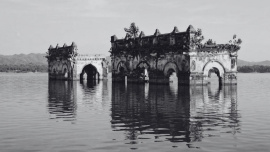
In 1897, synthetic indigo was introduced to the market by BASF and Hoechst, two German chemical giants. Before this juncture, the primary colourant for textiles worldwide was indigo, a blue vegetable dye extracted from the leaves of the indigo plant (Indigofera tinctoria)—supplied from the colonial world of British India, Dutch Java, and Spanish Central America, in order of importance. The cultivation of indigo was known in ancient South Asia long before colonial times. What the Europeans introduced during the colonial period was a larger-scale organisation of indigo planting and more centralised dye production, financed by the agency houses which linked planters with world markets. By the mid-19th century, indigo was the most important manufacturing sector of rural Bengal and its largest private industry, producing the finest indigo in the world. In 1859, a large-scale rebellion against indigo cultivation erupted in Bengal, mobilising nearly five million indigo cultivators. By 1862, when the rebellion had died out, it had destroyed a thriving industry and forced the planters to abandon the factories which dotted the central districts of Bengal. Many planters relocated their factories to Bihar. In 1889, a second uprising broke out, this time localised mostly in the Jashore region.
Three crucial points regarding the Indigo Rebellion need to be noted. Firstly, in addition to the Europeans, Bengali zamindars were also indigo planters, and they were no less oppressive than the Europeans. Secondly, the rebellion was not along racial or ethnic lines, but along class lines. Thirdly, the rebellion did not wipe out indigo production in Bengal. Indigo production stopped after the introduction of cheaper chemical dyes in the 1890s.
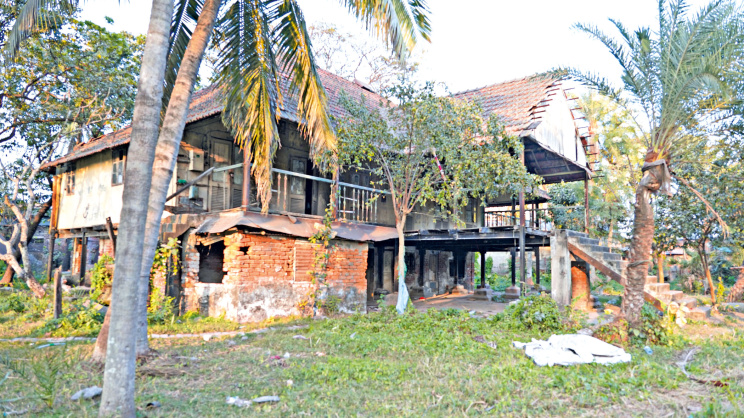
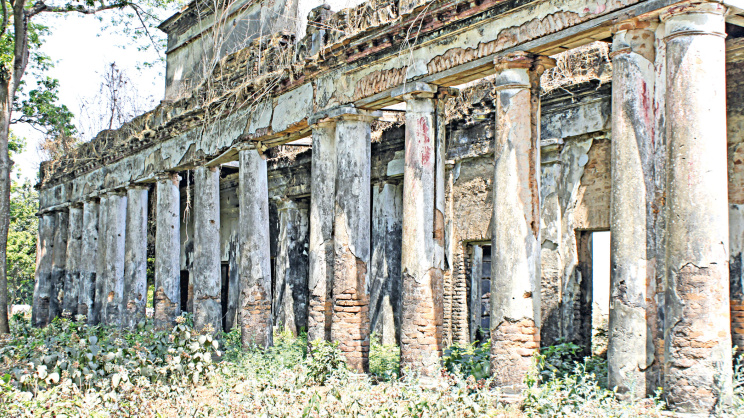
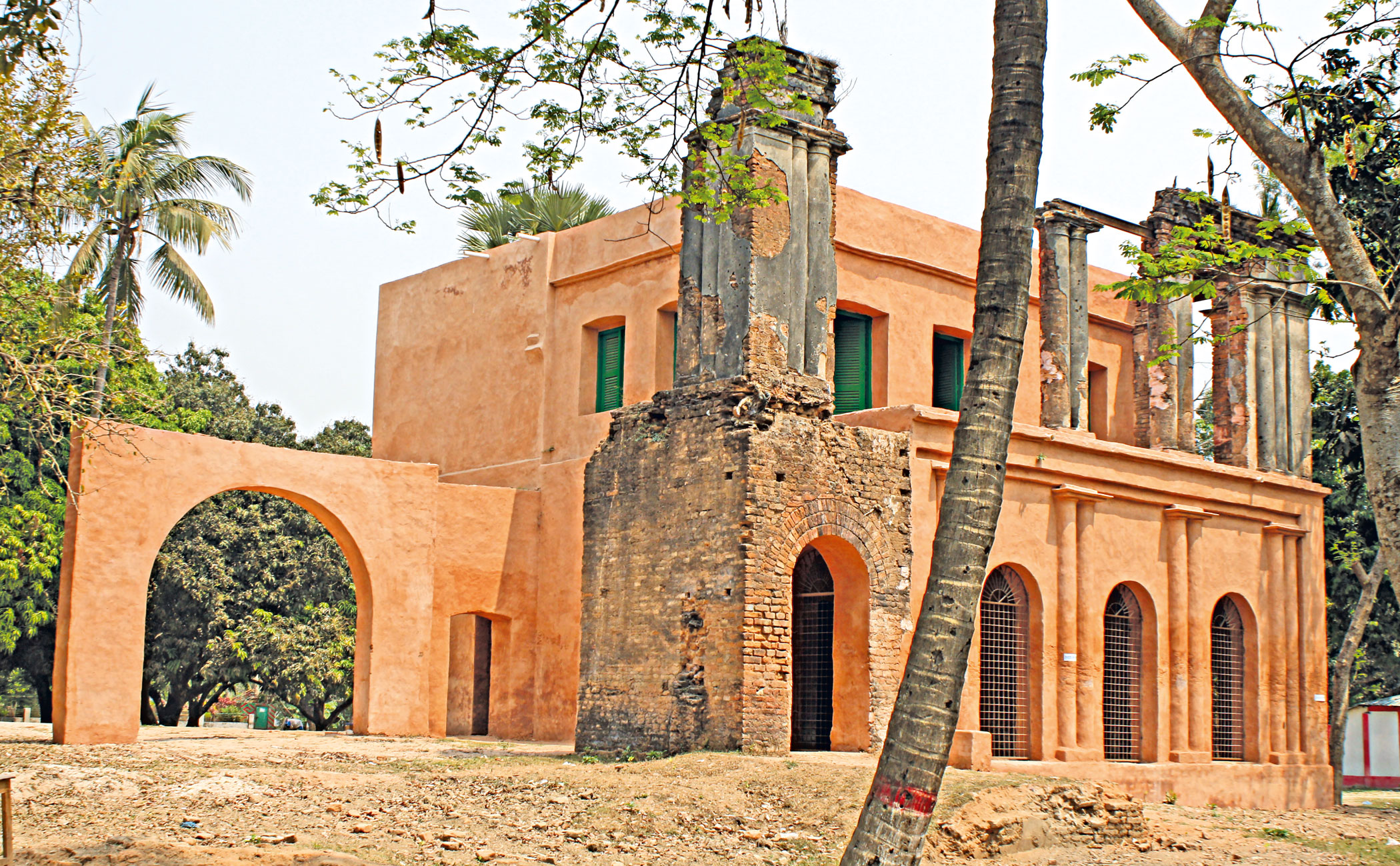
In the 20th and 21st centuries, academia has produced a voluminous historiographic literature on the Indigo Rebellion. Acknowledging the importance of all these works, I undertook a research project focusing on the present so as to examine how the memory of the Indigo Rebellion is retained, if at all, by the rural inhabitants of the indigo districts in Bangladesh. The research analyses ethnographic data collected from 57 sites across the following 14 administrative districts of Bangladesh: Nilphamari, Dinajpur, Rangpur, Faridpur, Madaripur, Khulna, Bagerhat, Jashore, Narail, Magura, Jhenaidah, Kushtia, Meherpur, and Chuadanga. The investigation began on 16 February 2020 and, after a hiatus during the first wave of the coronavirus pandemic from March to August 2020, ended on 27 March 2021, by which time the second wave had set in. Using purposive, snowball, and convenience sampling, 496 respondents were interviewed across the 14 districts. The respondents in the research all bear daily witness to the surviving remains of indigo factories as ‘tangible heritage’. A hundred and sixty-odd years earlier, people living in these areas rose in rebellion because economic exploitation left them with no other choice. Today, only 25% of the people remember it. Why? More importantly, does it matter that people have mostly forgotten the rebellion?
The Indigo Rebellion in general, and Digambar Biswas and Bishnu Charan Biswas, two iconic figures in the rebellion, in particular, have lost much of their significance in the Jashore region. Although Piyāri Sundarī, a zamindar who led the rebellion, is remembered in the Kushtia region, she remains very much a local heroine whose relevance to questions regarding national identity is inconsequential.
To answer these questions, it may be helpful to draw on Maurice Halbwachs. In On Collective Memory, he argues, “one cannot in fact think about the events of one’s past without discoursing upon them. But to discourse upon something means to connect within a single system of ideas our opinions as well as those of our circle.” Hence, “remembering is not pure, unmediated, unaltered, ‘photographic’ recollection of the past;” in the process of remembering, past experience is inevitably interpreted, organised, and integrated “via the social frameworks for memory, i.e., social norms, values, beliefs, and expectations,” which are internalised by the members of society.
As the research demonstrates, the frameworks of collective memory in Bangladesh have undergone a tectonic shift from the 1860s, when the Indigo Rebellion erupted, to the 2020s. With the onset of colonisation in 1757, Bengal’s economy began to be transformed into a colonial economy, and the process was sealed by the end of the century. The central feature of the land system of Bengal during the period was “the perpetual fixity of the Government’s share of the revenue from land but with no fixity for the rent of the tenant-cultivator.” It was this system, instituted under the Permanent Settlement Act of 1793, which underpinned the authority of the zamindars and emerged as a key factor in the antagonistic relationship between the European planters, the local zamindars, and the peasants. “The general economy continued to rest on a predominantly agrarian subsistence base now linked firmly to the capitalist world market,” and, in consequence, peasant family economies were impoverished at the same time through the operation of merchant and usury capital. As far as the Muslim peasantry of eastern Bengal was concerned, they formulated Islam by means of a syncretistic frame of reference, in consequence of which, as Richard Eaton shows in The Rise of Islam and the Bengal Frontier, “Islamic and Bengali worldviews and cosmologies became fused in dynamic and creative ways.” Although the Faraizi Movement under Haji Shariatullah (from 1818 to 1840) worked vigorously against syncretistic Islam, it assumed a radical agrarian character under Dudu Miyan from 1840 onwards, as it veered towards class struggle by invoking the ideal of equality and brotherhood.
Since Bangladesh’s independence in 1971, rural society, in general, and agricultural production, in particular, have undergone a tectonic shift. The contribution of the agricultural sector to Bangladesh’s gross domestic product fell from 49% in 1983/84 to an average of 14% in 2014–2019. At the same time, agriculture remains the largest sector in terms of employment, providing 40% of the total labour force. The rural population in the country had fallen to a little over 61% by 2020. Against this image of rurality and agriculture, contrasting images that attract daily attention in Bangladesh today emerge from globalised sweatshops producing ready-made garments in the country, and from migrant labourers toiling in construction yards in the Middle East, palm orchards in Malaysia, and other labour-intensive industries elsewhere in the world. Indeed, the readymade garment industry and remittances from expatriates are the key drivers of the country’s growth.
In contrast to the colonial period, life and living in Bangladesh today heavily devalue the agricultural social order and the economic importance of the peasantry. Instead of the worldview that had emerged out of what Eaton names ‘creative adaptation’ between Islamic institutions and the non-Brahmanised religious culture of pre-modern Bengal, globalisation has brought home the Wahhabi-Islamist lifestyle and jubba-hijab dress code from Saudi Arabia through the conduit of migrant Bangladeshi labourers. Class struggle, anti-imperialist struggle, and anti-colonial resistance are outmoded in this social system because the people of Bangladesh are now focused on the RMG economy and Islamic values. Consequently, the Indigo Rebellion in general, and Digambar Biswas and Bishnu Charan Biswas, two iconic figures in the rebellion, in particular, have lost much of their significance in the Jashore region. Although Piyāri Sundarī, a zamindar who led the rebellion, is remembered in the Kushtia region, she remains very much a local heroine whose relevance to questions regarding national identity is inconsequential.
This matter of forgetting, or failing to remember, broaches the question of identity. Acknowledging that the construction of the identity of a dominant social group is dependent upon the manner in which it conceives its other, it is also necessary to remember Andrew Edgar’s explication of Michel Foucault in Cultural Theory: Key Concepts that “the self may be theorised in terms of the conceptual and other intellectual resources that it calls upon in order to write or talk about itself, and in the way in which it is written about, or written to.” In such writing or talking about itself, “identities develop in reference to nation, religion, gender, language, socio-economic position and lifestyle. While identities are not fixed or unidimensional, they may be constructed in a manner that is exclusive of some other dimension of identity formation” — creating lines of tendential force. Crucially, as Salwa Ismail argues in “Being Muslim”, ‘identity politics’, or the struggle for power over identity, “asserts difference in terms of distinctions in tastes, lifestyles, and modes of representation in the public sphere.” In collective memory studies, the ‘physical evidence of the past’ has often been asserted as a shared lexicon of cultural referents that constitute, at least in part, national identities. This is because collective memory is a key factor that heavily impacts how social groups define and chart their boundaries. Hence, it is also possible that the amnesia regarding the Indigo Rebellion exists not only because Bangladesh has moved on from colonial rurality to postcolonial RMG and expatriate labour, but also because physical evidence of the past is now being harnessed to reinforce identity politics in which Islam is the line of tendential force.
In bringing up the complex interplay of Islam and identity, Ismail’s argument acknowledges that “the hijab may be an expression of identity politics, used to deliver a message in the public sphere: a message that is not about religion per se, but about difference and a right to public recognition.” The research explores how Islamism is being mobilised to articulate the collective memory of the Indigo Rebellion and how the collective memory of the rebellion is giving rise to Islamist identity. Here, ‘Islamism’, as Ismail demonstrates, encompasses (1) ‘Islamist politics,’ i.e., “the activities of organizations and movements that agitate in the public sphere while deploying signs and symbols from Islamic traditions”, and (2) ‘Islamization,’ i.e., “a drive to Islamize the social sphere [by means of] a process whereby various domains of social life are invested with signs and symbols associated with Islamic cultural traditions.” Islamism is indeed a modern phenomenon that captures the affinity between Islam and modernity and is, at the same time, “a reaction against the failure of modernisation and a defence against post-modernity.”
At this point, I turn to media memory to demonstrate how Islamism has been activated as a potent agent in the politics of memory. In January 2022, the number of Internet webpages that remembered indigo cultivation and rebellion stood at 79, of which 72 were online news pages and blogs, and 7 were YouTube videos. The rebellion, as discussed in these pages, is embedded within three ideological strands: (i) a people’s uprising led by the people’s leaders; (ii) an uprising of the people led by some local zamindars; and (iii) an uprising or resistance of the Muslim peasantry led by Haji Shariatullah and his son Dudu Miyan. Although a few memory agents remember local zamindars as ill-famed and oppressive, the general trend of media memory in Bangladesh is to portray all the European indigo planters as evil oppressors and the Bengalis as helplessly oppressed, thus drawing a clear binary of us/good and them/evil. Such a media memory easily facilitates the invocation of nationalism.
If the ‘politics of collective memory’ may be defined as the struggle for power over the shaping of memory that articulates a desired construction of identity, then the most visible struggle to which the nation-state of Bangladesh has devoted the greatest mnemonic labour since its emergence is the Liberation War of 1971. If collective memory is of any consequence at public events hosted by political parties in Bangladesh, it is mostly restricted to the war. Consider, for example, the news report published in Prothom Alo English on 29 April 2026: “Tension flares in parliament over Liberation War–Jamaat debate.” Indeed, the Liberation War constitutes what Daniel Hallin identifies in The ‘Uncensored War’ as ‘the sphere of legitimate controversy’. It is here that the politics of memory is most concerned with debates about the past involving the Liberation War. The most obvious example in this regard is the debate over the roles of Sheikh Mujibur Rahman, Ziaur Rahman, and the leaders of Bangladesh Jamaat-e-Islami. In contrast, the collective memory of the Indigo Rebellion appears to belong to the ‘sphere of deviance,’ “the realm of those political actors and views which journalists and the political mainstream of the society reject as unworthy of being heard.” Indeed, 79 webpages articulating the memory of the Indigo Rebellion are utterly insignificant compared to the over 11 million webpages in Bengali and English linked to the War of Liberation (as a cursory search on 24 August 2023 revealed). If this act of forgetting is justified on whatever grounds, then the War of Liberation may too be forgotten by a similar gesture a hundred and fifty-odd years from the time it erupted. Please remember, half of that time has already elapsed.
In his essay “What is a Nation”, Ernest Renan equates “the act of forgetting” with “historical error”, but nevertheless acknowledges that forgetting “is an essential factor in the creation of a nation, which is why progress in historical studies often constitutes a danger for nationality.” Because neither the rural population of Bangladesh at the grassroots level, nor the political parties and the state at the national level, show any interest in mobilising the collective memory of the Indigo Rebellion in imagining the Bengali nation, this erasure indicates that the direction in which the nation is heading today is towards an Islamist socio-cultural identity. In Theorizing Social Memories, Sebald Gerd and Wagle Jatin note that “when worlds change at a great pace and when these changes are accompanied by massive disruptions,” as is currently taking place in Bangladesh today, “traditional forms of memory are destroyed, and the very question of memory gravitates toward the centre of general perception and preoccupation.” And, in Bangladesh, the centre of general perception and preoccupation is Islamism.
Dr Syed Jamil Ahmed is a founding member of Spardha Independent Theatre Collective and Honorary Professor of Theatre and Performance Studies at the University of Dhaka.
Send your articles for Slow Reads to slowreads@thedailystar.net. Check out our submission guidelines for details.

157th Birth Anniversary of Mahatma Gandhi / Gandhi’s return to Noakhali
Why does Tagore still trouble Bangladesh’s idea of ‘us’?

Can Bangladesh make better use of its zakat money?
Three revolutions that reshaped the world
Paradise lost and found: Rediscovering early modern Bengal
Unbound Mother: The making and remaking of Kaali in Bengal
Do great leaders make history, or does history make them?
Poison and cremation: A forensic history of colonial Bengal