Rethinking the origins of Bongabdo through Bengal’s ecological civilisation
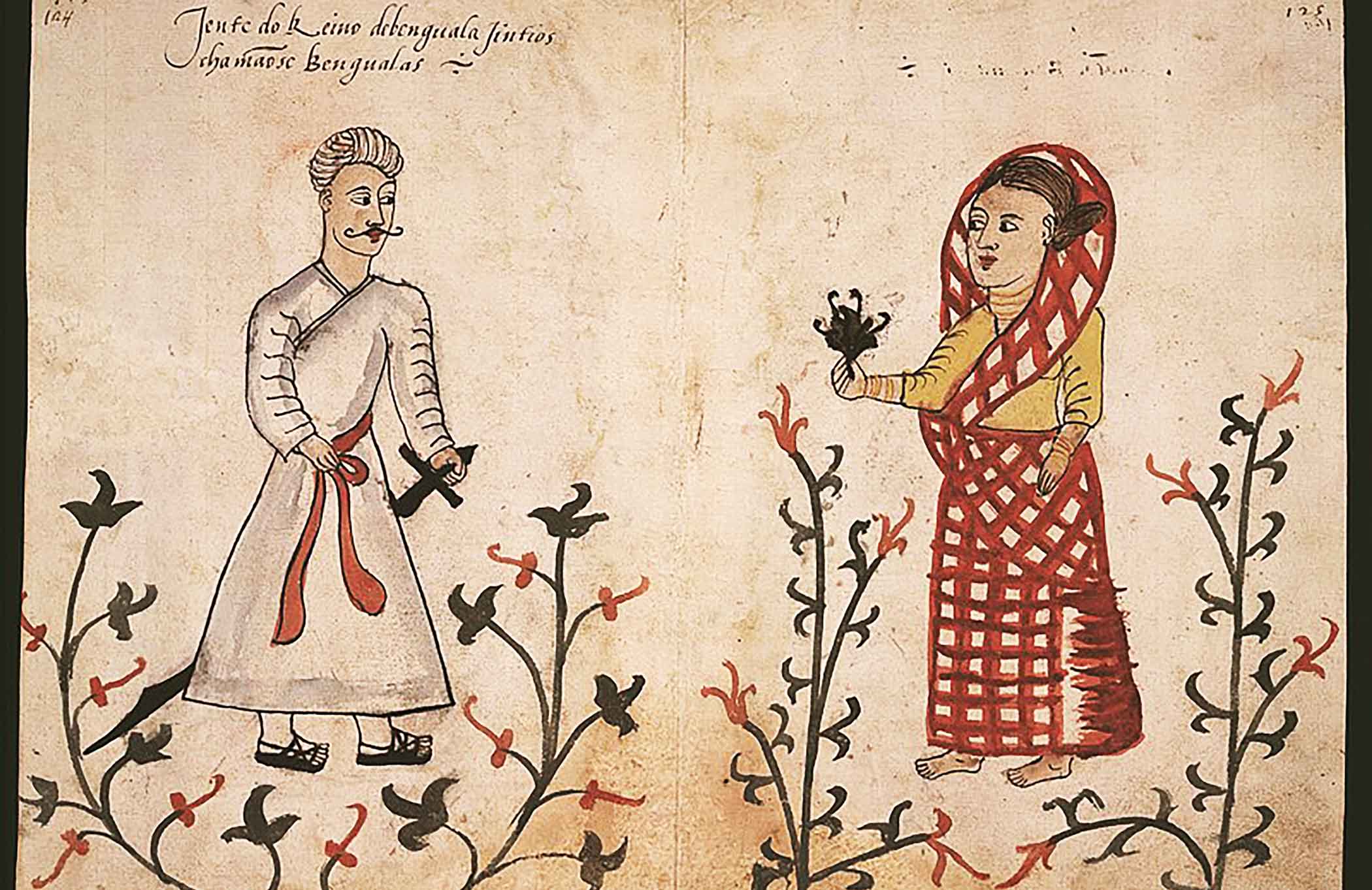
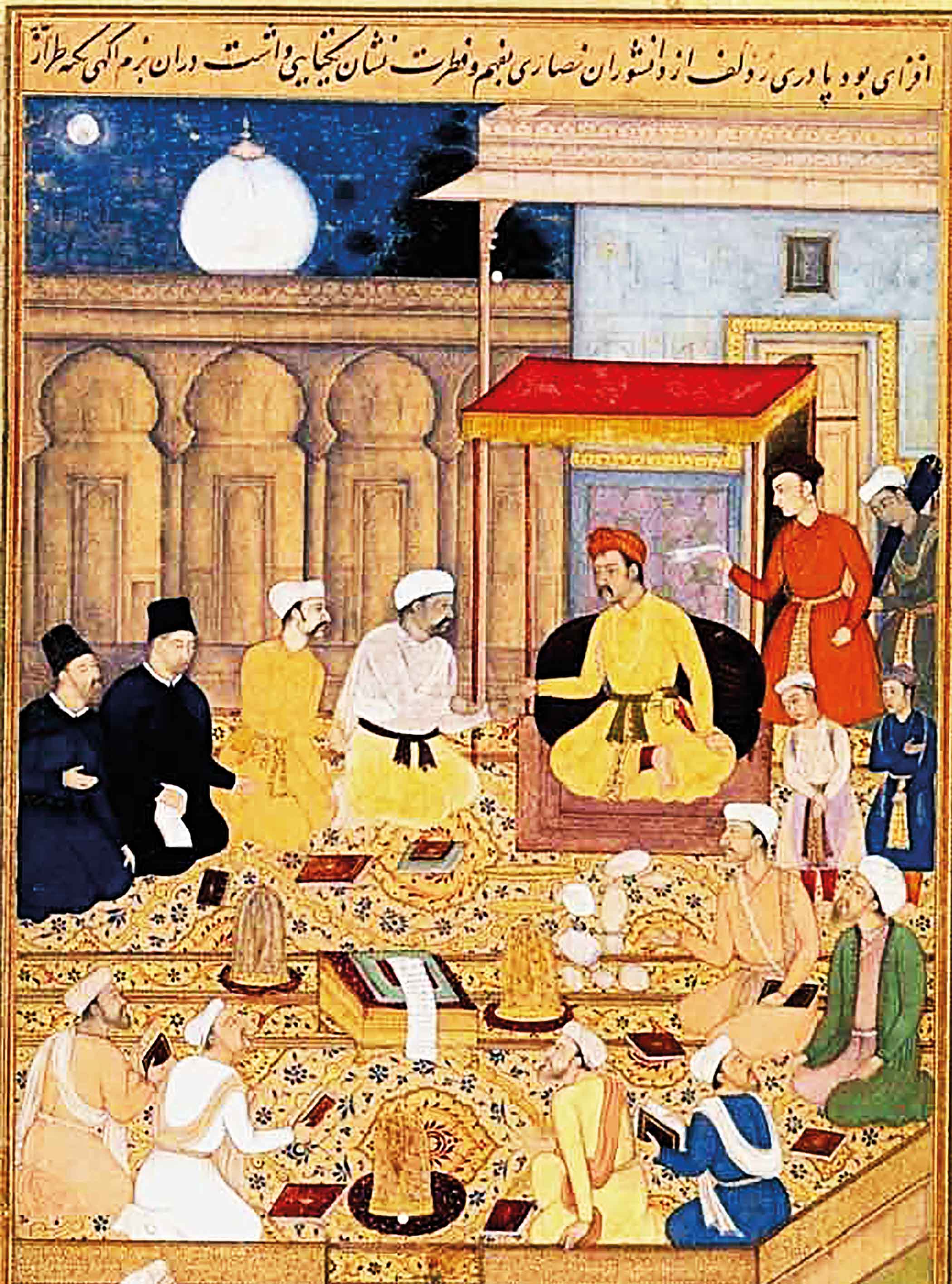
Every year, when Pohela Boishakh arrives with its processions, music, alpona, and the familiar call of Esho He Boishakh, people in Bangladesh come together to celebrate time itself. Alongside these festivities, a common historical claim is often repeated. Some believe the Bengali calendar, or Bongabdo, was created by the Mughal emperor Akbar to facilitate tax collection. Others say it began with Shashanka, the seventh-century ruler of Gauda. Both figures are important, but the real question is whether either of them actually 'created' the calendar.
The issue is not about recognising the influence of emperors or kings. The problem is thinking that a rich culture of timekeeping, shaped by centuries of farming, rituals, and local memory, could come from just one ruler’s decision. Calendars do not appear suddenly. They develop gradually as civilisations grow.
Time in a delta
To understand Bongabdo, it is important to first understand Bengal itself.
Bengal is more than just a political region. It is one of the world’s major delta areas, shaped over time by rivers, sediment, floodplains, monsoons, farming, and how people have adapted. Historian Richard M. Eaton explains that settling and farming in Bengal depended on working with floods, changing rivers, and the timing of the monsoon. Willem van Schendel also describes Bengal as a society built through ongoing interaction with waterways, seasonal changes, and the challenges of its environment.
Landscapes like this naturally create their own way of marking time.
In Bengal, time was once read through swollen rivers, ripening paddy, fishing tides, and the smell of wet earth before monsoon rain. They organise it around cycles of planting and harvesting, floods and droughts, movement, and trade. In Bengal, the farming year was more than just an economic plan; it shaped festivals, markets, travel, and community life. This is why the Bengali calendar still feels closely connected to nature. It's six seasons match Bengal’s climate, not the rules of faraway empires. The calendar’s timing fits with farming cycles and seasonal changes unique to the delta. These lasting patterns point to something older than Mughal rule or royal orders.
It suggests continuity.
A calendar closely linked to monsoon farming, floods, and seasonal growing does not come from imperial policy alone. It develops over many generations as people adapt to their environment. Empires might standardise or organise calendars, but they rarely create the deep connection to nature found in them.
Civilisations, not rulers, make calendars
Modern historians often look for single founders. We like to connect beginnings to well-known rulers because it makes political history easier to tell. However, cultural systems rarely start in such clear-cut ways. Languages change slowly over time. Food traditions build up over centuries. Calendars develop in the same gradual way.
Fernand Braudel famously said that civilisations are shaped more by slow environmental changes than by kings. Geography, climate, work systems, and natural rhythms last much longer than any political rule. The Bongabdo seems to fit into this deeper kind of history.
Instead of seeing the Bengali calendar as something a ruler invented, it is more accurate to view it as a long-term expression of Bengal’s delta civilisation, later changed and adapted by different rulers. A calendar closely linked to monsoon farming, floods, and seasonal growing does not come from imperial policy alone. It develops over many generations as people adapt to their environment. Empires might standardise or organise calendars, but they rarely create the deep connection to nature found in them.
The Buddhist layer
The story becomes richer when we consider Bengal’s Buddhist past.
Long before Brahmanical and Mughal times, Bengal was closely connected to Buddhist networks of ideas and institutions. Monasteries, pilgrimage routes, trade paths, and learning centres linked Bengal to places across South and Southeast Asia. These institutions needed organised ways to keep track of time, such as ritual calendars, seasonal events, and astronomical calculations, all of which were important in monastic life.
Studies of early Buddhist buildings and settlements in Bengal show that these sites were not merely religious. They were part of the region’s culture and environment, helping to organise farming and seasonal activities. Sanskrit scholar Sheldon Pollock says that regional cultures in South Asia did not just accept outside knowledge; they made it their own. Bengal likely did this with astronomical and calendar knowledge from Buddhist networks. The great Buddhist mahaviharas of Paharpur and Mainamati were not isolated religious enclaves; they functioned within seasonal agrarian worlds that required coordinated ritual and agricultural timekeeping. Therefore, Bongabdo may reflect not only political history but also Buddhist traditions, local astronomy, and farming practices developed over centuries before any royal changes.
The Mughal Empire needed to manage taxation effectively, especially in a region as complex as Bengal. Tax collection had to align with the timing of planting and harvest. That is why the Mughal administration used the Bengali calendar—not to create it, but to fit their system to it. What is important is that, even after these changes, the calendar kept its ecological structure. The six seasons stayed the same. Farming rhythms continued. The empire adapted to Bengal more than Bengal changed for the empire.
Shashanka territorialised time; Akbar bureaucratised it
This does not diminish the importance of Shashanka or Akbar. Instead, it helps clarify what they actually did.
Shashanka ruled at a key time when Bengal was becoming more independent and building early Brahmanical state systems. It is likely that he formalised and ‘Sanskritised’ elements of an already existing regional temporal culture, integrating them into an emerging Shaivite political order. A timekeeping culture rooted in the environment may have been reorganised under new Shaivite rule, gaining new official and symbolic forms but keeping its local rhythms. In this way, Shashanka did not create Bengali time; he gave it a territorial shape.
Akbar’s role was also more limited than the usual story suggests. The Mughal Empire needed to manage taxation effectively, especially in a region as complex as Bengal. Tax collection had to align with the timing of planting and harvest. That is why the Mughal administration used the Bengali calendar—not to create it, but to fit their system to it. What is important is that, even after these changes, the calendar kept its ecological structure. The six seasons stayed the same. Farming rhythms continued. The empire adapted to Bengal more than Bengal changed for the empire.
A calendar of rivers, not empires
The more closely we look at Bongabdo, the less it seems like the work of a single dynasty. Instead, it looks like a record of many layers of civilisation. It holds signs of monsoon ecology, life along rivers, farming traditions, Buddhist institutions, local astronomy, Shaivite state-building, and Mughal administrative changes. Each layer was added over centuries, without wiping out the earlier ones.
This is important because it challenges the usual way Bengal’s history is told. Much of South Asian history has been written from the viewpoint of empires, making local knowledge seem less important. Bengal is often portrayed as a place ruled, not as one that created its own history. Historian Ranajit Guha warned against ignoring local processes in favour of elite political stories. The search for a single founder of Bongabdo may be an example of this problem.
Remembering time the Bengali way
This may be why Pohela Boishakh feels different from most official celebrations. It does not mark a conquest, a throne, or an empire. Instead, it celebrates renewal through the changing seasons, the coming of heat, wind, harvest, trade, and shared rhythms. It feels connected to nature before it feels political.
This ongoing emotional connection may itself be a sign of history.
For centuries, people in Bengal learned to live with rivers that changed direction, floods that reshaped the land, and monsoons that decided whether they would survive. From this constant adjustment came not only farming and settlement patterns, but also new ways of understanding time. Bongabdo is one of the few remaining signs of that shared memory. Akbar may have changed it. Shashanka may have formalised some parts. But neither can fully explain it.
That is why the Bengali calendar seems older than royal courts, deeper than dynasties, and more connected to nature than to empires. It is not just a king’s calendar. Bongabdo survived because it was never merely a royal calendar. It emerged from the deeper continuity of a deltaic civilisation that learned to organise life around rivers, monsoons, cultivation, ritual, and renewal long before empires attempted to regulate it. Kings may have renamed it, standardised it, or bureaucratised it. But Bengal itself produced the temporal consciousness that made the calendar possible.
Mohammad Habib Reza is an architect, architectural historian, and Associate Professor at the School of Architecture and Design, BRAC University. He is the originator of the new contextualism framework and works on Bengal’s cultural history, deltaic urbanism, heritage governance, and civilisational continuity. He is also the Vice President of PRERICO and Secretary (Events) of ICOMOS Bangladesh.
Send your articles for Slow Reads to slowreads@thedailystar.net. Check out our submission guidelines for details.

157th Birth Anniversary of Mahatma Gandhi / Gandhi’s return to Noakhali
Why does Tagore still trouble Bangladesh’s idea of ‘us’?

Can Bangladesh make better use of its zakat money?

Three revolutions that reshaped the world
Paradise lost and found: Rediscovering early modern Bengal
Unbound Mother: The making and remaking of Kaali in Bengal

Do great leaders make history, or does history make them?
Poison and cremation: A forensic history of colonial Bengal