



From artificial intelligence to the artificial state: Is the trajectory inexorable?
7 October 2026
•
In Focus
157th Birth Anniversary of Mahatma Gandhi / Gandhi’s return to Noakhali
6 October 2026
•
In Focus
Why does Tagore still trouble Bangladesh’s idea of ‘us’?
5 October 2026
•
In Focus

Can Bangladesh make better use of its zakat money?
4 October 2026
•
In Focus
Three revolutions that reshaped the world
2 October 2026
•
In Focus
Paradise lost and found: Rediscovering early modern Bengal
1 October 2026
•
In Focus
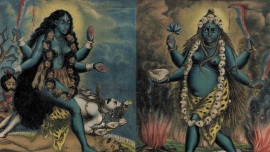
Unbound Mother: The making and remaking of Kaali in Bengal
30 September 2026
•
In Focus
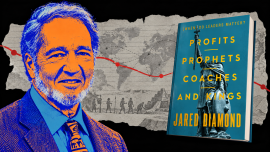
Do great leaders make history, or does history make them?
29 September 2026
•
In Focus
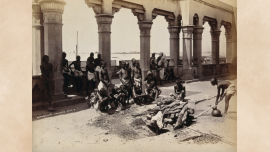
Poison and cremation: A forensic history of colonial Bengal
28 September 2026
•
In Focus
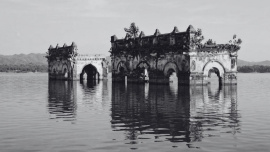
Partition, Bor Porong and the Chakmas’ unfinished struggle for belonging
27 September 2026
•
In Focus
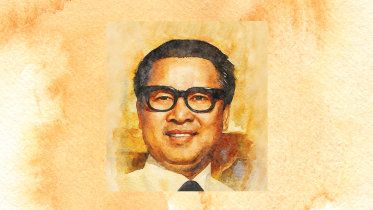
Remembering Tajuddin Bhai
I first met Tajuddin Ahmad—or Tajuddin Bhai, as I knew him—in the 1960s, during the pre-Liberation period. After I joined the Awami League, Bangabandhu told me to meet Tajuddin Ahmad, as he would answer all my questions on politics and the party, and that he possessed deep knowledge of both politics and people.
22 July 2025

‘Tajuddin’s place in history should be seen in terms of his wartime leadership’
The Daily Star (TDS): How do you view Tajuddin Ahmad’s early political journey and his emergence as a key national figure?
22 July 2025

On the path of dawn
Every moment of the night of 25 March 1971 and the following two months will always shine brightly in the depths of my memory. Even though I might not be able to express all those living memories in words, I will try to articulate a possible description of the events.
22 July 2025

Tajuddin’s unfinished revolution
As a person, Tajuddin Ahmad was an idealist. In his personal life and professional conduct, he was disciplined and guided by a deep sense of restraint and propriety.
22 July 2025

Self and Society: Tajuddin’s formative years
No leader emerges in a vacuum. The making of a political figure is deeply influenced by the social structures around them—family, religion, education, and the broader environment all leave lasting imprints.
22 July 2025

Tajuddin Ahmad man who shaped history
The historic journey of the people of Eastern Bengal in the middle half of the last century, to be more precise from 1947 to 1971, was an amazing story with great impact on the post-colonial social and political development of the subcontinent.
22 July 2025
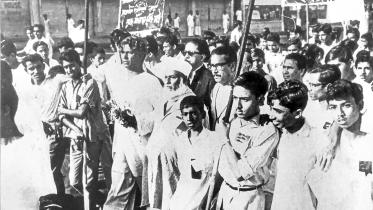
An atypical leader
In the fraught political environment of Bangladesh, where the image of politicians and the idea of politics have remained systematically devalued and perverted, Tajuddin Ahmad (TA) dared to be different and charted his journey according to his own intellectual and moral imperatives.
22 July 2025

‘The trial of the jail killing case should be reopened’
The Daily Star (TDS): We all know Tajuddin Ahmad as a leader, but how was he as a father?
22 July 2025

‘Tajuddin Ahmad seems like a Greek tragic hero who had all the great qualities but destiny was against him’
The Daily Star (TDS): What inspired you to make the documentary Tajuddin Ahmad: An Unsung Hero?
22 July 2025

A man hard to find
Tajuddin Ahmad was tragically killed in jail on 3 November 1975. His life was cut short at the age of 50. Yet, in this brief life, he had the rare opportunity to perform great service to his country — and he made full use of it.
22 July 2025

Our moral inheritance Tajuddin Ahmad’s call to national conscience
I recall much of my formative youth in the United States spent sharing a home with struggling guests and families. Sharmin Ahmad “Reepi,” my mother and Tajuddin’s eldest daughter, once hosted a family of six whose two-month stay turned into several years until the guests could get back on their feet.
22 July 2025
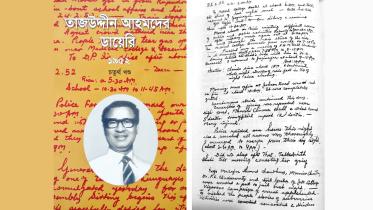
Reading his diaries and understanding the man
I do not remember who gave me the book—it may have been a friend, colleague, or a student of mine.
22 July 2025
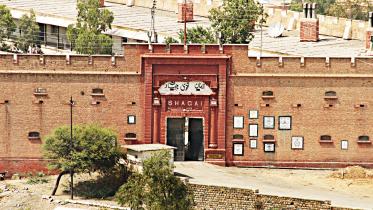
The crime of being Bengali: The untold story of Bengali internment in Pakistan
In the immediate aftermath of the Bangladesh Liberation War, as world attention fixated on the harrowing human toll of conflict and the fate of 93,000 Pakistani POWs in Indian custody, a darker, largely buried chapter was quietly unfolding in Pakistan.
20 July 2025
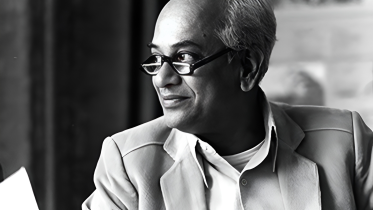
Muzharul Islam and Chetana Movement
“If properly planned, even now, Dhaka can be transformed into a very decent, liveable city. We can take advantage of the river, the khals, the lowlands, and the richness of the soil for the growth of trees and plants.
13 July 2025

The Terrible Splendour of Not Knowing
“O my body, make of me always a man who questions!” — Frantz Fanon had thundered, as if pleading with flesh and sinew to refuse silence, to resist obedience.
3 July 2025
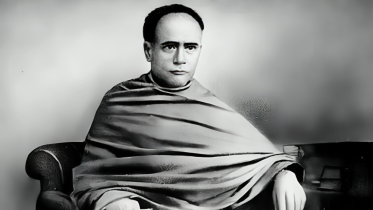
The Maverick Pundit
The poet and playwright Michael Madhusudan Dutta (1824–73) made no effort to conceal his disapproval of traditional Brahmin pundits.
29 June 2025

Reviving Bain: Chakma Fashion Reimagined
In the late afternoon, the sun seemed to drift hastily towards the Phuromon hill in the west. The krishnachura leaves whispered softly in the breeze while the birds’ chirping spread a melodic resonance.
22 June 2025

Why is Sandwip missing from the Bay of Bengal’s history?
Chittagong’s neighbour Sandwip is absent from Bay of Bengal history because its nature is hard to define.
15 June 2025
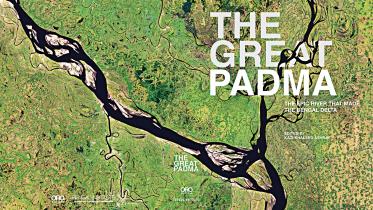
Writing the Padma
The first experience of the great river Padma is nothing less than overwhelming, and slightly terrifying. I first came to face the mighty river as a young lad in my teens sometime in April of the momentous year of 1971. My first sighting came with two terrors. My father was fleeing Dhaka with the family with the hope of crossing the river to escape the brutal onslaught of the Pakistan army. Arriving at the banks, there was the Padda (Padma) before us with its glorious panorama. It seemed like an oceanic river, with no sight of the other side, and the frightening prospect of crossing it.
1 June 2025
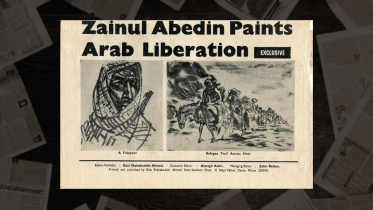
Art and decolonisation, with Zainul Abedin
When Zainul Abedin left Calcutta (now Kolkata) in 1947, as India and Pakistan negotiated a partition-ridden freedom from the British Empire, he was one of the city’s most acclaimed artists.
25 May 2025