



157th Birth Anniversary of Mahatma Gandhi / Gandhi’s return to Noakhali
6 October 2026
•
In Focus
Why does Tagore still trouble Bangladesh’s idea of ‘us’?
5 October 2026
•
In Focus

Can Bangladesh make better use of its zakat money?
4 October 2026
•
In Focus
Three revolutions that reshaped the world
2 October 2026
•
In Focus
Paradise lost and found: Rediscovering early modern Bengal
1 October 2026
•
In Focus
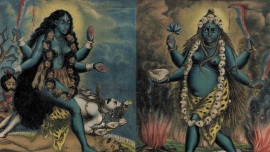
Unbound Mother: The making and remaking of Kaali in Bengal
30 September 2026
•
In Focus
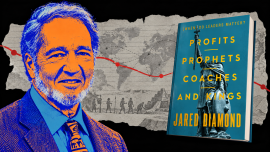
Do great leaders make history, or does history make them?
29 September 2026
•
In Focus
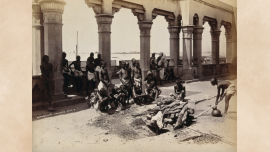
Poison and cremation: A forensic history of colonial Bengal
28 September 2026
•
In Focus
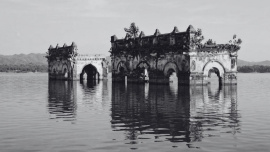
Partition, Bor Porong and the Chakmas’ unfinished struggle for belonging
27 September 2026
•
In Focus
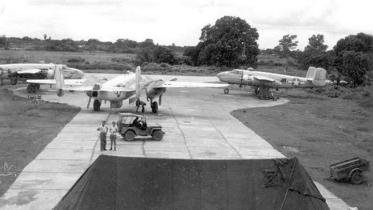
APO 433: Dhaka’s forgotten post office of World War II
Discover the hidden history of APO 433, the US military post office that connected Dhaka to the world during the Second World War. Read the full story.
9 September 2026
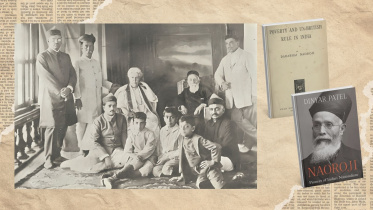
Dadabhai Naoroji: The man who exposed the economics of British colonialism
Dadabhai Naoroji exposed British colonialism’s economic exploitation, linking India’s poverty to political power and making swaraj a nationalist imperative.
8 September 2026
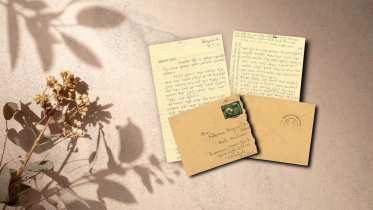
Untold stories of 1971 through private letters
Private letters preserved through philately reveal the intimate fears, journeys, losses and resilience that shaped Bangladesh’s 1971 Liberation War.
7 September 2026
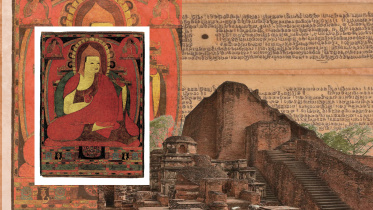
The extraordinary journey of Atish Dipankar Srigyan
Explore the life and legacy of Atish Dipankar Srigyan, the legendary Buddhist scholar from Bikrampur who shaped Tibetan Buddhism. A deep dive into history.
6 September 2026
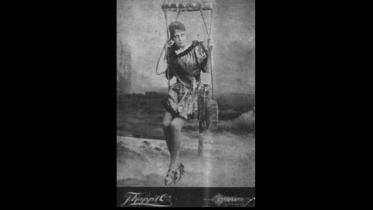
Forgotten story of Jeanette Van Tassel, the American woman who flew over Dhaka in 1892
Jeanette Van Tassel was a 24 year old American aeronaut whose balloon ascent over Dhaka's Buriganga River in 1892 was meant to dazzle a city. Instead, it ended in her death after a rescue attempt went tragically wrong, leaving her buried in an unmarked grave in Old Dhaka. More than a century later, a researcher's chance discovery brought her remarkable story back to light.
5 September 2026
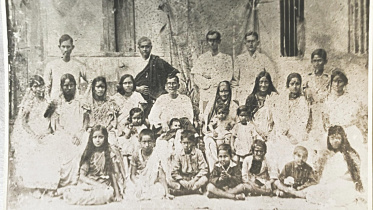
A personal essay
Beyond 1947 is a personal essay by Sunita Chowdhurie about the two grandmothers who shaped her, women who never called it Independence, only Partition. Through memory, food, and quiet endurance, it traces what was lost and rebuilt when a border cut through Bengal.
4 September 2026
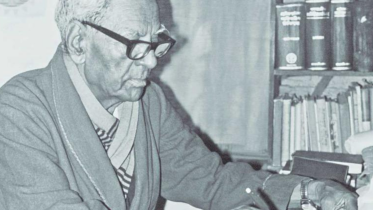
A global quest in search of a nation
Abul Mansur Ahmad’s vision of Bengali Muslim identity went beyond the boundaries of East Pakistan, connecting questions of language, culture, sovereignty and autonomy to wider global histories of decolonisation.
3 September 2026

Chand Bibi and the forgotten history of Muslim women’s political resistance
In this interview with The Daily Star, historian Sarah Waheed, author of Chand Bibi: The Lives and Legends of a Warrior Queen, traces how oral legend, court chronicles and Deccani paintings kept her memory alive, and what her story reveals about the erased political power of Muslim women across South Asia.
2 September 2026
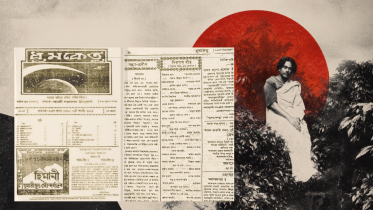
Women’s voices in Nazrul’s Dhumketu
Nazrul’s *Dhumketu* is remembered for rebellion, but its pages also gave women writers a powerful voice for freedom.
31 August 2026
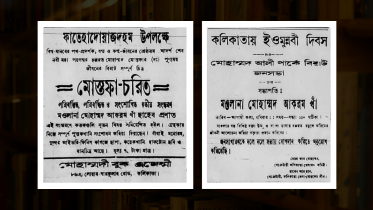
How Milad-un-Nabi shaped Muslim cultural life in colonial Bengal
Explore how Milad-un-Nabi celebrations in schools helped foster a distinct cultural identity among the Muslim middle class in colonial Bengal.
26 August 2026
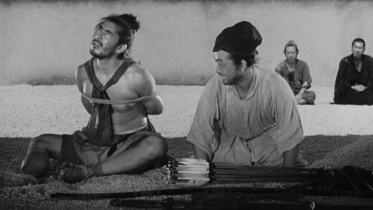
What Rashomon teaches us about truth and human behaviour
Kurosawa’s Rashomon brilliantly illustrates the inherent subjectivity of human memory, prefiguring modern insights into cognitive behavioural economics.
26 August 2026
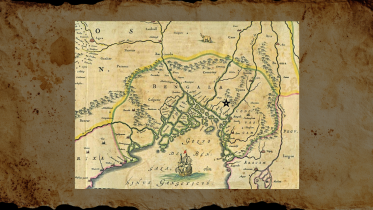
Why Chittagong never became a maritime city
Why did Chittagong, despite its vast trading reach and strategic location, never become Bengal’s maritime city proper?
24 August 2026
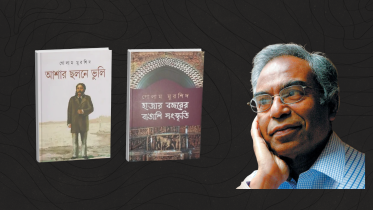
The many worlds of Ghulam Murshid
Ghulam Murshid’s scholarship bridged Bengali literature, history, gender, religion and culture, revealing the complexity of modern Bengal.
23 August 2026
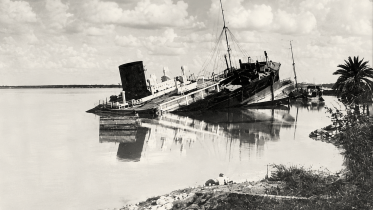
Operation Jackpot: How Bangladesh’s naval commandos struck at Pakistan’s lifeline in 1971
Defecting submariner AW Chowdhury orchestrated Operation Jackpot, decisively crippling Pakistani maritime logistics during the 1971 Liberation War.
21 August 2026
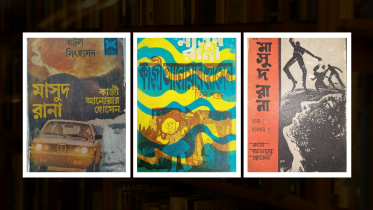
The Yellow Butterfly: How Sheba shaped my world growing up
For generations of Bangladeshi readers, Sheba Prokashoni opened windows to distant worlds, shaping childhoods through adventure, mystery and classic literature.
18 August 2026

What Bangladesh’s historic Test victory in Australia means for Bangladeshi-Australians
Bangladesh’s historic Test victory in Australia offers Bangladeshi-Australians a rare moment of pride, visibility and belonging.
17 August 2026

Remembering Sumit Sarkar, a historian who questioned orthodoxy
Professor Sumit Sarkar rigorously challenged historical orthodoxy, redefining modern Indian historiography through critical Marxist and subaltern perspectives.
17 August 2026
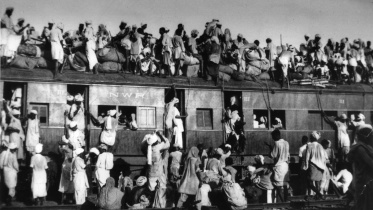
The unfinished histories of Partition
Partition remains an unfinished history, shaped by competing narratives, memories, political interests, and the enduring question of who gets to narrate.
16 August 2026
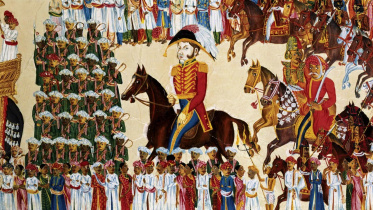
‘Britain didn't conquer India’
Britain controlled India through the East India Company, alliances and political manipulation rather than conquering the entire subcontinent militarily.
15 August 2026
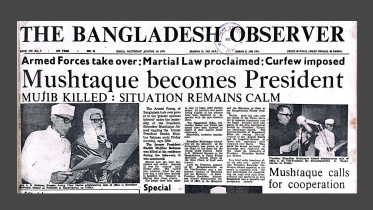
Sheikh Mujib’s killing: What the newspapers told and what they omitted
Bangladeshi newspapers in 1975 heavily censored details of Sheikh Mujibur Rahman's assassination to legitimise a military takeover.
15 August 2026