Asma Abbasi: The essence of orange
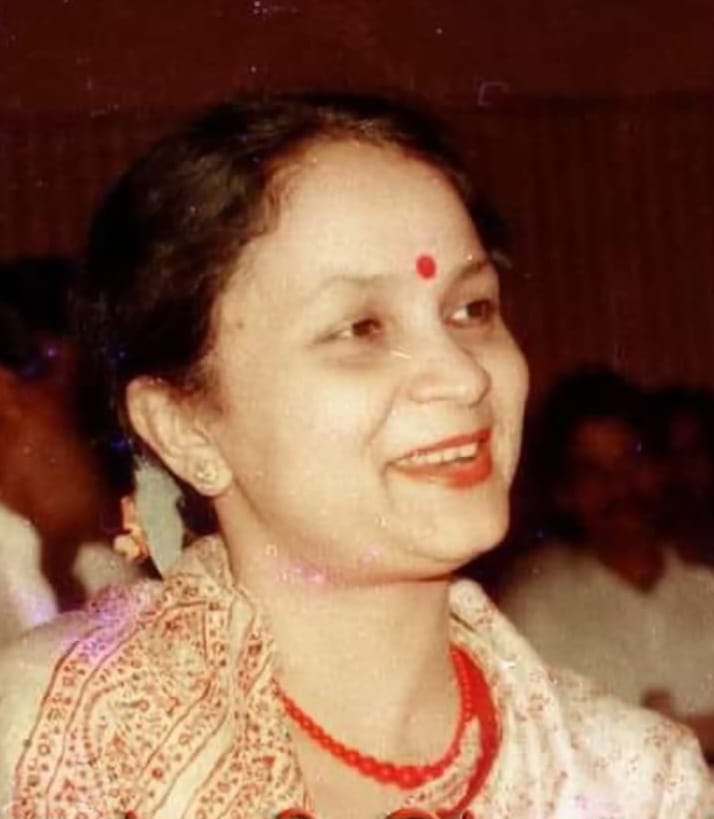
My mother was a slender, beautiful woman with a fair, full-moon face. My mind’s lens sees her as a young lady, always clad in a sari, stepping down the spiral staircase of our paternal ancestral home on her way to college to teach. It is indeed a surreal, dreamy, picture-perfect snapshot from memory lane.
But she was far too strict when it came to our studies, dress, and prayers. What seemed most unfair was the embargo on watching television.
In my childhood, what seemed most formidable was neither Everest nor Annapurna, but the top of my mother’s white steel almirah. As I was a bookaholic, she kept the freshly published, voluminous Sharodiyo Anondomela on that lofty shelf, for it was around that time that the final examinations would begin. But when November bade farewell with the end of the examinations, I would always come home to find that all the study books had been removed and replaced with the thick Puja Shongkha and many more books.
Yes, my mother was Professor Asma Abbasi: an academic, writer, broadcaster, social worker, patron of literature, and so much more.
She was born imbued with the essence of oranges in Sylhet, amid the riverine tenderness of the Monu, Surma, and Kushiyara, flowing like living verses through a land carrying the sanctity of Hazrat Shahjalal. At birth, she held both her parents' hands, but, as fate would have it, her father, Mevlana Habibur Rahman, a scholar from Deoband and Principal of the Aliya Madrasah, a great theological institution, passed away just six months after her birth.
Her mother, Syeda Hifzunessa Khanam, was left with her eldest son and four daughters. Owing to the sudden rough winds of fate, she had to move from Sylhet to Moulvibazar, where the cost of living was lower. My Nanu's three illustrious brothers emerged as the pillars of support and provided financial assistance in raising her children. I shall not go into what strength and patience it took for Nanu and my only mama to endure those difficult years.
Among the figures who shaped Asma's deep love of literature was her youngest uncle, Syed Mujtaba Ali (her Huru Mamu, meaning her youngest maternal uncle), one of Bengal's most distinguished literary figures.
In Amma's own words to me, she was besotted with the presence of her Huru Mamu for three reasons. Whenever he came to visit, her mother would prepare delicious dishes such as Hus'n-e-Curry, Potol Dolma, Shahi Tukra, and many other Sylheti delicacies. He always came bearing gifts for the siblings, but the most memorable moments came when night fell. Huru Mamu would gather them all around him and read aloud the freshly written manuscripts of Deshe Bideshe and Shabnam, as though they had just come out of the oven.
After her eldest and only brother, Suleiman Chowdhury, completed his studies in Economics in Kolkata, he took charge of the family. He moved to Dhaka, where he excelled as a banker. By then, two of the sisters had already been married. Asma was admitted to Qamrunnesa School in class eight. She shared with me how a coy mofussil girl, with her long banana braid, felt overwhelmed by the ways and manners of the Dhaka girls. Yet, when the final examination results were published at the end of the year, she topped the list. She stood first among all four sections of class eight. The girls were frantically looking around, trying to figure out, "Who is Asma Chowdhury?"
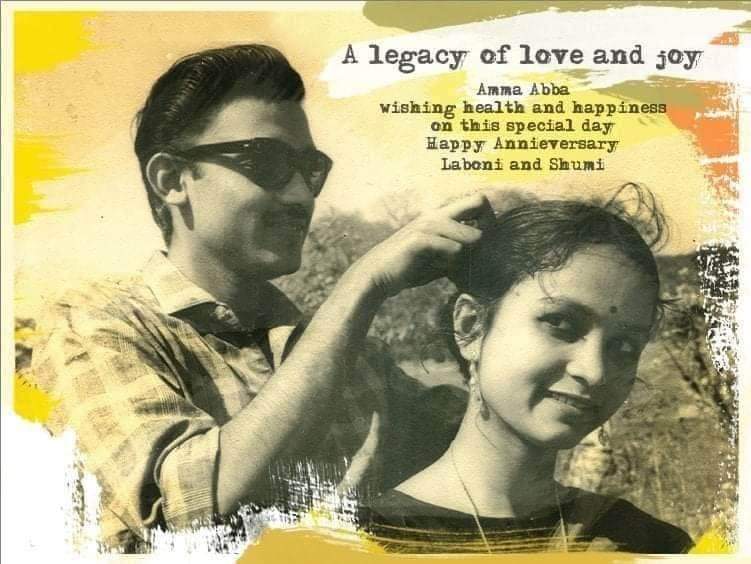
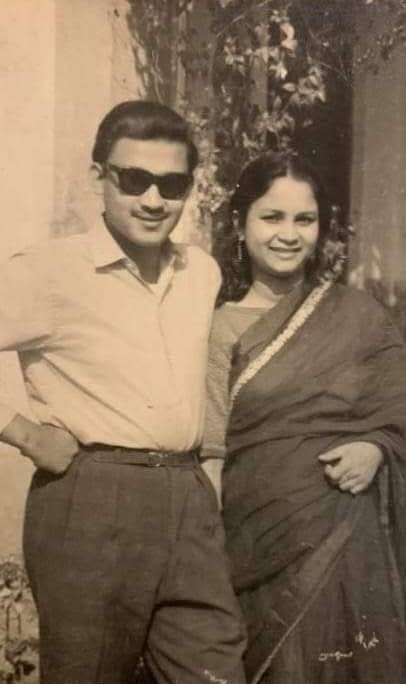
After completing Higher Secondary, she was admitted to the Department of Bengali at Dhaka University. She shared that, on the first day, her renowned editor and journalist cousin, SM Ali, better known as Khasru Mama, accompanied her. She was mesmerised by the extraordinary teachers who opened up a whole new world of literature to her, each one a unique gem. While she was a student at Dhaka University, my father, Mustafa Zaman Abbasi, proposed to her. He too was a man of remarkable gifts. In later years, she completely denied their romance! My sister, Einstein Samira Abbasi, and my daughter, Sarina Ashraf, later turned into detectives and sub-inspectors, investigating the matter. They uncovered volumes of diaries and letters. The charge sheet was firmly against Asma, corroborated by far too much evidence!
Asma tied the knot with the legendary Abbasuddin Ahmed's son, Mustafa Zaman Abbasi. She stood first in the Civil Service Education Cadre and was offered a lectureship at Dhaka College. But she felt shy about teaching boys, so she was posted to Eden College. After a month, she found that her first-born daughter had developed a fever. She immediately left the job. She never compromised her duty, passion, or striving for perfection in caring for her family and extended family.
However, she then joined Purana Paltan Girls' College, which was nearby. For more than forty years, she taught Bengali literature. She played a significant role in upgrading the college, helping to arrange funds to build a new four-storeyed building with her dedicated academician colleagues.
She had a hypnotic impact on her students. She, in fact, became a matchless orator. Her life was, in many ways, inspired beyond description by Professor Munier Chowdhury. She spoke of him throughout her life, and her eyes sparkled whenever she recalled his gallant lectures. He was her teacher for the English literature subsidiary course at Dhaka University. Professor Anisuzzaman, Dr Nilima Ibrahim, and others also left a mesmerising impression on her. Till her last day, she kept telling me about Munier Chowdhury. She said, "Maa, I can't express how Sir, apparently a man of medium stature whom one may not reckon much at first sight, transformed himself while teaching. He became Othello while we studied Othello. Hamlet the Prince!"
She was a fine writer. Her eight books have a niche readership. Her style of writing carried the embedded tonality of Syed Mujtaba Ali, especially in its subtle humour. Famously, Tagore used to tell Mujtaba Ali that his words had the essence of orange, referring to the Sylheti dialect.
Among many accolades, she received a gold medal from the Government of Bangladesh in recognition of her achievements as a Professor of Bengali Literature. She immersed herself in activities across many different spheres. I shall name just a few. She was involved with Kochi Kachar Mela (a children's sanctuary for learning music, writing, and painting), and, with time, she became associated with many organisations working for marginalised communities, including Dhaka Ladies Club, the Inner Wheel Club as District Chairman, Lekhika Shongho, and Shishu Academy, among others. She was also a member of the National Zakat Board and the Film Censor Board.
I cannot narrate her life and involvement across so many spheres of social welfare and achievement on a word-bound palette. As I write, tears are dripping. As Amma said, "You will only write about your illustrious father." With immense pain, tears, and haphazard thoughts, I am striving.
Love knows not its own depth until the hour of separation. Sadly, I realised the dynamism of Asma Abbasi's life and the scent of the finest jasmine only after she left us. I should also add that she hailed from a pious family. It was truly amazing that she learnt Arabic by attending night classes over a period of four years. I have seen photographs of her delivering speeches in Arabic at the Babylon Music Festival as she accompanied her illustrious musician husband, Abbasi. As District Chairman of the Inner Wheel Club, she visited Frankfurt and many other places abroad.
Worth mentioning, she conducted a popular literacy programme on BTV and was also an enchanting speaker. She spoke about Islam with a voice that was simple, gentle, and deeply inspiring. That is appreciated by many to this day.
Amma was the sunflower of our family. Her vitality and the remarkable role she played in the lives of her husband, two daughters, extended family, neighbours, and colleagues were extraordinary. She always cooked for us. For forty years, Amma prepared innovative Western dishes for us—from grilled cauliflower with minced beef to shish kebabs on the grill Abba had brought from Russia. She was the driving force behind her husband's success in his pursuits.
She was besotted with her grandchildren. And since life is an echo, the children's lives have come to an emotional halt. Amma always told me, "Maa, Ami kintu bole jabo na (I shall leave without a signal), so don't be too broken." I used to tease Mother, saying, "It's not so easy to leave earthly life. You are not overtly pious enough to have such an exit!" But her prophecy came true. Just like my maternal grandmother, Amma did leave without a word. Like a bird on the wire, she flew.
That day, in July 2024, despite her habit of having lunch late, at 5 p.m., she had it with Abba. After a while, she took a shower and shampooed her hair, as she usually did. She performed her ablution and rested on her bed. I approached her and said, "You threw up. Shall I bring you some sorbet or saline?" Instead, she showed me a bottle of holy Zamzam water. She took a sip, said something inaudible, closed her eyes, and passed away in my arms as the Thursday Asr Adhan was being called.
Our family, extended family, lifelong friends, and admirers were in a state of shocked grief, as she had had no ailment. Well, I cannot express, as her youngest daughter, the intensity of her sudden departure, which shook me to my core. The wounded surface of my heart lies beneath an ocean, a thousand kisses deep.
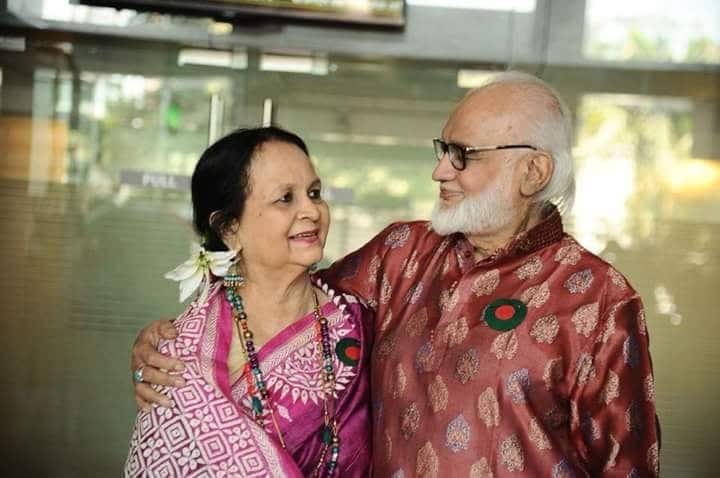
Amma taught me all life's skills—to be steadfast in my studies, to have a maddening love for books, and to appreciate the finer things in life. She taught me how to excel as a daughter, mother, wife, and friend. Mother, I do not know how well I fare. But you did not teach me how to live without you. How am I supposed to carry on?
Songs end, but melody never wanes. In fact, one does not even have to preserve the notation of music when love and music soar to their Maker. So, Amma, your eternal summer sunshine will never fade nor lose its radiance. I tend your garden with meditative serenity. I often read your diaries, pray unceasingly, and pass sleepless nights staring at the night sky through the large window. I see a scintillating star smiling—that is you, I am sure.
Sharmini Abbasi is a lawyer, writer, and daughter of Asma Abbasi.
Send your articles for Slow Reads to slowreads@thedailystar.net. Check out our submission guidelines for details.

157th Birth Anniversary of Mahatma Gandhi / Gandhi’s return to Noakhali
Why does Tagore still trouble Bangladesh’s idea of ‘us’?

Can Bangladesh make better use of its zakat money?

Three revolutions that reshaped the world
Paradise lost and found: Rediscovering early modern Bengal
Unbound Mother: The making and remaking of Kaali in Bengal

Do great leaders make history, or does history make them?
Poison and cremation: A forensic history of colonial Bengal