What India and Bangladesh get wrong about the Teesta
In Debesh Roy's novel Teesta Parer Brittanto, a government survey begins at the riverbank. Suhas, the survey officer, works with Priyanath and Binodbabu to map the land. Pencil, plot numbers, and survey lines try to pin the Teesta to paper, but the riverbank has already defected from cadastral control. Gayanath, a local jotdar, watches. He owns land. He understands property and bureaucracy. As the survey nears completion, he approaches Suhas: ‘Sir, have you finished the map?’ The map is nearly done. But Gayanath’s question is not innocent. ‘Is the river breaking?’ he asks. A river that breaks banks, that erodes land, that creates chars and drowns forests cannot be fixed on a map. The question smuggles in a harder doubt: Is the river still moving? Still alive? The surveyors have drawn the river in one location. Gayanath names what they have done: ‘Where you have drawn the river, there is no river. This is a forest.’ The map describes a dead thing and calls it a river. But a river is what moves. A river is what breaks. Who decides what the river is? The surveyor draws his lines. Gayanath contradicts. Yet the Teesta continues its work of erasure.
1
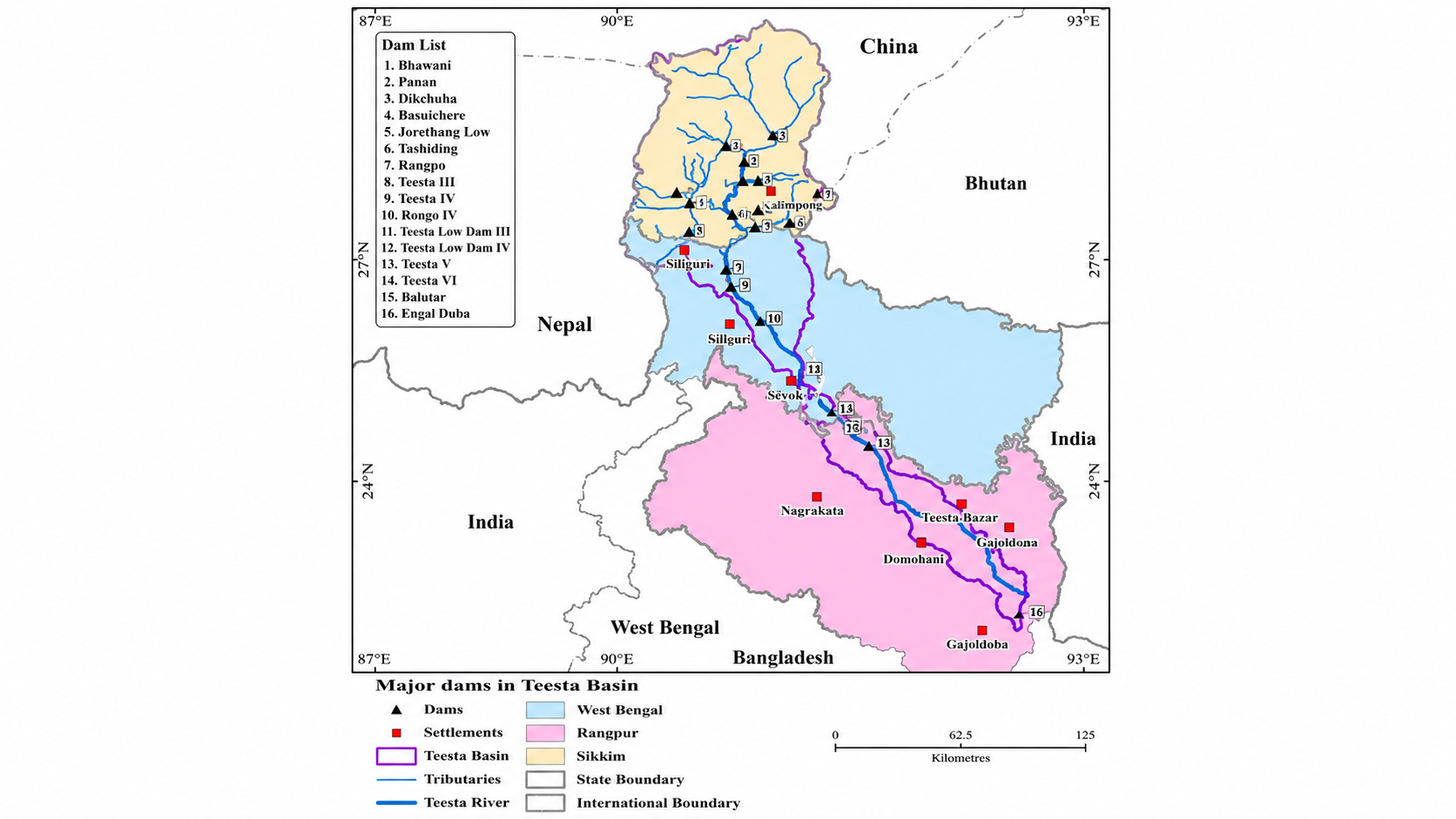
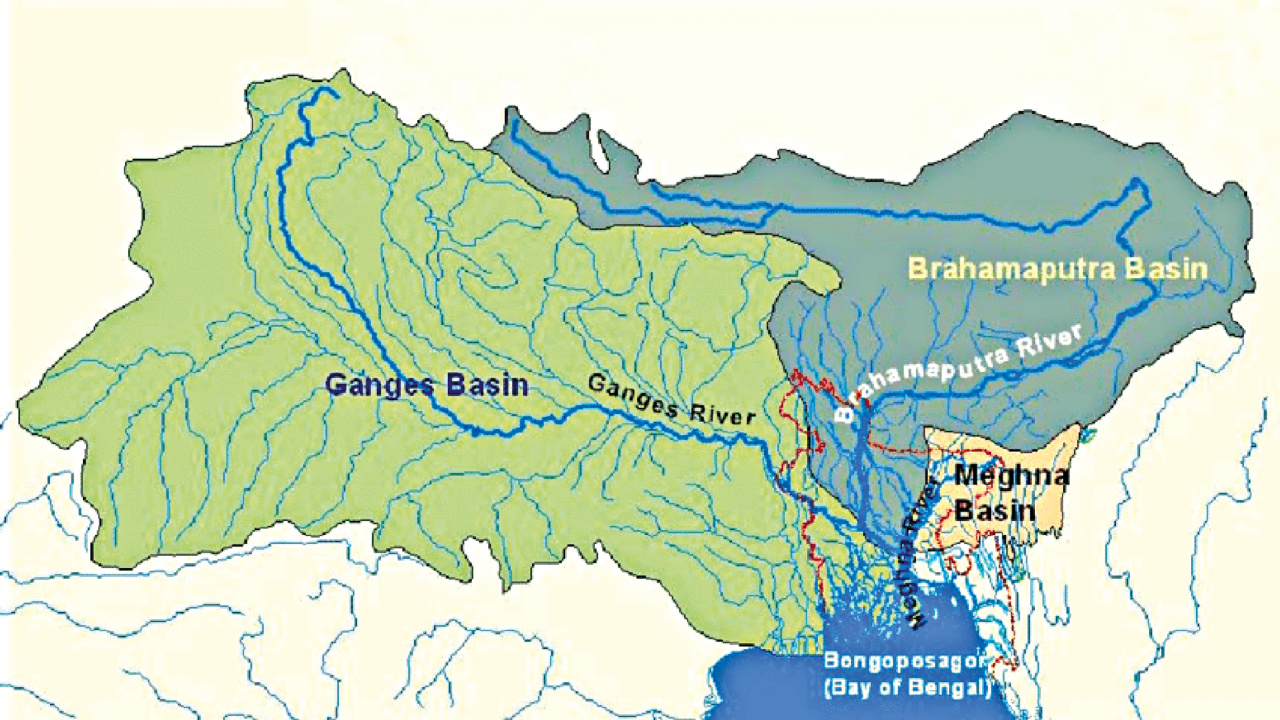
On 3 October 2023, the wall of South Lhonak, a glacial lake in Sikkim destabilised by warming temperatures, collapsed. Water and sediment roared down the mountain. In hours, 270 million cubic metres of sediment entered the Teesta’s course. The Teesta III hydropower dam was destroyed, and several other dams along the Teesta River were damaged. The disaster caused 55 deaths, and 74 persons were reported missing in Sikkim. In one night, the Teesta shattered assumptions that had gestated across decades: that engineers can manage what nature generates, that maps can contain what lives. No treaty can step around this moment.
In Roy’s fictional world, Gayanath had already understood what modern diplomacy still struggles to acknowledge. The Teesta delivered its answer in sediment, shattered concrete, and human loss. The old quarrel between map and river is no longer a matter of interpretation; it has become a catastrophe. The question before India and Bangladesh is no longer only how much water each side receives. The question is whether the Teesta can continue to exist as a river.
2
For fifteen years, Bangladesh heard a familiar explanation for why the Teesta treaty remained unsigned. Delhi wanted it. Kolkata blocked it. Chief Minister of West Bengal Mamata Banerjee stood between diplomacy and water. On 4 May 2026, West Bengal voted for a new government. Suvendu Adhikari, the BJP candidate, defeated Mamata Banerjee in her own constituency. He took the oath of office as Chief Minister on 9 May. Mamata Banerjee’s veto is over. But Bangladesh should not mistake a cleared corridor for a flowing river. One blockade has moved; the Teesta has not returned.
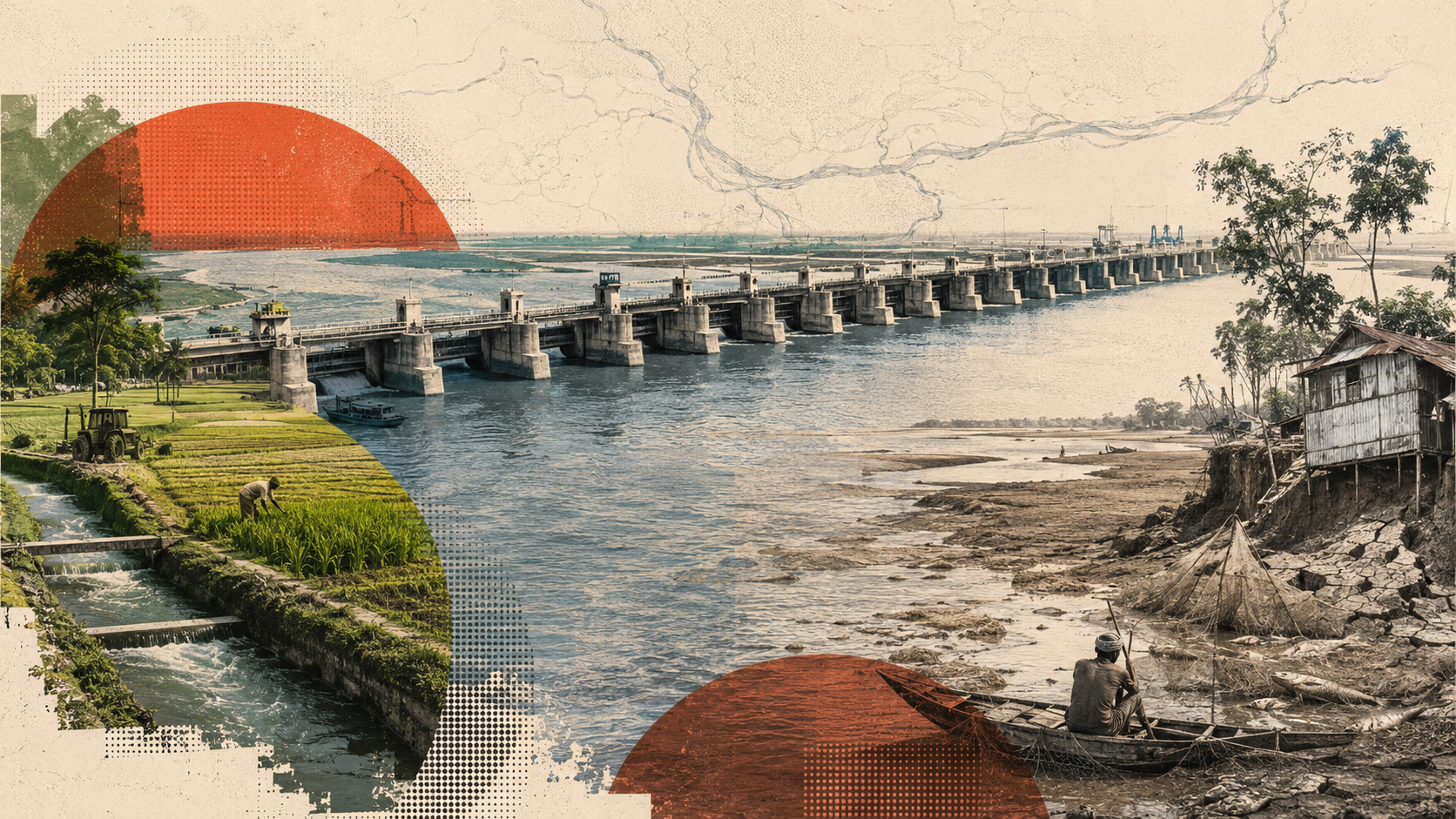
The real crisis, the one that emerges in Teesta Parer Brittanto and remains unresolved in 2026, is not political. It is epistemological. Two ways of knowing the Teesta collide here. One measures the river by its flow on a given day at a specific station. Other measures it by legal documents, by historical precedent, by bureaucratic definition. Neither acknowledges what the novelist Debesh Roy illustrated: that the Teesta is alive. That it responds to forces no map can discipline or deflect. The Glacial Lake Outburst Flood (GLOF) of 2023 revealed this in concrete form. The deeper truth emerged with it: any treaty signed without acknowledging the river’s fundamental crisis will merely varnish the fact of its decline. A percentage formula in which India would receive 42.5 per cent and Bangladesh would receive 37.5 per cent of the Teesta’s waters during the dry season will prove as fragile in the face of the next catastrophic release as the Teesta III dam proved in the last one.
3
In 1966, the International Law Association met in Helsinki and drafted the Helsinki Rules on the Uses of the Waters of International Rivers. These rules established a principle that has governed transboundary water diplomacy: each riparian state deserves ‘a reasonable and equitable share in the beneficial uses of the waters of an international drainage basin’.
The principle is sound. It rejects upstream tyranny. But it rests on an assumption: rivers are stable. Flow can be predicted from historical averages. Engineering can manage variability. The 2023 glacial lake outburst and the accelerating retreat of the Himalayan ice have shattered all three. The legal framework has evolved since 1966. The 1997 United Nations Watercourses Convention codified equitable and reasonable use, no significant harm, and prior notification as core principles of global water law. Separately, Bangladesh acceded on 20 June 2025 to the 1992 Convention on the Protection and Use of Transboundary Watercourses and International Lakes, becoming the first South Asian country to join that instrument.
The 1992 Convention requires parties, especially riparian parties, to cooperate, exchange reasonably available data, consult in good faith, and share information on planned water uses or installations likely to cause transboundary impacts. The Helsinki Rules and later water conventions did real work. They put evidence before power, gave states a shared legal language, and made upstream coercion harder to defend. But their imagination stayed hydrological, not climatic. They trusted averages, stations, notifications, and good faith.
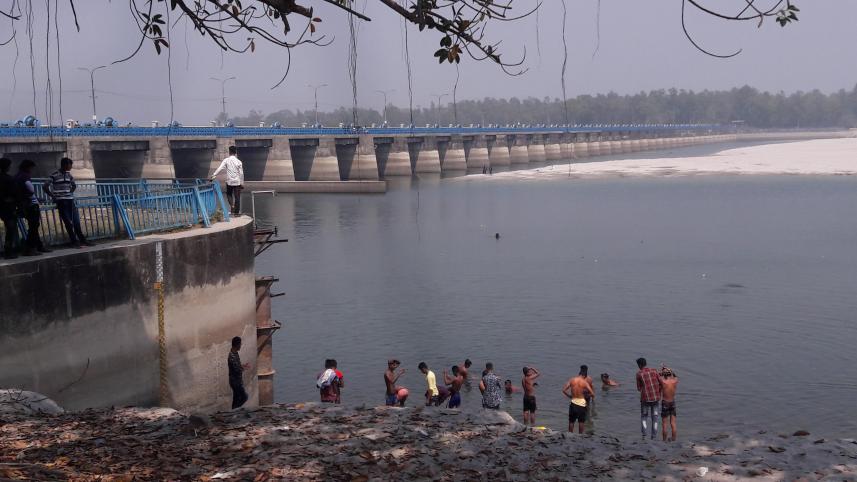
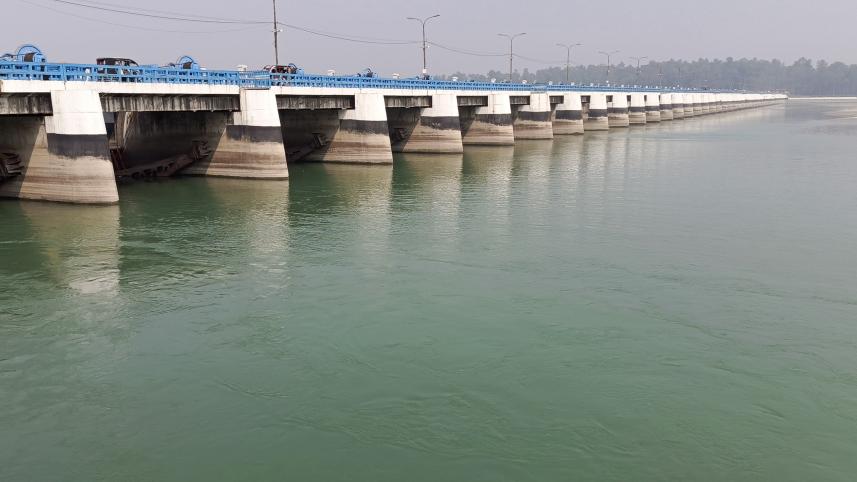
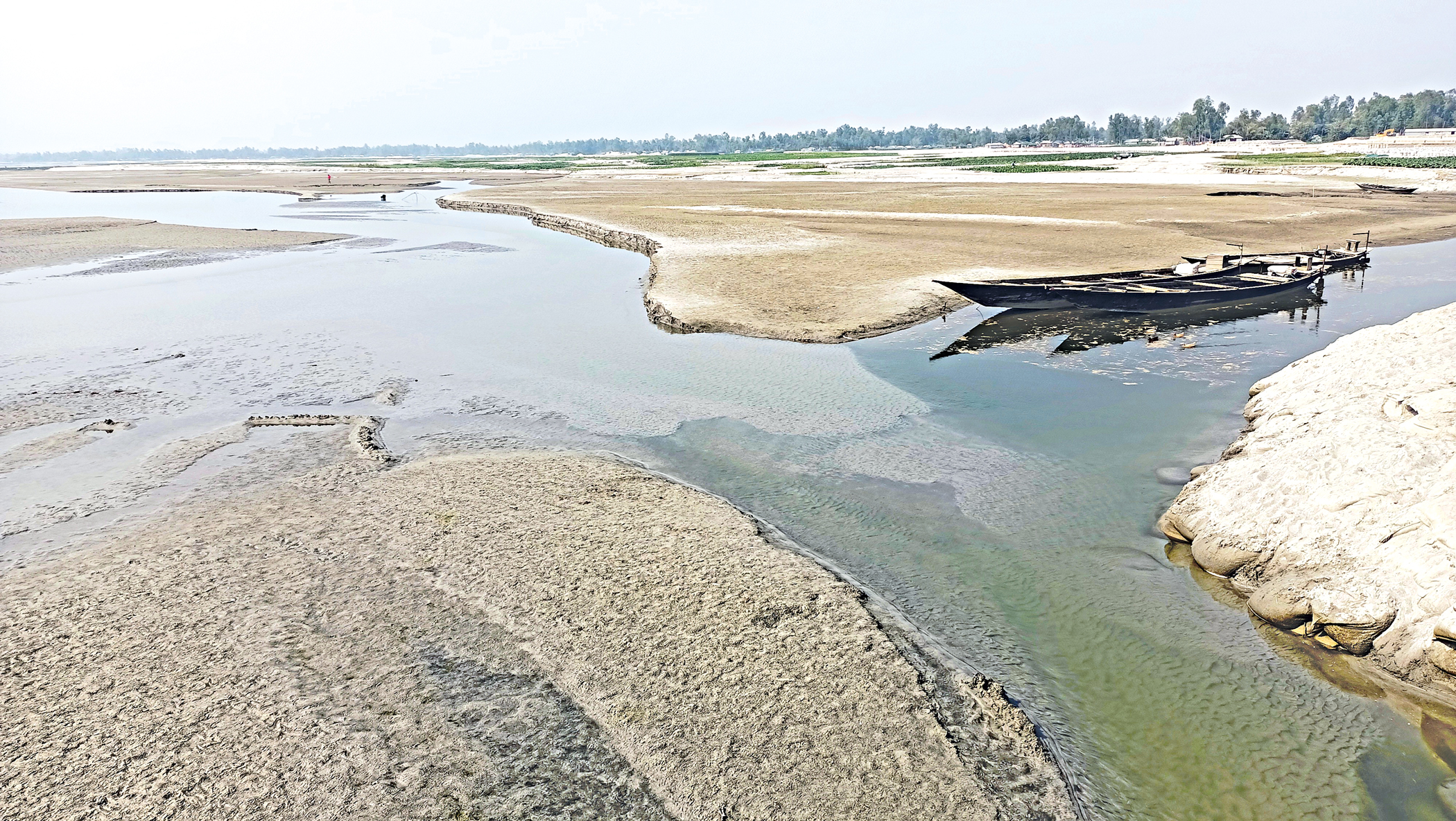
The Teesta now mocks that trust. Dams alter its pulse. Sudden releases turn treaty language into wet paper. The Teesta’s dry-season flow has collapsed. Reported figures trace the fall: the river carried nearly 6,500 cusecs in 1997, fell to 1,348 cusecs by 2006, and dwindled to somewhere between 700 and 300 cusecs in the following decade. The Gajoldoba Barrage in West Bengal diverts much of this water before it reaches Bangladesh. Upstream dams in Sikkim disturb the river’s timing, sediment flow, and release patterns. Climate change frays the rest. Any treaty signed without treating flow collapse as the central crisis is already a treaty about managing a river’s decline.
4
Across five northern districts—Rangpur, Lalmonirhat, Nilphamari, Kurigram, and Gaibandha—millions depend on the Teesta for irrigation, fishing, and seasonal work. Bangladesh’s Teesta Barrage scheme needs at least 4,500 cusecs in the dry season to serve its command area. Recent reports put the flow near 400. That deficit does not live on a spreadsheet. Water insecurity lives in dry canals, empty nets, and the ledgers of char families who borrow against harvests that may never come.
When water arrives from upstream, unannounced and violent, farmers lose the year. They plant on hope. They harvest on prayer. Sudden releases flood fields. Riverbanks collapse. Chars disappear.
Uncertainty corrodes more than crops. It erodes sovereignty. When Bangladesh cannot set its own irrigation calendar, when India controls dry-season releases, sovereignty frays. Char families grasp what economists miss: a farmer who cannot predict water cannot keep children in school or daughters unmarried. Early marriage becomes economic.
5
Frustrated by fifteen years of delay, Bangladesh has pursued an alternative. A Chinese company, with Bangladeshi government support, designed the Teesta River Comprehensive Management and Restoration Project. Cost estimates approach US$1 billion. Project documents describe large-scale dredging, embankment construction, and river narrowing, though the precise specifications have shifted across reports.
What emerges from the available descriptions is a plan to discipline the river. Dredge the bed. Narrow the channels from a braided spread to a confined corridor. Reconstruct the banks. This is restoration only in language. In practice, it is ossification: an attempt to hold fixed what the monsoon, the glacier, and the chars naturally remake. Bangladesh has the right to pursue this. No country should wait forever beside a drying river. But engineering narrows choices. A narrowed river in a warming climate is a river that cannot absorb the next catastrophic release. The environmental assessment remains unpublished. The debt terms are not transparent. The specifications describe a river remade through human intention, not allowed to follow its own course. Here lies the contradiction.
In 2019, Bangladesh’s High Court declared the Teesta, along with all rivers, to be a living entity with legal personhood. The river has rights. The state is obliged to protect the river’s intrinsic dignity. Yet the restoration project treats the Teesta as a channel to engineer and control. This is Gayanath’s problem restated: the state claims authority to define the river through maps, documents, and blueprints. The river claims a different authority: the authority of life.
6
As Chief Minister, Suvendu Adhikari faces a choice. He can sign a treaty of the familiar kind: percentage formulas, data-sharing promises, and quarterly commission meetings that skirt the real crisis. Such a treaty will fail. The Teesta does not obey percentages. Data without enforcement is empty. Commissions cannot negotiate with climate or with glaciers collapsing at accelerating speed. A real treaty must begin with an acknowledgement: the Teesta’s character is changing. Floods intensify. Dry-season flows collapse. Neither state can manage this alone.
From that recognition flow three practical imperatives.
First: establish a minimum ecological flow as law. The Helsinki Rules call for consideration of environmental needs. The Berlin Rules give first priority to ‘vital human needs’ under Article 14(1), while Article 15(2) recognises water needed to assure ecological flows. A Teesta minimum flow should therefore be defended as ecological necessity and household survival, not merely as irrigation demand. It sustains the river’s character as a river. It sustains the people who depend on it. Set this flow at 4,500 cusecs, the amount Bangladesh requires for irrigation, and make it non-negotiable.
Second: install real-time data transmission and prior-warning protocols. The Gajoldoba Barrage in Jalpaiguri controls flow. India can release water or withhold it. Bangladesh can’t know what is being released or when. A treaty would require hourly data transmission to Bangladesh. It would establish protocols for sudden releases, preventing them from becoming instruments of coercion. Independent observers would verify compliance.
Third: build climate-sensitive review mechanisms. The monsoon is intensifying, glacial retreat is accelerating, and extreme events are becoming normal. A treaty written on 20th-century hydrology will fail within five years. The agreement must include annual review and event-triggered renegotiation. Any mega-project—Chinese, Indian, or otherwise—must undergo an independent environmental assessment before construction begins. If it narrows the Teesta, reduces sediment flow, or intensifies flood risk, the project must be rejected or redesigned.
7
Suvendu Adhikari’s victory removes a longstanding political obstacle. For the first time in fifteen years, Delhi and Kolkata may speak with one voice on the Teesta. Yet the removal of one blockade is not the breakthrough Bangladesh imagines. The real obstacle is not Mamata Banerjee. The real obstacle is that neither government has acknowledged what the crisis actually is: the Teesta is not a resource to divide. It is a living system that must be protected. Any treaty that ignores this reality, that treats the river as a commodity rather than a living entity with rights, is merely a framework for managing decline.
Gayanath refused the surveyor’s map because the Teesta had already moved beyond it. Decades later, the same error still governs diplomacy: officials divide a river on paper while dams, glacier melt, and dry-season scarcity remake it on the ground. Kolkata, Delhi, and Dhaka now face a narrower choice than they imagine. A treaty can protect the Teesta as a living system, or it can merely record its decline. If the second path is chosen, the next survey will find a river still recognised in law, but missing from the landscape.
Galib Mahmud Pasha is a civil servant with the Government of Bangladesh and is currently pursuing a Master's degree in Environment at the Australian National University. His research focuses on policy, governance, migration, and environmental justice in South and Southeast Asia.
Send your articles for Slow Reads to slowreads@thedailystar.net. Check out our submission guidelines for details.

Can Bangladesh bring its hilsa back?
Can the new strategy achieve Bangladesh’s renewable energy targets?

André Wink speaks / What we get wrong about the Indo-Islamic world
Bengali Muslims and the ghosts of India's citizenship politics
Bangladesh’s solar growth: Will the incentives be enough?

The missing link in Bangladesh's innovation economy
Dhaka’s battery rickshaw problem is economic, not just about traffic
The staircase between our mothers and care
Is Bangladesh prepared for the next food shock?